 how-to
Dining Subscription Services: Retain Customers in 2026
Table of Contents
- Why Dining Subscription Services Retain Customers Better Than Punch Cards
- The Financial Case: Retention Rates, Recurring Revenue, and Customer Lifetime Value
- Restaurant Membership Program Benefits That Keep Diners Coming Back
- Increasing Customer Lifetime Value in Hospitality With Tiered Subscriptions
- Restaurant Loyalty Program Best Practices for Subscription Models
- Operational Logistics: Running a Dining Subscription Without Disrupting Service
- Measuring Retention: Metrics and KPIs That Matter
- Frequently Asked Questions
Last Updated: September 19, 2026
Why Dining Subscription Services Retain Customers Better Than Punch Cards
A dining subscription is a recurring membership that gives diners ongoing perks at a restaurant in exchange for a steady monthly commitment. At The Regulars Club, we see this model work because it rewards the relationship, not just the transaction.
- Punch cards: one-time reward, easy to forget, no recurring value
- Dining subscriptions: ongoing perks, predictable visits, stronger bond
- Punch cards: no data on who your best customers are
- Dining subscriptions: clear view of your most loyal diners
The Financial Case: Retention Rates, Recurring Revenue, and Customer Lifetime Value
The financial case for dining subscriptions rests on one idea: keeping a customer costs far less than finding a new one. Many operators find that repeat diners spend more over time and refer friends without prompting.
How Repeat Customers Drive Profitability
Repeat customers are the backbone of restaurant profitability. They order more, tip better, and need less marketing to return. A member who eats with you twice a month is worth far more than a one-time visitor.
Calculating the ROI of a Dining Subscription
Monthly ROI = (average member spend × visits per month) − cost to serve − program cost
Example:
- Average member spend: $40
- Visits per month: 2
- Cost to serve: $30
- Program cost: $10
| Metric | One-Time Diner | Subscription Member |
|---|---|---|
| Visits per month | 0.5 | 2 |
| Average spend | $35 | $40 |
| Predictable revenue | No | Yes |
| Referral likelihood | Low | High |
Restaurant Membership Program Benefits That Keep Diners Coming Back
Restaurant membership program benefits work best when they feel exclusive, not generic. A member-only perk says "you matter here." A generic discount says "anyone can get this."
Member-Only Perks vs. Generic Discounts
Generic discounts train customers to wait for a deal. Member-only perks train them to stay. That is the whole game.
Consider what members actually value:
- Free food offers and BOGO deals
- Monthly rewards tied to their visits
- Early access to new menu items
- A simple way to redeem, like showing an active membership
The Perk Mix That Actually Moves Retention
Most operators overload the front end of a membership with discounts and wonder why churn stays flat. A common pattern among programs that hold their members is a three-part perk mix, weighted roughly like this:
| Perk type | Share of program value | Why it retains |
|---|---|---|
| Tangible savings (free item, BOGO, member price) | About half | Gives an immediate, calculable reason to return |
| Access and recognition (early menu access, member-only specials, name recognition) | About a third | Builds identity, the "insider" feeling that discounts alone cannot create |
| Surprise and delight (rotating bonus perk, birthday treat, random upgrade) | The remainder | Creates a story the member tells others, which drives referrals |
Why Recognition Beats Discount Depth
A diner can get a discount anywhere. What they cannot get anywhere is being known. Simple recognition mechanics, a server who greets a member by name, a member-only item that never appears on the public menu, a note on the receipt thanking them for their third month, cost very little to run and are far harder for a competitor to copy than a price cut.
Making Redemption Effortless
The best perk in the world fails if redeeming it slows down the line. The Regulars Club builds on this idea: diners get member-only perks at local spots, and restaurants add discounts right into their POS as coupon buttons. No new system, no friction at the counter.
Increasing Customer Lifetime Value in Hospitality With Tiered Subscriptions
Increasing customer lifetime value in hospitality comes down to giving members something to climb toward. Tiered subscriptions do exactly that, but only if the tiers are built around behavior you want to reward, not around arbitrary price points.
Designing Tiers That Encourage Upgrades
A tiered structure gives diners a reason to spend a little more each month. Each tier should feel like a clear step up, not a confusing maze.
A simple three-tier model:
- Basic: a few member perks and monthly rewards
- Plus: adds free food offers and BOGO deals
- VIP: adds the best perks and priority access to specials
The Mechanics Most Operators Get Wrong
Three design decisions determine whether tiers lift lifetime value or flatten it.
A Tier Table You Can Adapt
| Tier | Core benefit | Behavioral trigger | Primary retention job |
|---|---|---|---|
| Basic | Monthly reward and member pricing on a set item | Sign-up | Get the member in the door at least once a month |
| Plus | Adds free food offers and BOGO deals | A visit threshold | Convert occasional visits into a routine |
| VIP | Adds the best perks and priority access to specials | Sustained visit frequency | Make leaving feel like a loss of status |
Notice that each tier's trigger is a behavior, not a payment. That is what separates a tier structure that raises lifetime value from one that just raises the monthly fee.
Watching for Tier Cannibalization
The most common failure is a middle tier that is too generous, it captures members who would have paid for the top tier and gives them most of the value. Watch the share of members sitting in each tier. If the middle tier swells while the top tier stays flat, the middle is likely doing too much.
Restaurant Loyalty Program Best Practices for Subscription Models
Restaurant loyalty program best practices for subscriptions focus on two things: personalization and avoiding member burnout. Get both right and your churn rate stays low.
Personalized Marketing and Data-Driven Insights
Personalized marketing turns a generic perk into a reason to visit. If you know a member loves pizza on Fridays, send that offer on Thursday.
Use data-driven insights to guide your outreach:
- Track which perks each member actually redeems
- Segment members by visit frequency
- Send offers based on real behavior, not guesses
Managing Subscription Fatigue Without Losing Members
Subscription fatigue is real. When members feel they are paying for something they rarely use, they cancel. The fix is to keep the value visible.
Ways to fight fatigue:
- Send a monthly recap of what they saved
- Offer a pause option instead of a hard cancel
- Rotate perks so the program stays fresh
- Reward members who visit more, not just those who pay
Operational Logistics: Running a Dining Subscription Without Disrupting Service
Operational logistics make or break a dining subscription. If redeeming a perk slows down your line, staff will resist and members will notice.
POS Integration and Redemption Workflows
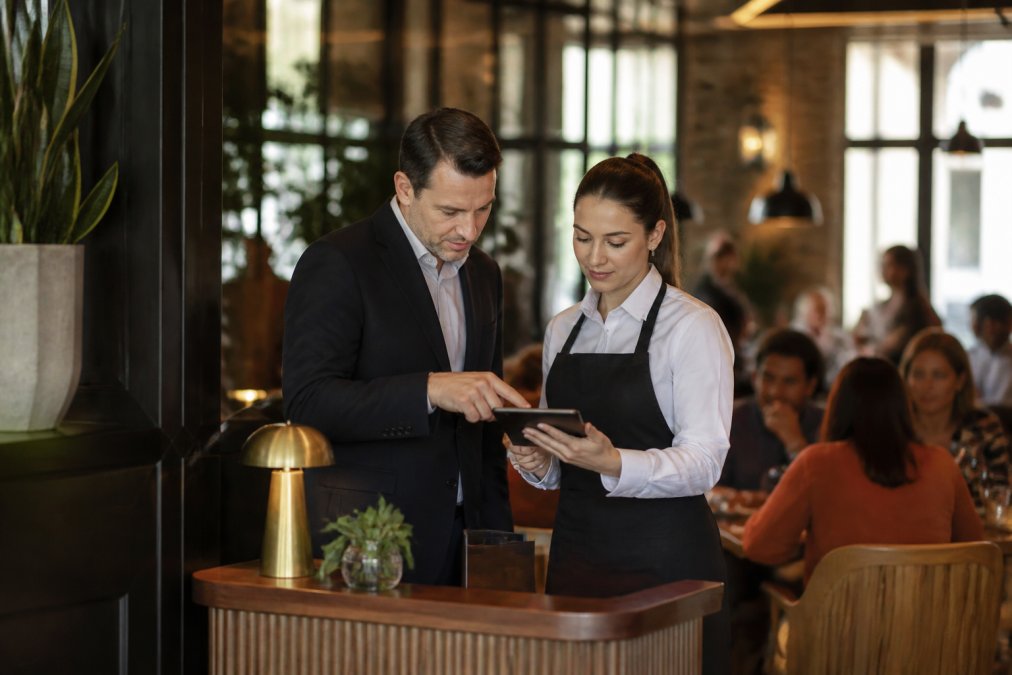
The best programs work with the POS you already have. The Regulars Club lets restaurants add membership discounts as coupon buttons directly in their POS. Staff tap a button, the perk applies, and service keeps moving.
A smooth redemption flow looks like this:
- Member shows their active membership
- Staff tap the membership coupon button
- Discount applies automatically
- Sale closes as normal
Measuring Retention: Metrics and KPIs That Matter
Measuring retention starts with a few core numbers. Track these monthly and you will know if your program is working.
- Customer retention rate: the share of members who stay active
- Churn rate: the share who cancel each month
- Visit frequency: how often members dine
- Customer lifetime value: total revenue per member over time
- Recurring revenue: predictable income from memberships
Frequently Asked Questions
How do dining subscription services improve customer retention rates?
Dining subscription services improve retention by converting occasional visits into a habit. Members pay upfront, so they return to get their money's worth, often visiting more frequently than non-members. This consistent foot traffic builds familiarity with staff and menu, which strengthens the emotional connection. A restaurant loyalty program best practices approach pairs these subscriptions with personalized perks and automated reminders, keeping the brand top-of-mind between visits.
What metrics should restaurants track to measure subscription success?
Focus on four core metrics: monthly churn rate, average visit frequency per member, customer lifetime value (CLV), and redemption rate of member perks. Churn tells you how many members cancel each month. Visit frequency shows engagement. CLV reveals long-term profitability. Redemption rate indicates whether your perks are actually appealing. Tracking these alongside customer feedback loops helps you adjust offers and reduce subscription fatigue before it hurts retention.
What are the best perks to include in a restaurant subscription program?
The strongest perks combine tangible value with exclusivity. Consider monthly free appetizers, BOGO entrées, member-only happy hour pricing, or first access to seasonal menus. Points-based rewards for every dollar spent also work well. The key is consistency: members should know exactly what they get each month. Rotating perks based on data-driven insights, like a free dessert for frequent brunch visitors, keeps the program fresh and reduces the risk of subscription fatigue.
How can small restaurants implement a recurring revenue model for dining?
Start with a simple tiered subscription: one basic tier with a clear perk, like a monthly free entrée, and one premium tier with extra value such as priority seating or a complimentary drink. Use a platform that integrates with your existing POS so staff can redeem offers with one button press. Promote the subscription at checkout and through email. Keep the first month low-commitment to build trust, then use customer feedback loops to refine the offer.
Retaining customers is harder than ever, and discounts alone will not do it. The Regulars Club helps independent restaurants turn occasional diners into loyal regulars with member-only perks, BOGO deals, and monthly rewards that plug into your existing POS. Restaurants create their own offers and add membership discounts as simple coupon buttons, so service never slows down. Get started with The Regulars Club and build the predictable, recurring revenue that keeps your tables full.