 comparison
InKind Alternative for Independent Restaurants: 5 Options
Table of Contents
- Why Look for an InKind Alternative?
- InKind Alternatives at a Glance: A Direct Comparison
- 1. The Regulars Club: Built for Recurring Revenue
- 2. ChowNow: Owning Your Ordering Data
- 3. Too Good To Go: Turning Waste Into Revenue
- 4. SBA Loans: Traditional Capital Without Revenue Sharing
- 5. Foodhub: An All-in-One Operational Platform
- How Restaurant Loyalty Program Software Compares
- Frequently Asked Questions
Last Updated: September 4, 2026
Why Look for an InKind Alternative?
Independent restaurants often face a difficult choice when seeking upfront capital: give up a slice of future revenue or wrestle with traditional bank paperwork. The inKind model, which trades funding for future dining credits, works well for some operators, but its revenue-sharing structure and equity implications don't fit every business model. Finding the right inKind alternative for independent restaurants means weighing how each option impacts your cash flow, your ownership stake, and your day-to-day operations.
At The Regulars Club, we help independent operators build recurring revenue through our Restaurant Membership Program, so we see firsthand how capital decisions shape a restaurant's long-term health. The core tension is simple: you need money to grow, but the terms attached to that money can either fuel your expansion or quietly erode your profit margins. A common approach is to compare the effective cost of capital across models, yet many owners overlook how each option affects customer relationships and operational control.

InKind Alternatives at a Glance: A Direct Comparison
Before examining each option in detail, here is a direct comparison matrix that highlights how these inKind alternatives differ across the criteria that matter most to restaurant owners:
| Option | Capital Model | Best For | Key Trade-off |
|---|---|---|---|
| The Regulars Club | Membership-driven recurring revenue | Building repeat visits and loyalty | Requires ongoing offer management |
| ChowNow | Monthly subscription | Owning ordering data and customer relationships | You handle delivery logistics |
| Too Good To Go | Per-transaction commission | Reducing food waste and attracting new diners | Limited control over bag contents |
| SBA 7(a) Loans | Interest-based term loan | Established restaurants seeking lower-cost capital | Rigorous application and collateral required |
| Foodhub | Subscription plus transaction fees | Consolidating POS, ordering, and payments | Hardware setup and staff training needed |
This comparison matrix covers the structural differences. Now let's examine each option's practical strengths and weaknesses.
1. The Regulars Club: Built for Recurring Revenue
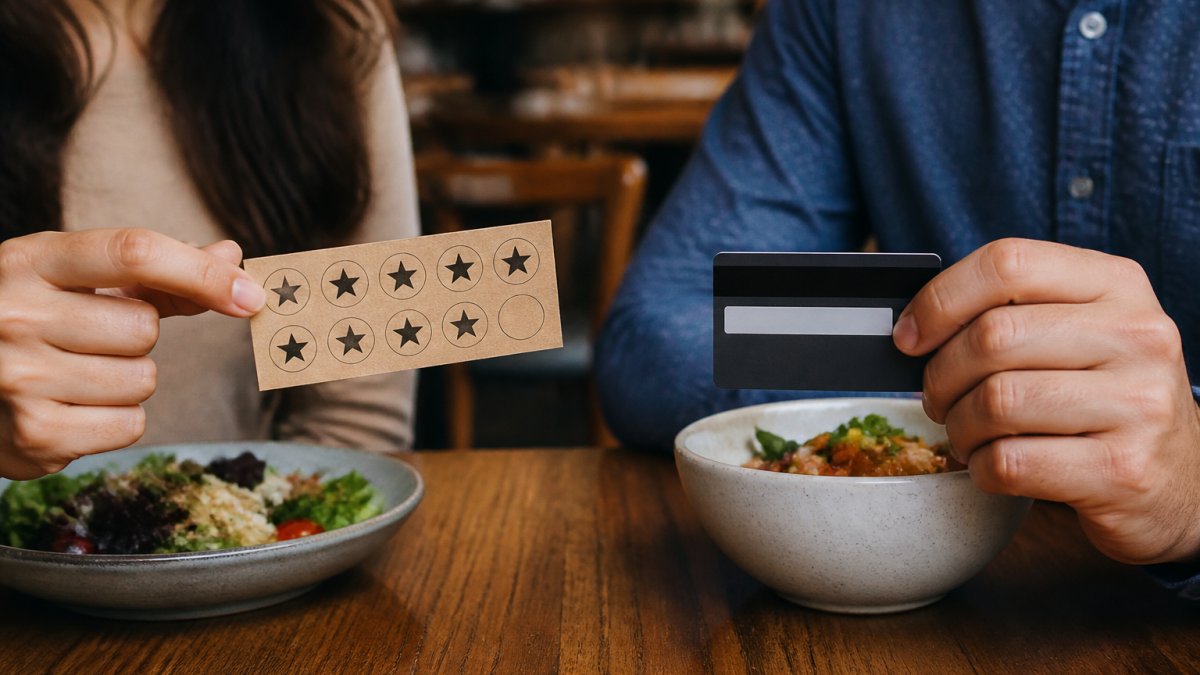
Our top pick for independent restaurants is The Regulars Club, because it addresses the root cause of cash flow instability: the lack of predictable repeat visits. Rather than providing a one-time capital injection, The Regulars Club is a restaurant membership and loyalty platform that helps you turn occasional customers into loyal regulars. Members gain access to exclusive perks, discounts, free food offers, BOGO deals, and monthly rewards, giving them a concrete reason to return.
For restaurant owners, the appeal is operational simplicity. You create your own offers and add Regulars Club discounts directly into your existing POS system as coupon buttons for easy redemption. There is no need to replace your current setup or train staff on a complicated new interface. This membership model supports customer retention strategies for independent restaurants by making every visit more rewarding for the diner and more profitable for you.
2. ChowNow: Owning Your Ordering Data
ChowNow is a commission-free online ordering platform that helps independent restaurants manage their own digital storefronts. If your frustration with third-party delivery apps is the high commission fees and the loss of customer data, ChowNow offers a direct solution. The platform provides a custom-branded mobile app and website integration, along with marketing tools designed to drive repeat customer orders.
The primary advantage is that ChowNow eliminates the high commission fees associated with delivery apps. Your customers order directly from your brand, and you maintain the relationship and the data. However, the trade-off is that you must manage your own delivery logistics or partner with third-party fleets, which adds a layer of operational complexity that not every kitchen is ready to handle.
3. Too Good To Go: Turning Waste Into Revenue
Too Good To Go takes a different angle on improving your financial position: it connects your restaurant with customers who buy surplus food at a discount, reducing waste and recovering costs on unsold inventory. The consumer-facing app helps local diners discover your restaurant through value-based offers, which can introduce your brand to new customers who might not have found you otherwise.
The model operates on a commission per transaction, so you only pay when you actually sell surplus food. The analytics dashboard tracks waste reduction and revenue, giving you visibility into how much you are recovering. The main limitation is that you have limited control over the specific items sold as "surprise bags," which means you need to be comfortable with a degree of unpredictability in what you offer.
4. SBA Loans: Traditional Capital Without Revenue Sharing
For established restaurants seeking a larger capital injection without giving up future revenue, SBA 7(a) loans remain a strong inKind alternative. These government-backed loans provide long-term financing for working capital or expansion, with lower interest rates compared to many private alternative lenders. The government-backed guarantee reduces risk for lenders, which translates into more flexible repayment terms for you (sba.gov).
The significant advantage is that SBA loans do not require you to provide future food or dining credits to investors. You retain full ownership of your revenue. The trade-off is the rigorous application and documentation process, and the requirement for collateral and personal guarantees. According to the U.S. Small Business Administration's 7(a) loan program overview, this program is designed to help small businesses access capital that might otherwise be unavailable through conventional channels. This option suits operators with a solid financial history who can navigate the underwriting process.
5. Foodhub: An All-in-One Operational Platform
Foodhub positions itself as a restaurant management and POS solution designed as an alternative to major payment processors for independent eateries. It consolidates your front-of-house and kitchen management, online ordering portal, and payment processing into a single platform with transparent fee structures. The platform also includes customer loyalty and retention tools, which supports your broader customer retention strategies for independent restaurants.
The main benefit is consolidation: you manage sales, orders, and customer data in one place, with more predictable costs than commission-heavy delivery platforms. The drawback is that Foodhub requires hardware implementation and staff training, which means an upfront investment of time and resources before you see the operational benefits.
How Restaurant Loyalty Program Software Compares
When evaluating an inKind alternative, it helps to separate capital-raising tools from revenue-building platforms. SBA loans and merchant cash advances solve an immediate liquidity problem, but they do nothing to increase your customer base or encourage repeat visits. Restaurant loyalty program software and membership platforms like The Regulars Club take the opposite approach: they build financial sustainability by increasing diner engagement and repeat revenue over time.
For independent restaurants weighing a thanx alternative for small businesses, the key distinction is whether you want debt-free financing or a tool that drives business growth strategy. Loyalty software does not hand you a check upfront, but it improves your profit margins by reducing your reliance on paid acquisition and third-party delivery commissions. A well-structured membership program can provide the working capital effect you need by smoothing out the natural ebbs and flows of restaurant operations.
Tax Implications of Credit-Based Financing vs. Revenue-Building Platforms
Most content on restaurant financing ignores the tax treatment of each capital source, yet this is where the true cost difference emerges. The IRS treats these options very differently, and an independent owner should consult a CPA before signing any agreement.
- SBA 7(a) loans: Interest payments are tax-deductible as business interest under Internal Revenue Code Section 163 (irs.gov). The principal is not deductible. This lowers the effective cost of an SBA loan by roughly 20-30% depending on your marginal tax bracket.
- Merchant cash advances: The IRS has not issued clear guidance on whether the factor fee (the difference between what you receive and what you repay) is interest or a purchase of future receivables. Most tax practitioners treat the fee as a deductible business expense, but the timing of the deduction depends on whether the agreement is structured as a loan or a sale. If structured as a sale, the deduction may be spread across the term rather than taken upfront.
- InKind-style revenue-sharing agreements: If you issue dining credits to investors in exchange for capital, the value of those credits is generally not taxable income to the restaurant at issuance. However, when diners redeem those credits, you are forgoing revenue you would otherwise have earned. The IRS does not allow a deduction for "lost revenue." The real tax cost is the forgone profit margin on those meals, typically 60-70% of the meal price, which is a permanent, non-deductible cost of capital.
- Loyalty and membership platforms like The Regulars Club: Discounts offered through loyalty programs are treated as a reduction in gross receipts, not as a separate deductible expense. If you offer a 20% discount to members, your taxable revenue is simply 80% of the menu price. There is no interest deduction, but there is also no compounding debt obligation.
Exit Strategy and Contract Termination: What Happens When You Close or Sell?
The second gap in most financing content is transparency about what happens if your restaurant closes, changes ownership, or you want to terminate the agreement early. The terms vary dramatically by model.
- SBA 7(a) loans: The loan is a personal obligation. If you sell the restaurant, the loan typically must be paid off at closing unless the buyer assumes it with lender approval. If you close the business, the personal guarantee means the lender can pursue your personal assets. There is no early termination fee, but prepayment penalties may apply in the first three years (the SBA allows lenders to charge up to 5% of the outstanding balance in year one, declining to 1% in year three).
- Merchant cash advances: These agreements often include a "confession of judgment" clause, which allows the lender to obtain a court judgment without a hearing if you default. Early payoff is rarely offered at a discount; most MCA providers require you to pay the full factor amount even if you close early. If you sell the restaurant, the MCA may be tied to your merchant processing account, not the business itself, meaning you personally remain liable.
- InKind-style credit agreements: Review the contract for a "change of control" clause. Some agreements require you to continue honoring dining credits even after you sell the restaurant, which can reduce the sale price a buyer is willing to pay. Others accelerate the repayment obligation upon sale or closure. Termination fees vary widely; some agreements require you to buy back unredeemed credits at face value, which can be a significant cash outlay if you have issued credits aggressively.
- Loyalty and membership platforms like The Regulars Club: There is no debt to repay and no future revenue obligation. If you close or sell, you simply stop offering the member discounts. There is no buyback clause for unredeemed member perks because members pay a subscription to you, not the reverse. The main consideration is ensuring your POS data and member list are transferable in a sale, which can actually increase your restaurant's valuation because recurring member revenue is an asset.
The choice ultimately comes down to your growth stage, your tolerance for operational complexity, and your exit timeline. If you need immediate upfront capital and have the documentation to qualify, SBA loans offer the most cost-effective traditional path, but understand the personal guarantee follows you for a decade. If your priority is building a loyal customer base that generates predictable revenue without debt or tax complexity, a membership platform like The Regulars Club delivers long-term value through its Restaurant Customer Loyalty Program. For many independent restaurants, the smartest approach combines both: use traditional term loans for capital-intensive projects and a loyalty program to protect your cash flow and customer base every single day, while keeping your exit options open.
Frequently Asked Questions
What is an inKind alternative for independent restaurants?
An inKind alternative is a financing or loyalty model that provides independent restaurants with capital or customer growth without the specific revenue-sharing structure inKind uses. Options range from traditional SBA loans for upfront capital to membership platforms like The Regulars Club that focus on building recurring revenue through repeat visits. The right choice depends on whether you need cash for expansion or a system to increase customer lifetime value and predictable cash flow.
Do restaurants make money with inKind-style credit systems?
It depends on your repayment terms and how quickly you can turn the upfront capital into profitable sales. Credit-based systems can help with cash flow, but the cost of capital is tied to your future revenue. Many owners find that a customer retention approach, such as a membership club that drives repeat visits without diluting revenue, offers a more sustainable path to financial sustainability and healthier profit margins.
How does restaurant loyalty program software compare to inKind?
Restaurant loyalty program software, like The Regulars Club, focuses on rewarding repeat customers to build recurring revenue, while inKind provides upfront capital in exchange for a share of future sales. Loyalty software typically works with your existing POS and uses discounts or perks to increase visit frequency. InKind is a financing tool, whereas loyalty software is a marketing and customer retention tool for long-term business growth.
What should a restaurant look for in a thanx alternative for small businesses?
When evaluating a Thanx alternative for small businesses, look for a platform that is affordable, simple to integrate with your current POS, and focused on your specific needs. Prioritize tools that help you own your customer data, create targeted offers, and drive repeat visits without high transaction fees. A membership model that requires no hardware change and lets you set your own offer terms is often a practical choice for independent operators.
What are the best customer retention strategies for independent restaurants?
Effective customer retention strategies for independent restaurants include implementing a structured loyalty program, personalizing diner engagement through email or SMS, and creating exclusive experiences for regulars. A membership club that rewards repeat visits encourages diners to choose you over competitors. The goal is to build a reliable base of regulars who contribute steady working capital through consistent sales, reducing your reliance on external funding.
This article was written using GrandRanker