 comparison
Restaurant Membership Platform Pricing for Cafes
Table of Contents
- How Membership Platform Pricing Works for Independent Cafes
- Pricing Breakdown: Five Platforms Compared
- Restaurant Loyalty Program ROI: What Cafes Actually Earn Back
- Subscription-Based Loyalty Program Examples in Action
- POS Integration for Cafe Loyalty Programs: What to Check
- Hidden Fees and Contract Traps to Watch For
- Which Platform Fits Your Cafe?
- Frequently Asked Questions
Last Updated: September 10, 2026
How Membership Platform Pricing Works for Independent Cafes
Membership platform pricing for independent cafes follows one of two models: a flat monthly subscription or a commission on member transactions. Which model fits your volume is the biggest factor in whether a loyalty program pays for itself.
Most owners focus on the sticker price; the smarter question is cost per active member.
Flat-Fee vs. Commission Models
Flat-fee pricing charges a set monthly amount regardless of redemptions; commission models take a percentage of each transaction driven through the platform (shopify.com).
For a cafe with steady repeat traffic, flat-fee usually wins because costs stay predictable as volume grows. Commission models suit cafes testing loyalty for the first time, since you only pay when the program produces a sale. At scale, a busy cafe processing hundreds of member transactions monthly often pays far more under commission than under a flat subscription.
What Drives Your Monthly Cost
Four variables determine what you actually pay each month:
- Active member count, most platforms tier pricing by how many enrolled customers you carry
- Transaction volume, commission models scale directly with redemptions
- POS integration depth, native integrations cost less to maintain than custom API work
- Marketing features, automated email, SMS, and push notifications usually sit in higher tiers
A common mistake is choosing the cheapest tier, then finding automated rewards and segmentation locked behind an upgrade. Map your must-have features before comparing quotes.
Pricing Breakdown: Five Platforms Compared
Pricing transparency varies widely: some platforms publish rates, others require a custom quote. The table shows advertised starting prices, but the number that matters is the all-in first-year cost: subscription plus setup, hardware, and any per-transaction charges.

| Platform | Starting Price | Pricing Model | Hardware Needed | Typical Time-to-Launch | Best For |
|---|---|---|---|---|---|
| The Regulars Club | Custom quote | Membership-based | None beyond existing POS | Days | Cafes wanting member-driven recurring revenue |
| Square Loyalty | $49/month | Subscription | None if already on Square | Same day | Cafes already on Square POS |
| LoyaltyPass | $99/month | Subscription | None beyond existing POS | Days to weeks | POS-independent flexibility |
| BonusQR | Contact for pricing | Subscription | Customer-facing tablet or printed QR stand | Days | Mobile-first QR experiences |
| Stamp Me | $49/month | Tiered subscription | None beyond existing POS | Days | Paper-to-digital transitions |
The Regulars Club
The Regulars Club is a strong option for independent cafes that want membership revenue without replacing their existing point of sale system. Restaurants create their own offers and add member discounts directly into the POS as coupon buttons, so redemption takes seconds at the counter.
Instead of a points ledger, members pay for access to perks across participating local restaurants, turning loyalty into recurring revenue rather than a discount you absorb. Pricing is quoted per business rather than published, so ask for the total figure in writing, including any per-redemption charges.
Square Loyalty
Square Loyalty is an option if you already run Square for payments. It tracks purchases automatically, with customizable reward tiers and digital punch cards built in.
The catch: it only works inside the Square ecosystem, so switching processors means the loyalty data does not travel with you. No hardware is needed if you already have a Square terminal, keeping the all-in cost close to the sticker price.
LoyaltyPass
LoyaltyPass connects to a range of POS systems rather than locking you into one vendor.
That flexibility matters if you plan to change POS providers or run multiple systems, and its analytics dashboard tracks repeat visits in more detail than most entry-tier tools. Because it is POS-agnostic, deployment can take longer than a native integration, so budget a few weeks if your POS is less common. Smaller cafes with simple needs will find it overpriced.
BonusQR
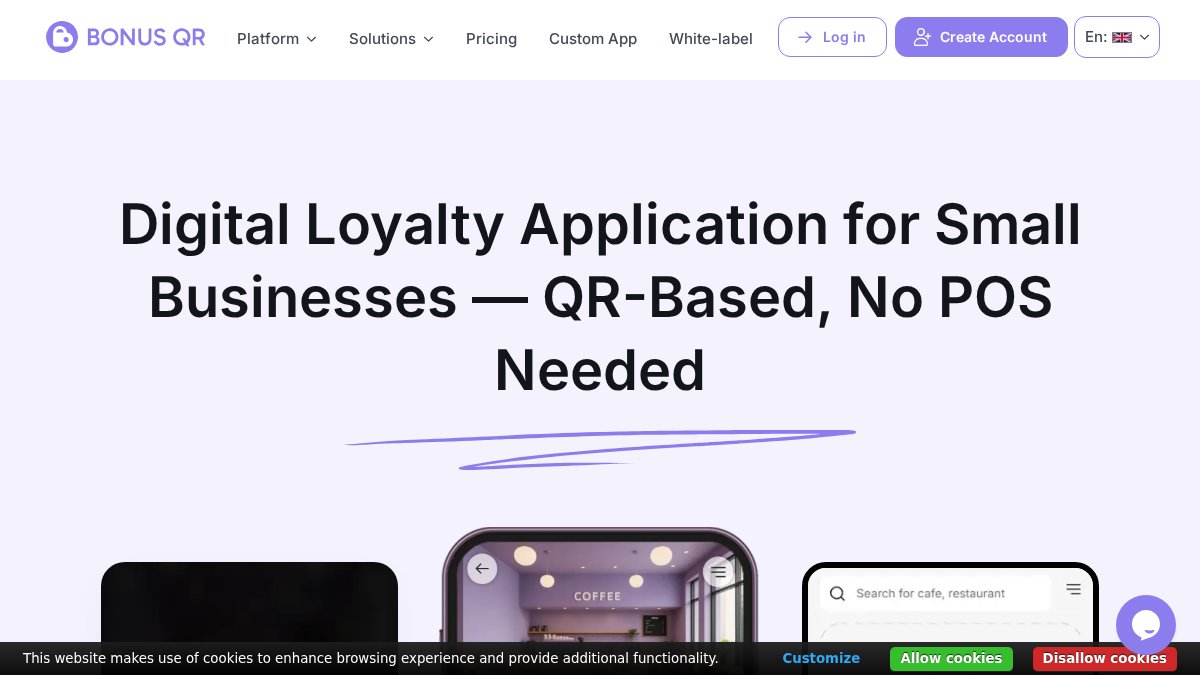
BonusQR uses QR code check-ins to replace cards and apps entirely. Customers scan, earn, and redeem without downloading anything, removing the biggest friction point in loyalty adoption.
The operator experience is simple and the behavioral analytics are strong, but It is also the one platform here that may require a customer-facing tablet or printed QR stand, a capital expense to plan for.
Stamp Me
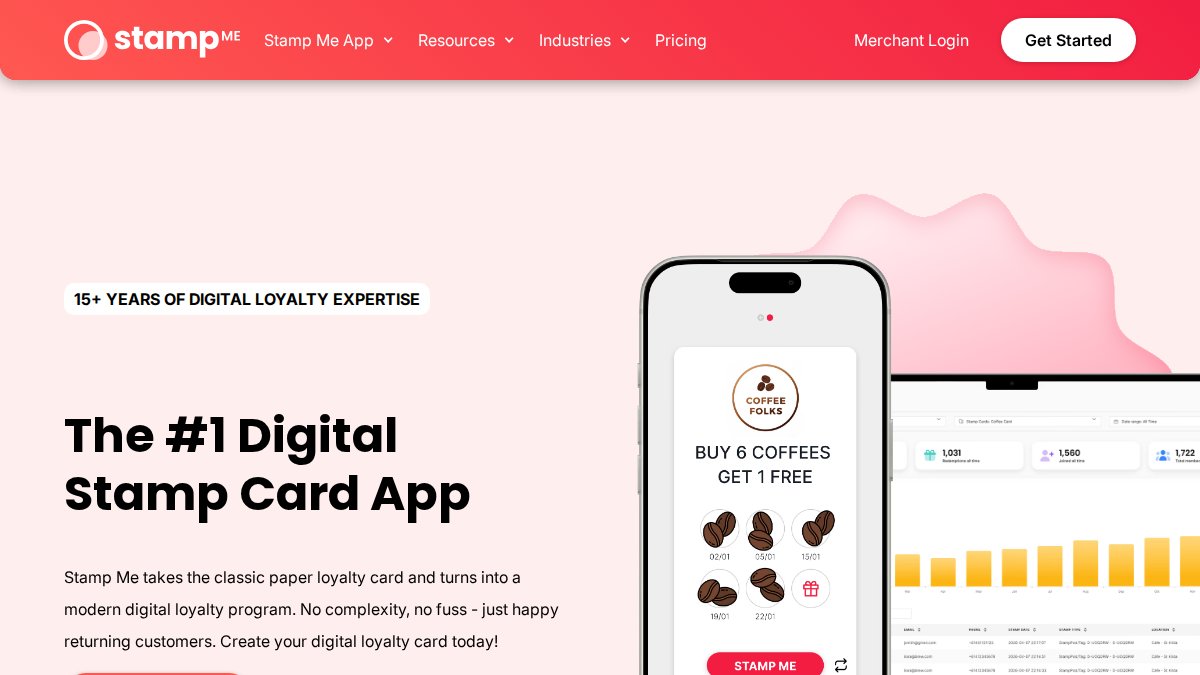
Stamp Me digitizes the paper punch card, making it an easy transition for cafes with an existing stamp program.
Push notifications and customer database management are included, but advanced automation sits in higher tiers, so budget for an upgrade if you want automated rewards rather than manual campaigns. No additional hardware is required, keeping the all-in cost close to the subscription.
The All-In Cost Question
The advertised monthly rate is rarely the full story. A platform at $49/month with a per-redemption charge can cost more than one at $99/month with none, depending on redemption frequency. Before you sign, ask each vendor for four numbers: the monthly subscription, any setup or onboarding fee, any per-transaction or per-redemption charge, and the cost of any hardware. Add them for a realistic first-year total, then divide by your expected active member count for a true cost per member.
Restaurant Loyalty Program ROI: What Cafes Actually Earn Back
Restaurant loyalty program ROI comes down to one ratio: the additional visits a member makes versus what you spend to keep them enrolled. A program that lifts visit frequency among regulars usually pays for itself within months.
The calculation is straightforward: multiply your average ticket by extra visits per member per month, then subtract platform cost and the margin you give up on redeemed offers. Break-even often arrives faster than expected because members spend more per visit than walk-ins (bondbrandloyalty.com). The variable that sinks programs is churn: members who enroll, redeem once, and disappear still cost you the subscription.
The Churn Problem Most Guides Skip
Enrollment is the easy part. Keeping members active after the first month is where independent cafes lose money, and it is the part almost no pricing guide addresses. Signups typically spike at launch, then decay as members forget the program exists, while the subscription cost does not (peer-reviewed research). Watch active member count, not total signups.
Three mechanisms keep members active:
- Perk rotation. A static offer becomes invisible within weeks. Change the member benefit on a regular cadence so there is always a reason to check back.
- Re-engagement triggers. Automated messages when a member has not visited in a set window bring back a meaningful share of lapsed members before they churn completely.
- Visible value at the counter. If staff do not mention the member benefit at checkout, members forget they have it. Redemption should be a one-tap action, not a conversation.
Active-Member Economics
The number that determines whether your program pays for itself is cost per active member, not cost per enrolled member. Divide your total monthly platform cost by the number of members who redeemed in the last 30 days.
If that figure is higher than the margin you make on an extra visit, the program is underwater regardless of signups. If it is lower, the program is working even if total enrollment looks modest.
Judging a loyalty program on enrollment numbers alone hides the real cost. A cafe with 500 enrolled members and 40 active ones is paying for 460 people who will never return. Track active customer count monthly, not signups.
When the Math Does Not Work
Some cafes should not run a paid membership program at all. If visit frequency is low, the average ticket is small, or the owner cannot commit to rotating perks, a membership model will churn faster than it acquires. A simple points program, or none, is the better financial choice: membership economics reward cafes with an existing base of regulars, not cafes still building one.
Subscription-Based Loyalty Program Examples in Action
Subscription-based loyalty program examples in the cafe world usually share one trait: the member pays for access, not for points. That flips the economics, because revenue arrives before the first coffee is poured.
A neighborhood cafe running a monthly membership typically structures it around member-only pricing, a recurring free item, or a rotating perk. The owner gains predictable monthly recurring revenue; the member gains a reason to return rather than try the shop down the street.
The model works best where visit frequency is already high. If a customer comes in twice a week, a membership that saves them money feels like an easy yes; twice a month, the value proposition is much harder to sell. These programs also live or die on perk rotation, since a static offer becomes invisible within weeks.
POS Integration for Cafe Loyalty Programs: What to Check
POS integration for cafe loyalty programs determines how much friction your staff and customers experience at the counter. Native integrations deploy faster and cost less to maintain than custom API connections.
Before signing with any platform, confirm four things:
- Does the platform support your specific POS system and version?
- Can discounts be added as coupon buttons rather than manual entry?
- Does redemption require staff to touch a separate device?
- What happens to member data if you change POS providers?
The fourth question is the one owners forget. Some platforms store loyalty data inside the POS ecosystem, so switching processors wipes your member list; others keep data independent, so it survives a hardware change.
Hardware is the other hidden barrier. QR-based systems may need a customer-facing tablet; app-based systems push that cost onto the customer's phone. Confirm what you need to buy before you commit.
Hidden Fees and Contract Traps to Watch For
Transaction fees are the most common hidden cost in loyalty platform pricing. A platform advertising a low monthly rate may still take a percentage of every member transaction processed through it.
Watch for these specific traps:
- Per-redemption charges added on top of the subscription
- Setup and onboarding fees quoted separately from the monthly rate
- Annual contracts with auto-renewal and limited cancellation windows
- Tiered member caps that trigger automatic upgrades as you grow
- Data export fees if you leave the platform
Ask every vendor for the total first-year cost in writing, including setup, hardware, and any per-transaction charges. A platform with a higher monthly rate and no commission often costs less than a cheap subscription with transaction fees layered on top.
Pin down implementation timeline too: a native POS integration may go live in days, while a custom API build can stretch for weeks and requires technical time you may not have.
Which Platform Fits Your Cafe?
The right platform depends on three things: your POS system, your member volume, and whether you want a points program or a membership model.
If you already run Square, Square Loyalty is the path of least resistance. If POS flexibility matters more than price, LoyaltyPass justifies its higher rate. QR-first cafes should look at BonusQR, and paper-to-digital transitions suit Stamp Me.
For cafes that want recurring revenue rather than another discount program, The Regulars Club offers a solution. It works alongside your existing POS, lets you create your own offers, and turns occasional customers into members who come back on purpose.
Choosing a membership platform is really a question of what you want loyalty to do: discount your regulars, or convert them into paying members. Most cafes default to points because it feels safer, then wonder why revenue never moves.
The Regulars Club takes the second path. We help independent cafes build membership programs with member-only perks, POS-integrated coupon redemption, and recurring revenue that does not depend on replacing the systems you already trust. Get started with The Regulars Club and turn your best customers into a predictable monthly base.
Frequently Asked Questions
What are the typical pricing models for restaurant membership platforms?
Most platforms use one of three models: flat monthly subscription, per-order commission, or a hybrid of both. Commission models take a percentage of each transaction. Your best fit depends on your order volume and whether you want predictable costs or pay-as-you-go flexibility.
Do independent cafes benefit more from flat-fee or commission-based loyalty software?
Flat-fee pricing works best for cafes with steady, high transaction volume because your cost stays fixed no matter how many orders you process. Commission-based models suit cafes with lower or seasonal volume since you only pay when customers actually spend. Run the numbers on your average monthly orders: if a flat fee costs less than the equivalent commission, go flat. If your volume swings widely, commission protects you during slow months.
What hidden costs should cafes look for in membership platform contracts?
Watch for transaction processing fees on top of your subscription, setup or onboarding charges, per-location fees if you expand, and charges for SMS or email campaigns beyond a monthly cap. Some platforms also require proprietary hardware, which adds upfront cost. Ask for a full fee schedule in writing before signing, and confirm whether loyalty redemptions carry their own processing fee. These extras can push your real monthly cost well above the advertised starting price.
How do membership platforms integrate with existing cafe POS systems?
Integration ranges from native plug-ins to fully hardware-agnostic setups. Square Loyalty only works inside the Square POS ecosystem, so it is plug-and-play if you already use Square. Platforms like LoyaltyPass work with multiple POS systems through API integration. The Regulars Club takes a simpler approach: restaurants add membership discounts directly into their existing POS as coupon buttons, so staff redeem offers without learning new software or replacing hardware.
Are there free tiers available for restaurant membership software?
Most established platforms do not offer a free tier. A few newer tools may offer free trials or limited free plans, but these usually cap your active customer count or strip out analytics and automated marketing features. For a cafe serious about building recurring revenue, budget for a paid plan from the start rather than relying on a limited free version.