 comparison
Restaurant Recurring Revenue: Pros and Cons for Owners
Table of Contents
- Why Restaurants Are Turning to Recurring Revenue
- The Pros of Restaurant Recurring Revenue Models
- The Cons and Hidden Costs of Recurring Revenue
- Restaurant Subscription Program Examples That Work
- Restaurant Loyalty Program Best Practices for Retention
- Menu Engineering and Pricing for Membership Tiers
- Tech Stack, Legal, and Churn Management Essentials
- Conclusion
- Frequently Asked Questions
Last Updated: September 8, 2026
Why Restaurants Are Turning to Recurring Revenue
Restaurant recurring revenue models convert one-off diners into predictable monthly income streams, building a financial foundation where a portion of revenue arrives on a forecastable schedule. This matters because the industry operates on notoriously thin profit margins, where a slow Tuesday can erase the gains from a busy Friday.
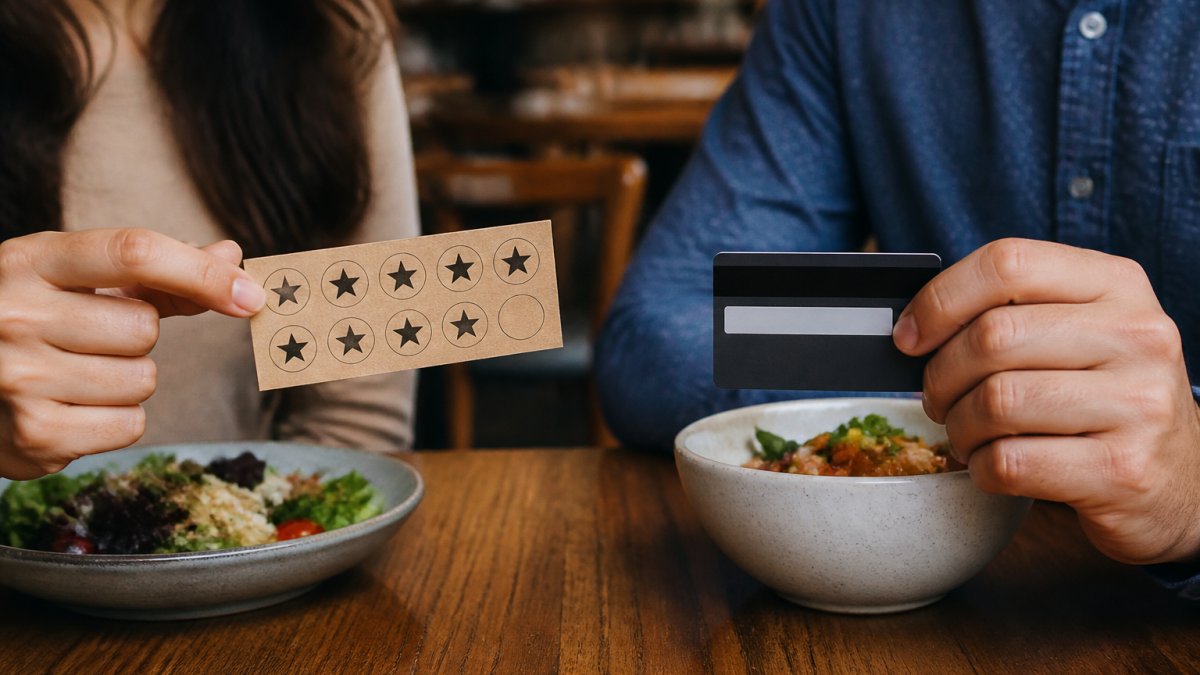
The Regulars Club works with independent owners tired of the feast-or-famine cycle. Diners pay a recurring fee and receive perks like monthly rewards, BOGO deals, or free food offers. For owners, this creates restaurant recurring revenue that smooths cash flow and reduces the anxiety of guessing what next month will bring.
Automated payments and digital transformation have made these programs easier to run than ever, most modern POS systems handle recurring billing without a dedicated IT team. The real question is whether the benefits outweigh the operational weight for your restaurant.
The Pros of Restaurant Recurring Revenue Models
The strongest argument for recurring revenue is predictable cash flow. When a member pays on the first of every month, you know your baseline revenue before the doors even open. This financial stability makes inventory management simpler and helps you staff appropriately during historically slow periods.

Beyond cash flow, recurring revenue directly improves customer lifetime value. A diner who commits to a monthly membership is far more valuable than one who visits every few months on a whim. Retention becomes your focus instead of chasing new faces through paid ads, shifting your customer acquisition cost math entirely.
There is also a psychological benefit: members feel invested in your success. That sense of ownership drives loyalty and turns routine visits into a ritual, with many members ordering more per visit because they already feel they are getting value.
The Cons and Hidden Costs of Recurring Revenue
Recurring revenue is not passive income, and treating it that way is the fastest path to failure. You must manage auto-renewal billing, handle failed payments, and respond to member service issues, a program without dedicated attention will quickly produce high churn.
Another hidden cost is the discount liability itself. If you offer a monthly free item, price it into your unit economics, a poorly engineered offer can erode margins faster than the fee replaces them. The value proposition must be generous enough to attract members but tight enough to protect your bottom line.
Subscription fatigue is real. Diners already manage memberships for streaming, gyms, and coffee, so your offer must feel distinctly valuable, if perks feel generic, members will cancel before the first renewal cycle completes.
Restaurant Subscription Program Examples That Work
The most successful restaurant subscription program examples focus on a single, irresistible anchor offer, like unlimited drip coffee or a monthly pizza plus a discount on additional orders. These work because the anchor is simple to understand and clearly delivers more value than the fee.
The Regulars Club removes the administrative headache: instead of building your own billing infrastructure, restaurants create offers and can add them directly into their existing POS as coupon buttons. Members show their active membership and the restaurant redeems the perk, no new hardware, no separate app, no complex billing software.
Tiered pricing works well for restaurants with distinct customer segments. A basic tier might offer a monthly discount, while a premium tier includes a free entree and priority seating, capturing value from both casual regulars and devoted fans.
Restaurant Loyalty Program Best Practices for Retention
Restaurant loyalty program best practices start with immediacy, the reward must arrive quickly after joining, not after ten visits. A first-visit perk creates the positive reinforcement that makes a member return while excitement is fresh.
Personalization separates programs that thrive from those that fade. Track order history and recognize birthdays or favorite items, a member who feels personally recognized develops a connection no discount alone can create. Hospitality has an edge here because you can deliver recognition face to face.
| Retention Tactic | How It Works | Why It Matters |
|---|---|---|
| Immediate welcome perk | Free item on first membership visit | Creates instant positive reinforcement |
| Monthly surprise reward | Rotating free or discounted item | Gives members a reason to return monthly |
| Personalized recognition | Staff greet members by name, remember orders | Builds emotional loyalty beyond transactions |
Churn management is about identifying at-risk members before they leave. Watch for those who stop redeeming perks or let auto-renewal fail, a quick outreach with a bonus offer can often recover a member quietly planning to cancel.
Menu Engineering and Pricing for Membership Tiers
A recurring revenue model changes your menu economics. The question becomes 'what item drives the most profitable member visit?' rather than 'what is the most profitable item?'
The Menu Engineering Matrix for Subscriptions
Traditional menu engineering categorizes items by popularity and profitability. For a subscription model, add a third dimension: redemption frequency. A high-margin item redeemed once a month has different value than a low-margin item driving a weekly visit.
Build membership perks around 'hero' items with three characteristics:
- High Gross Margin: Items with a food cost below 25% are ideal. For example, a pasta dish with a food cost of $2.50 sold at $16 has a gross margin of $13.50. A steak with a food cost of $12 sold at $35 has a gross margin of $23, but the absolute dollar risk is higher if the member redeems it weekly.
- High Craveability: The item must be something members genuinely look forward to. A signature burger or a seasonal dessert creates more excitement than a generic side salad.
- Complementary Upsell Potential: The perk should naturally pair with high-margin add-ons. A free appetizer that leads to an extra entree and a dessert is a better anchor than a free entree that fills the customer up.
Pricing Tiers: The Visit-Frequency Framework
A common framework structures tiers around visit frequency and average check size. The goal is to make the fee feel like a 'discount card' that pays for itself after one or two visits, while incremental spend covers your margin.
| Tier | Monthly Fee | Anchor Perk | Target Customer | Break-Even Logic |
|---|---|---|---|---|
| Starter | $10/month | 10% off all orders, no cap | The monthly visitor | Requires $100 in monthly spend to break even |
| Regular | $25/month | One free appetizer + 10% off | The bi-weekly visitor | Requires $150 in monthly spend to break even |
| VIP | $50/month | One free entree + priority seating | The weekly regular | Requires $250 in monthly spend to break even |
These are illustrative figures, your actual pricing must be based on your specific average check, food cost, and visit frequency data. The key principle: the anchor perk should be priced at roughly 1.5x to 2x the monthly fee in retail value, with a food cost under 50% of the fee.
Credit-Based Models: A Different Approach
Instead of a fixed-fee model, some restaurants use a credit-based system where members prepay for a block of credits (e.g., $100 for $120 in credits) usable on any item. This avoids the 'free item' liability and improves cash flow, but does not create the same psychological commitment as a distinct perk.
The most effective hybrid is a 'membership + credit' model: the monthly fee provides member-only pricing, and the member loads credits for payment. This combines subscription retention benefits with the predictable revenue of a stored-value system.
The 'Basket' Analysis
Your pricing strategy must account for the full member visit, not just the perk. Track average basket size of members versus non-members, if a member redeems a free appetizer but adds an entree, dessert, and drink, your margin is likely higher than a non-member ordering only an entree. The fee is effectively a marketing cost buying a higher share of wallet.
Members often spend more per visit than non-members because they feel they are 'already saving.' This incremental spend can make the model work. If members only redeem the perk and leave, the menu engineering may need adjustment, design the perk as a gateway, not the entire meal.
Tech Stack, Legal, and Churn Management Essentials
Most articles stop at the 'what', benefits and offer design. The 'how' is where programs succeed or fail, and this section covers the operational backbone separating a sustainable program from a costly experiment.
The Technology Stack: POS Integration and Payment Processing
The core requirement is not a new app or separate platform, it is a POS system that handles recurring billing natively or through a supported integration. Major providers like Toast, Square, and Clover have these features. Verify that your specific POS can:
- Automatically charge a stored payment method on a set schedule (e.g., the 1st of every month).
- Handle failed payment retries with a built-in dunning mechanism (e.g., automatically retrying a declined card after 3 and 7 days).
- Sync membership status to the POS terminal so that staff can see if a customer is an active member at the point of sale, without a separate lookup.
- Apply member-specific pricing or perks via coupon codes or menu modifiers that are tied to the membership SKU.
For a single-location independent restaurant, a dedicated subscription platform is often overkill, syncing data between a third-party system and your POS creates more problems than it solves. Use the POS's native recurring billing tools to keep member data, payment processing, and redemption tracking in one system.
For multi-location groups, a dedicated platform integrating with your POS provides more robust analytics and centralized management, but adds monthly software cost and staff training. Start with POS-native tools and graduate to a separate platform only when you have more than three locations or complex tiered offerings.
Legal and Tax Compliance: Auto-Renewal and Revenue Recognition
The legal landscape is governed by the FTC's Restore Online Shoppers' Confidence Act (ROSCA), which mandates clear disclosure of auto-renewal terms before obtaining billing information and a simple, cost-effective cancellation method (the FTC). Non-compliance can result in significant fines and legal action.
State laws can be even stricter. California's Automatic Renewal Law (Business and Professions Code Section 17600) requires clear and conspicuous notice of renewal terms and affirmative consent before charging (leginfo.legislature.ca.gov). Some states also require a 'cooling-off' period or specific cancellation methods, review your state's statutes before launching.
On the tax side, the critical issue is revenue recognition. Under GAAP, prepaid membership fees are recorded as deferred revenue and recognized as income over the service period, for a monthly membership, recognizing 1/12th of an annual fee each month (fasb.org). Consult a CPA who understands subscription accounting to set up the correct schedule.
Churn Management: Preventing Subscription Fatigue
Churn is a process, not a single event, members disengage before they cancel. The leading indicator is a drop in redemption frequency: if a member who used their perk monthly suddenly stops for 60 days, they are at high risk.
A practical churn-management workflow involves three stages:
- Identify: Use your POS data to flag members who have not redeemed a perk in the last 45 days.
- Engage: Send a personalized outreach via SMS or email. The message should not be a generic 'we miss you', it should reference their specific order history. For example, 'Your favorite short rib special is back this Thursday. We saved you a seat.'
- Win Back: If the member does not respond to the first outreach, offer a 'pause' option rather than a full cancellation. A member who pauses for a month is far easier to reactivate than one who goes through a formal cancellation process.
Finally, track your 'subscription fatigue' rate. If more than 5% of members cancel within the first 90 days, your value proposition is not strong enough. The fix is not a cheaper price, it is a more compelling anchor offer that feels indispensable.
Conclusion
Recurring revenue models give restaurants a path to financial stability, but they demand genuine operational commitment. Owners who succeed treat membership programs as a core part of their business, engineering menus around offers, tracking redemption data closely, and obsessing over retention.
Getting started does not require a massive technology investment. The Regulars Club helps independent restaurants add membership perks directly into the POS systems they already use, turning occasional customers into loyal regulars. Explore how a [restaurant membership(/how-to-price-restaurant-membership-tier) program | theregularclubmembers.com] can create a predictable revenue stream for your restaurant, and see how recurring revenue for restaurants works in practice.
Frequently Asked Questions
How does a recurring revenue model work for independent restaurants?
For an independent restaurant, a recurring revenue model typically works through a membership or subscription program where guests pay a monthly or annual fee in exchange for ongoing perks. This fee is collected automatically, providing a predictable cash flow separate from daily food sales. Members might receive a monthly free appetizer, a discount on every visit, or a BOGO entree offer. This model shifts the focus from one-time transactions to building an ongoing relationship with your most loyal customers.
What are the biggest risks of implementing a restaurant subscription program?
The biggest risks include giving away too much value and hurting your food cost margins, which directly impacts your profit. Managing the program also takes staff time, and if you don't keep the perks fresh, you could face subscription fatigue and a high churn rate. You must also handle tax compliance for collected membership fees. Using a dedicated platform can help manage billing and offers, but you must carefully track the financial impact to ensure the recurring revenue stream is profitable.
How do restaurant membership programs impact customer lifetime value?
Membership programs can significantly increase customer lifetime value by creating a recurring revenue stream and boosting your retention rate. Instead of relying on random visits, a member is incentivized to return regularly to use their perks, like a monthly reward. This increases visit frequency and average order value over time. Because the customer has already paid for the membership, they are more likely to choose your restaurant over a competitor to 'get their money's worth,' solidifying their loyalty and engagement.
How do you balance member perks with food cost margins?
The key is to design perks that feel valuable to the customer but are low-cost for you to provide. Instead of discounting your high-margin entrees, offer a free side, a complimentary dessert, or a unique off-menu item that costs you little to make. Focus on items with high perceived value but low actual cost. Carefully track the redemption rate of each perk to see which ones are driving visits without destroying your profit margins, and adjust your offerings based on that data.
The decision to adopt recurring revenue is a strategic one. It changes how you forecast revenue, how you price your menu, and how you interact with your most loyal customers. For restaurants ready to build deeper customer loyalty and smoother cash flow, The Regulars Club offers a straightforward way to launch a membership program without replacing your existing POS system. Get started with The Regulars Club and turn your regulars into a reliable recurring revenue stream.