 listicle
Why Traditional Restaurant Loyalty Fails
Table of Contents
- The Core Problem: Why Traditional Restaurant Loyalty Fails
- Operational Friction and Technical Silos
- Restaurant Loyalty Program Best Practices
- The Shift From Punch Cards to Digital Engagement
- Benefits of Membership-Based Restaurant Platforms
- Restaurant Loyalty Program ROI Metrics That Matter
- Privacy, Data Ethics, and Breakage: Hidden Costs of Loyalty
- Conclusion
- Frequently Asked Questions
Last Updated: September 3, 2026
The Core Problem: Why Traditional Restaurant Loyalty Fails
Traditional restaurant loyalty programs operate on outdated mechanics designed for punch cards. The fundamental issue isn't complexity, it's friction. A diner visits their favorite pizzeria three times a month but never completes a punch card. A café owner invests in a loyalty program only to watch it languish because the system doesn't integrate with their POS. Customer acquisition costs climb while redemption rates stagnate.
Restaurant owners recognize that customer retention costs far less than acquisition, yet they implement solutions that create more work, not less. When a loyalty program requires downloading an app, creating an account, remembering a membership number, and manually tracking points, it's already lost half its potential members.
This guide from The Regulars Club examines why traditional restaurant loyalty fails and what actually works instead. We'll cover operational bottlenecks, the shift from outdated mechanics to digital-first engagement, and the metrics that predict program success.
Operational Friction and Technical Silos
Most restaurant loyalty programs fail because they're built on fragmented systems that don't communicate. Your POS tracks transactions. Your loyalty platform tracks points. Your email system tracks engagement. Your inventory system tracks stock. None of them talk to each other, and the restaurant owner manually reconciles data across multiple dashboards.
When a customer earns points at the register but those points don't appear in the mobile app for two hours, trust erodes. When a restaurant owner can't easily see which customers are redeeming rewards, they can't optimize offers. When a diner's loyalty status doesn't sync across locations, the program feels broken.
For independent restaurants, the problem is compounded by cost and complexity. A dedicated loyalty platform might cost hundreds per month and require integration work with the POS. Many small operators decide the ROI isn't there and stick with punch cards.
The restaurants that solve this problem choose platforms designed for their constraints, systems that work alongside existing POS rather than replacing it, require no complex integrations, and give owners real-time visibility into program performance. Solutions like a Restaurant Membership Program let restaurants add loyalty offers directly into their POS as coupon buttons, with no integration and immediate tracking.
Restaurant Loyalty Program Best Practices
The most effective loyalty programs share core principles. They reduce friction for both customer and business. They align incentives so what's good for the customer is also profitable for the restaurant. They create genuine value.
Start with clarity of value proposition. A customer should understand exactly what they get within ten seconds. Not "earn points on every purchase", instead: "Get a free appetizer after five visits" or "Members save 15% every Tuesday." Specificity drives participation.
Second, design for omnichannel consistency. If a customer earns a reward at one location, it should work at all locations. A regional chain with five locations might have five different loyalty mechanics because each location manager implemented something different. The customer experience becomes inconsistent.
Third, automate redemption. The best loyalty incentives are those customers don't have to think about. Rewards that automatically apply at checkout beat those requiring a code. Offers triggered by purchase history beat those requiring the customer to remember to ask.
Fourth, segment your offers. A regular who visits weekly has different needs than someone who comes monthly. A customer ordering appetizers should see different rewards than one ordering entrées. Programs treating all members identically leave money on the table.
Finally, measure what matters. Track whether loyalty members spend more than non-members, visit more frequently, and justify the program's cost. Programs that succeed have owners obsessing over these numbers and adjusting offers based on data.
The Shift From Punch Cards to Digital Engagement
The transition from punch cards to digital loyalty represents more than a technology upgrade. It's a fundamental shift in how restaurants engage with customers.
Punch cards are simple but limited. They can be lost, damaged, or forgotten. They generate no data beyond a tally mark. There's no way to send targeted offers to customers who haven't visited in two months or recognize loyal customers with unexpected rewards.
Digital loyalty creates a persistent connection between restaurant and customer. When a customer's phone is with them everywhere, their loyalty membership is too. No forgotten cards. No degraded barcodes.
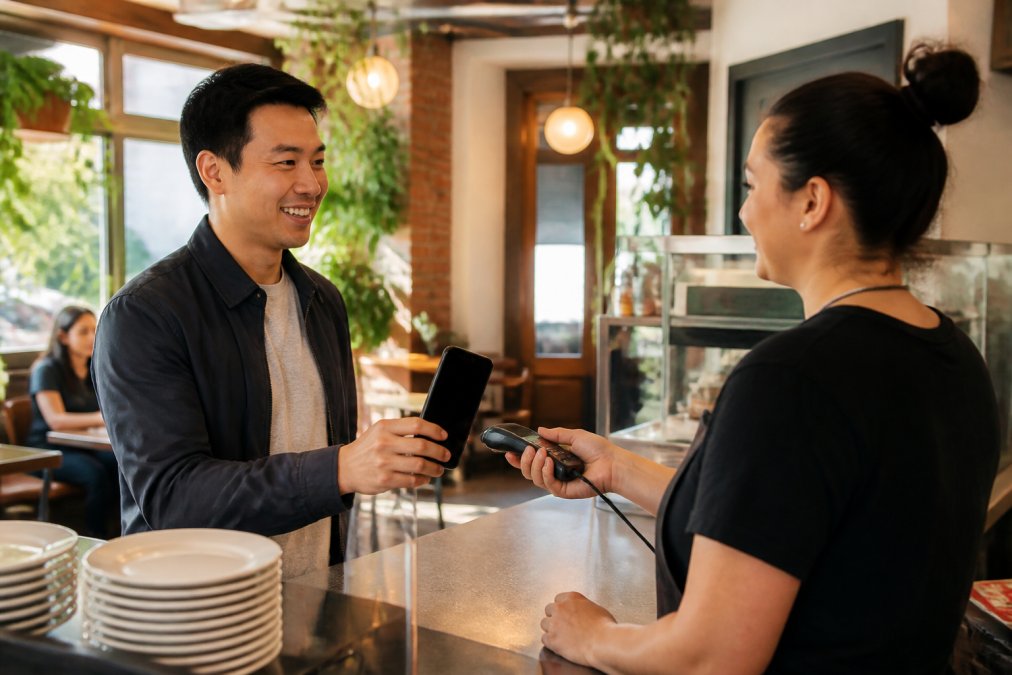
Digital enables real-time personalization. A restaurant can see a customer approaching their tenth visit and send a special offer. They can identify that a regular hasn't visited in six weeks and send a "we miss you" discount. They can track which menu items drive loyalty and create targeted promotions.
The data generated by digital loyalty is dramatically richer. Punch cards tell you when someone visited. Digital systems tell you what they ordered, how much they spent, whether they redeemed an offer, and how they heard about the promotion.
However, the shift requires less friction than the old system, not more. If digital loyalty requires downloading an app, creating a password, and remembering credentials, adoption will be lower than a punch card. The best digital programs make enrollment frictionless, a phone number at checkout, a text confirmation, and membership is active.
Benefits of Membership-Based Restaurant Platforms
Membership-based platforms represent evolution beyond traditional point-accumulation models. Rather than earning points toward future rewards, members pay a subscription fee and receive ongoing benefits.
For customers, membership creates clarity and predictability. A membership might include 15% off every visit, a free entrée on their birthday, and early access to new menu items. The value is transparent.
For restaurants, membership creates recurring revenue and deeper customer data. A member who pays monthly has already committed; they're more likely to visit and spend more. The recurring revenue stream provides cash flow predictability, critical for independent restaurants operating on thin margins. Members typically visit more frequently, spend more per visit, and try new offerings (the NIH).
Membership platforms also solve the omnichannel problem. When a customer is part of a membership program spanning multiple restaurants, they're incentivized to explore the entire network. This drives cross-restaurant traffic and increases customer lifetime value.
The Regulars Club operates on this membership model, connecting diners with local restaurants through exclusive member-only perks. Members get access to BOGO deals, free food offers, and discounts across a network of independent restaurants. Restaurants create their own offers and add them directly into their POS as coupon buttons, making redemption frictionless. A Restaurant Customer Loyalty Program built on membership creates both customer engagement and predictable Recurring Revenue for Restaurants.
Restaurant Loyalty Program ROI Metrics That Matter
Many restaurant owners measure loyalty program success by the wrong metrics. They track enrollment, points issued, or coupons printed. These are activity metrics, not outcome metrics.
The metrics that predict program success are behavioral and financial. Start with frequency increase. Compare visit frequency of loyalty members to non-members. If members visit 40% more often, the program is working (the CDC).
Second, measure average transaction value. Do loyalty members spend more per visit? A program driving frequency but not spending isn't as valuable as one doing both.
Third, track redemption rates. If 80% of issued rewards are redeemed, the program is engaging customers. Low redemption signals that your reward structure or offer timing is misaligned.
Fourth, calculate customer lifetime value by cohort. Loyalty-acquired customers typically have higher lifetime value because they're already engaged.
Fifth, measure churn rate. How many members remain active after three months? Six months? A year? High early churn indicates the value proposition wasn't clear or redemption friction is too high.
Finally, calculate program ROI directly. What did the program cost to build and operate? What incremental revenue did it generate? A well-designed loyalty program typically generates 2-3x its operational cost in incremental revenue within the first year (peer-reviewed research).
Privacy, Data Ethics, and Breakage: Hidden Costs of Loyalty
Traditional loyalty programs create a hidden financial problem called breakage. When a customer earns points but never redeems them, the restaurant keeps the revenue but the customer feels cheated. The financial gain is offset by customer relationship damage.
Data ethics is another hidden cost. Loyalty programs collect detailed behavioral data, what customers buy, when they visit, how much they spend, what promotions they respond to. Customers increasingly expect transparency about how their data is used and stored. A restaurant that collects loyalty data without protecting it risks reputation damage.
Privacy regulations also create compliance costs. Restaurants implementing loyalty programs should have clear data policies, secure storage, and mechanisms for customers to access or delete their data.
The best approach is transparency. Communicate clearly what data you're collecting, why, and how it will be used. Use data to improve customer experience through personalized offers and better inventory management, not to manipulate customers.
Breakage should be minimized through design. Points expiring after a reasonable timeframe (12 months or more) are fair. Offers that are easy to redeem reduce abandoned rewards. The customer should know the rules upfront.
Conclusion
Traditional restaurant loyalty fails because it was designed for a world that no longer exists. Punch cards made sense when customers didn't have phones and restaurants couldn't track behavior in real time. Today, the old model creates friction where there should be seamlessness.
The restaurants winning at loyalty have moved beyond points and cards to create genuine membership experiences. They've eliminated operational friction by choosing systems integrating with existing POS. They've personalized offers based on behavioral data. They've built omnichannel consistency. They measure success by frequency, spending, and lifetime value.
If you're ready to move beyond traditional loyalty and build something that drives customer retention and recurring revenue, The Regulars Club offers a membership-based platform designed for independent restaurants. Members get exclusive perks and BOGO deals across a network of local restaurants, while restaurant owners gain a simple way to increase loyalty without replacing their POS system. Start building your loyalty program today at theregularclubmembers.com.
Frequently Asked Questions
Q: Why do customers stop using traditional restaurant rewards?
A: Punch cards get lost or forgotten, points expire before redemption, and the rewards feel disconnected from the dining experience. Modern diners expect instant gratification, personalized offers based on their actual preferences, and frictionless redemption. When a loyalty program requires effort to track or feels like a chore, customers abandon it. Digital platforms that automatically track visits and deliver relevant rewards see significantly higher engagement than card-based systems.
Q: What are the most common reasons restaurant loyalty programs fail?
A: Programs fail when they lack personalization, create operational friction for staff and customers, fail to integrate with POS systems, and don't measure ROI. Many restaurants also struggle with data silos, customer information lives in multiple systems that don't communicate. Additionally, programs that rely on gamification without delivering real value, or that have high redemption barriers, experience rapid churn. Success requires alignment between what the restaurant can deliver and what customers actually want.
Q: How has the shift to digital changed restaurant loyalty expectations?
A: Diners now expect loyalty programs to be accessible via mobile wallet, offer real-time tracking of rewards, and deliver personalized recommendations based on their dining history. The shift from transactional (earn points, redeem later) to emotional loyalty (feeling valued and recognized) means restaurants must engage customers between visits through targeted messaging. Digital platforms enable omnichannel consistency, online ordering, in-restaurant visits, and group dining all contribute to the same rewards pool, which traditional punch cards cannot support.
Q: What metrics should restaurants track to measure loyalty program ROI?
A: Track customer acquisition cost versus lifetime value, redemption rates, average visit frequency before and after enrollment, churn rate, and incremental revenue per member. Monitor engagement metrics like email or push notification open rates and conversion rates. Calculate breakage (unredeemed rewards) as a percentage of total issued rewards. The strongest ROI indicator is whether members visit more frequently and spend more per visit than non-members. Without these metrics, you cannot determine whether your program is actually driving retention or just giving away margin.
This article was written using GrandRanker