 how-to
How to Leverage Customer Data for Restaurant Growth
Last Updated: October 22, 2026
Quick Summary
How to leverage customer data for restaurant growth starts with collecting purchase history, dining frequency, and preferences from your POS system and loyalty program, then analyzing this data to identify patterns in guest behavior. Use these insights to segment customers, personalize offers based on their actual preferences, and measure results through controlled tests to drive repeat visits and increase lifetime value.
- Collect core data from your POS system, email signups, and loyalty program to track purchase history and dining frequency.
- Analyze menu performance by pairing revenue with reorder rates to identify items that drive both profit and loyalty.
- Segment guests into new, returning, and loyal customers, then tailor offers and messaging to each group's needs.
- Personalize loyalty rewards and email campaigns based on individual purchase history and preferences to boost redemption rates.
- Test one change at a time with a holdout group to measure incremental lift and avoid crediting results to coincidence.
Table of Contents
- Why Customer Data Drives Restaurant Growth
- Step 1: Collect the Right Guest Data
- Restaurant Customer Data Analytics: From Raw Numbers to Insights
- Step 2: Restaurant Customer Segmentation for Targeted Action
- Step 3: Use Restaurant Loyalty Program Data to Drive Repeat Visits
- Step 4: Implement Restaurant Customer Retention Strategies
- Step 5: Measure Results and Optimize
- Common Mistakes to Avoid When Using Customer Data
- Frequently Asked Questions
Why Customer Data Drives Restaurant Growth
Understanding how to leverage customer data for restaurant growth is the foundation of sustainable success.
Research from Production and Operations Management researchers shows that restaurant analytics and data-driven operations are emerging as critical competitive advantages. Restaurants that track customer behavior see measurable improvements in repeat visits, average order value, and overall profitability.
At The Regulars Club, we've worked with hundreds of independent restaurants. The ones that use customer data effectively stop guessing and start acting on what guests actually want.
Customer data reveals patterns you can't see day to day: a guest who always orders the same entrée, a group that spends more on weekends, a regular who hasn't shown up in six weeks. Each signal is actionable.
Step 1: Collect the Right Guest Data
The first step in learning how to leverage customer data for restaurant growth is knowing what to collect.
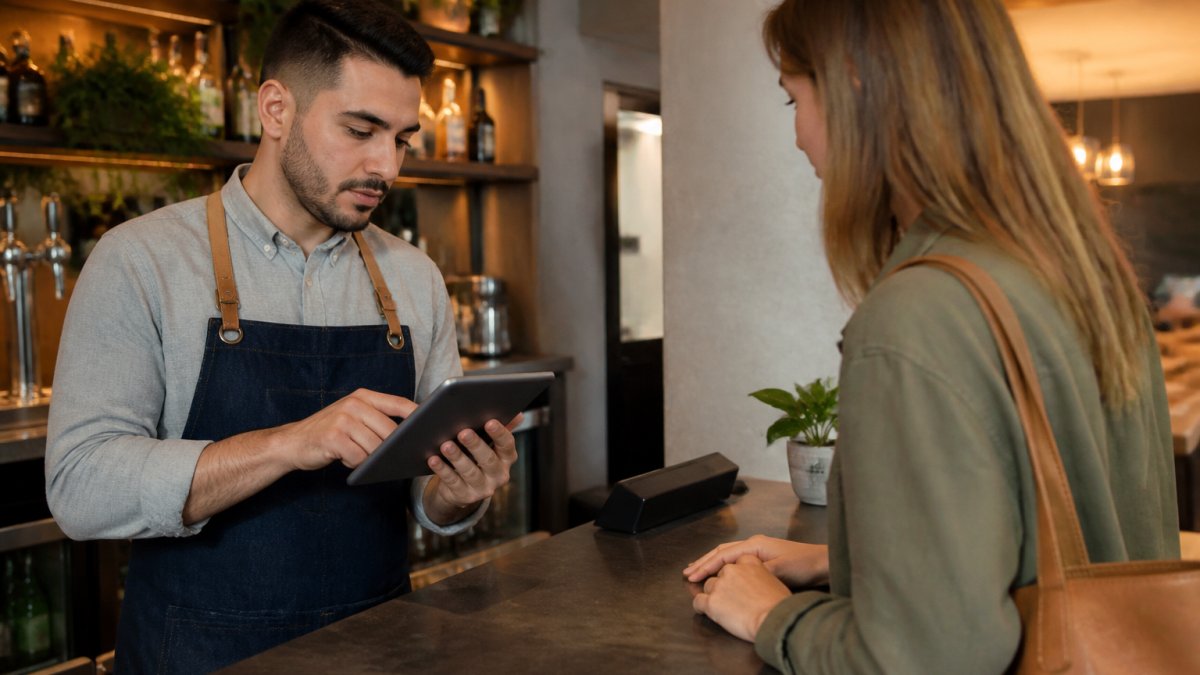
Data sources: POS systems, email signups, and loyalty programs
Your POS system already captures transaction history, payment method, time of visit, and items ordered automatically. The key is actually using it.
Email signups give you direct contact information and permission to communicate. A loyalty program ties purchases to individual guests and creates incentive to return.
What to capture: purchase history, dining frequency, and preferences
Focus on these core data points:
- Purchase history: What items does each guest order? Do they prefer appetizers, entrees, or desserts? What's their average spend per visit?
- Dining frequency: How often do they visit? Are visits increasing or decreasing?
- Preferences: Dietary restrictions, favorite dishes, preferred seating areas, time-of-day patterns.
- Contact information: Email and phone number for direct outreach.
Don't overcomplicate this. Start with what's easiest to capture: POS transaction data, emails from signups, and preferences from a simple loyalty program.
Restaurant Customer Data Analytics: From Raw Numbers to Insights
Raw data means nothing without analysis.
Start with a business question, not a dashboard
A common failure is opening a reporting tool and browsing.
Analyze sales trends and menu performance
Look at which menu items generate the most revenue, but pair revenue with margin and repeat-purchase behavior. A simple analysis might reveal:
- Your highest-margin appetizer is ordered by only 30% of guests
- Your most-ordered entree has low profitability
- An item is ordered once by many guests but rarely reordered, signaling trial without retention
Revenue per item tells you what sold; reorder rate tells you what keeps guests coming back. Menu placement, pricing, and promotions should be informed by both.
Move from snapshots to cohorts and lifetime value
A monthly revenue total hides the story.
Customer lifetime value (CLV) turns that into a planning number: average order value × visits per year × expected years of relationship.
Track visit frequency and average order value
Visit frequency shows loyalty; average order value shows spending patterns.
Watch for data-quality pitfalls
Dirty records cause bad decisions more often than missing data does:
- Duplicate profiles: the same guest signed up with two emails or phone numbers, inflating your count and splitting their history.
- Missing transactions: a POS outage, an untracked cash payment, or a third-party channel that doesn't feed back leaves gaps.
- Channel mismatches: online, delivery, and in-store tickets may not reconcile, so revenue and visit counts disagree.
- Misleading averages: a mean order value pulled up by a few large parties can hide that most guests spend far less. Check medians alongside averages.
A short monthly data-quality check protects every downstream insight.
Step 2: Restaurant Customer Segmentation for Targeted Action
Segmentation is where data becomes strategy. Treating all customers the same wastes marketing effort and leaves money on the table.
Separate new, returning, and loyal customers
This is the most important segmentation for restaurant growth. Each group needs a different approach.
- New customers: Make a good impression and encourage a second visit
- Returning customers: Build habit and increase frequency
- Loyal customers: Maximize lifetime value and turn them into advocates
A new customer needs a reason to come back, not a loyalty reward. A loyal customer needs recognition and exclusivity, not a discount.
Group guests by spending patterns and preferences
Go deeper with secondary segmentation:
- High-value guests who spend $50+ per visit
- Frequent visitors who come weekly or bi-weekly
- Occasion diners who visit only for special events
- Dietary-preference groups (vegetarian, gluten-free, etc.)
This lets you create hyper-targeted campaigns: a vegetarian guest gets plant-based recommendations, a high-value guest gets early access to new menu items or tasting events.
Step 3: Use Restaurant Loyalty Program Data to Drive Repeat Visits
A loyalty program is the engine that drives repeat visits. But only if you use the data it generates strategically.
Personalize offers based on purchase history
The most effective offers are specific. A guest who orders steak three times a month should see steak promotions, not vegetarian specials. Many restaurants miss this and send the same generic discount to everyone; personalization based on actual purchase data drives higher redemption and stronger loyalty.
Reward frequency with targeted promotions
Frequency-based rewards work: after five visits, offer a free appetizer; after ten, a free entree. The Restaurant Customer Loyalty Program tracks visits and triggers rewards automatically, making it easy to build habit without manual effort. Make rewards meaningful: a free appetizer from their favorite restaurant beats a random discount code.
Step 4: Implement Restaurant Customer Retention Strategies
Retention is cheaper than acquisition, and customer data tells you who's at risk of leaving.
Identify at-risk customers and re-engage them
An at-risk customer visited regularly but hasn't shown up recently. Once identified, a targeted re-engagement campaign works: a personal message from the owner, a special offer just for them, a reminder of why they loved your restaurant. Tools like the Restaurant Marketing & Customer Retention program help you stay connected with guests and bring lapsed customers back.
Build email campaigns around guest preferences
Email is the most cost-effective marketing channel, but generic emails get deleted. Segment your list by:
- Favorite dishes (menu updates featuring their favorites)
- Visit frequency (reminders at their typical visit interval)
- Spending patterns (offers matched to their typical spend)
- Dietary preferences (relevant menu recommendations)
A guest who visits every other week should get an email every 10 days; a monthly guest, every 3 weeks.
Step 5: Measure Results and Optimize
The final step is measurement, where most restaurants go wrong. Repeat visits rising after a campaign is not proof the campaign caused it; seasonality, a menu change, or a competitor closing can move the same numbers.
Establish baselines before you act
You cannot measure lift without a starting point. Capture these before launching anything:
| Metric | What it tells you | How to baseline it |
|---|---|---|
| Repeat visit rate | Whether guests come back | Share of guests with a second visit within 60 days |
| Visit frequency | Depth of habit | Average visits per guest per month |
| Average order value | Spending per visit | Median and mean ticket size |
| Cohort retention | Long-term health | Return rate by first-visit month at 30/60/90 days |
| Email engagement | Reach of outreach | Open and click rates by segment |
Use medians alongside averages so a few large parties do not distort the picture.
Design a simple test
A controlled test separates cause from coincidence:
- Pick one change. A win-back email, a new loyalty reward, or a menu repositioning.
- Define the outcome and window. For example, second visits within 30 days.
- Split the audience. Randomly assign eligible guests to a treatment group and a holdout group. Keep the holdout small but real.
- Hold everything else steady. No other campaigns to the same guests during the test window.
- Compare the groups. The difference in outcome is your incremental lift.
A holdout group is the single most useful habit here. Without it, you are guessing.
Attribute results honestly
Attribution means crediting an outcome to the action that caused it. Common pitfalls:
- Claiming all returners as campaign wins. Some would have returned anyway; the holdout tells you how many.
- Ignoring channel overlap. A guest who saw an email and a window sign may have been influenced by either or both.
- Measuring too early. Match the window to the behavior; 30 days may miss slow effects, 90 may absorb seasonality.
- Changing multiple things at once. Alter the offer, timing, and audience together and you can't tell which mattered.
Review on a cadence
Review operational metrics monthly and cohort and lifetime-value trends quarterly. At each review ask: What moved? Did the test explain it? What will we change next?
Common Mistakes to Avoid When Using Customer Data
Most restaurants make predictable mistakes when they start using customer data.
Treating all customers the same. Generic marketing wastes budget and alienates loyal guests.
Ignoring data quality. Garbage data leads to garbage decisions. Invest in clean data.
Setting it and forgetting it. Preferences and visit patterns shift.
Overwhelming guests with too many offers. More emails often backfires. Send targeted offers at the right time.
The restaurants that grow fastest aren't the ones with the fanciest technology.
Start small: collect purchase history, contact details, and basic preferences.
Frequently Asked Questions
What customer data should a restaurant collect?
Collect purchase history, visit frequency, dining times, menu preferences, dietary restrictions, and contact information. This data helps you understand guest behavior and tailor personalized offers. POS systems capture sales data automatically, while email signups and loyalty programs gather preference information directly from customers. Start with the essentials, transaction data and contact details, then expand as you build your analysis.
How can restaurants use customer data to increase repeat visits?
Use customer data to identify your most valuable guests and target them with personalized offers based on their purchase history. Send email campaigns featuring their favorite menu items or offer discounts on items they haven't tried. Loyalty programs reward repeat visits with points or exclusive perks. By recognizing returning customers and giving them reasons to come back, you increase visit frequency and build lasting relationships.
How do restaurants measure the success of customer data campaigns?
Track conversion rates (how many customers redeem offers), repeat visit frequency, average order value, and overall revenue growth. Compare metrics before and after launching data-driven campaigns. Monitor email open rates and click-through rates if you're using email marketing. Customer lifetime value, the total revenue a guest generates over time, shows the long-term impact of your retention efforts.
What's the difference between new and loyal customers in restaurant data?
New customers are first-time or infrequent visitors with limited purchase history. Loyal customers have multiple visits and higher spending patterns. Returning customers fall between, they've visited a few times but aren't yet regular patrons. Segmenting these groups lets you tailor strategies: attract new guests with introductory offers, reward loyal customers with exclusive perks, and re-engage returning customers to boost frequency.