 how-to
Integrating Digital Loyalty Programs With Cafe POS
Table of Contents
- How POS-Integrated Loyalty Programs Work
- Understanding Cafe POS Loyalty Integration Options
- Setting Up a Cafe Rewards Program From Scratch
- Customer Enrollment and Checkout Workflow
- Cafe Loyalty Program Examples and Real-World Structures
- Loyalty Program Integration Best Practices for Cafes
- Measuring Program Success and Optimizing Results
- Frequently Asked Questions
Last Updated: October 20, 2026
How POS-Integrated Loyalty Programs Work
Integrating digital loyalty programs with cafe POS connects your point-of-sale system directly to a customer rewards platform. When a customer makes a purchase, the transaction data flows automatically from your register to the loyalty system, earning them points or rewards without manual entry.
This integration eliminates friction. Your staff doesn't need to swipe cards or type numbers. Customers don't need to remember account details. The system handles everything in seconds.
Here's what happens in practice:
- Customer arrives and pays at checkout
- POS system captures the transaction amount
- Loyalty platform automatically credits points to their account
- Customer sees their updated balance on a screen or app
- Rewards accumulate toward discounts, free items, or special offers
The real power is data. Every transaction tells you who your regulars are, what they order, and how often they visit. You can use this information to create personalized promotions that actually drive repeat business.
Understanding Cafe POS Loyalty Integration Options
When you're ready to integrate digital loyalty programs with cafe POS systems, you face a key decision: build loyalty features into your existing POS, or connect a separate loyalty platform to it.
Built-In Loyalty Features vs. Third-Party Platforms
Built-in loyalty means your POS provider offers rewards functionality as part of their software. You manage everything within the same system you use for payments and inventory.
Built-in approaches work well if:
- Your POS provider offers the specific features you need
- You want simplicity and fewer integrations
- You're comfortable with limited customization
The tradeoff is flexibility. Most POS providers offer basic loyalty functionality, but they may lack advanced personalization or marketing tools.
Third-party loyalty platforms operate independently from your POS. They connect to your register via API or data sync, creating a separate system for rewards management.
Third-party platforms shine when:
- You need advanced segmentation and personalized promotions
- You want to offer loyalty across multiple locations
- Your POS doesn't have strong loyalty features built in
- You need omnichannel rewards (online ordering plus in-cafe)
The tradeoff is complexity. You're managing two systems instead of one, which means more setup and staff training.
For most independent cafes, a third-party loyalty platform offers more flexibility than built-in POS features. A Restaurant Customer Loyalty Program works alongside your existing POS without replacing it. You keep your current system and add powerful loyalty functionality on top.
Setting Up a Cafe Rewards Program From Scratch
Building a cafe loyalty program requires three core decisions: your reward structure, your point system, and how customers enroll.
Defining Your Reward Structure and Point System
Your reward structure determines what customers actually earn. Common cafe loyalty structures include:
Points-based rewards, Customers earn points per dollar spent and redeem them for discounts or free items. A typical structure might be 1 point per dollar, with 50 points earning a free drink.
Tiered rewards, Customers unlock higher benefits as they spend more. A cafe might offer 10% off at Silver level (after 10 visits) and 15% off at Gold (after 25 visits).
Punch cards, A simplified version where customers earn a reward after a set number of purchases (buy 9 coffees, get 1 free).
Free item rewards, Customers earn free products directly. After 5 visits, they get a free pastry. After 10 visits, a free drink.
The best structure for your cafe depends on your margins and customer behavior. A high-margin cafe can afford generous rewards. A lower-margin operation needs tighter math.
Connecting Your Loyalty Platform to Your POS System
Integrating your loyalty platform with cafe POS systems requires a technical connection. Here's what happens behind the scenes:
API integration is the most common method. Your loyalty platform connects directly to your POS via a secure API. Transaction data flows in real time, and loyalty credits update instantly.
Data sync is an alternative approach. Instead of real-time connection, your loyalty platform syncs with your POS at set intervals (every hour, for example). This works fine for most cafes but introduces slight delays.
Manual integration is the slowest option. Staff manually enter loyalty information at checkout. This rarely works well for high-volume cafes.
Most modern loyalty platforms use API integration. Your POS sends transaction details to the loyalty system, which instantly credits points and displays the customer's updated balance.
Before connecting, verify:
- Your POS system supports API connections
- Your loyalty platform supports your specific POS brand
- Your internet connection is reliable (downtime breaks the system)
- Staff can troubleshoot basic connection issues
Customer Enrollment and Checkout Workflow
Getting customers into your loyalty program is the hardest part. Enrollment friction kills adoption.
Your checkout workflow should be seamless. When a customer pays, they should have a clear opportunity to join with minimal effort.
Effective enrollment methods include:
- Phone number signup, Customer provides a phone number at checkout. The system creates an account instantly. They're enrolled before they leave.
- QR code signup, Display a QR code at checkout. Customers scan and join on their phone in 10 seconds.
- Email signup, Simple form asking for email address. Fast and captures data for marketing.
- Digital card, Customer receives a digital membership card on their phone. They show it at their next visit.
The key is removing barriers. Ask for the minimum information needed. Don't ask for birthdate, address, or preferences at signup, collect that later.
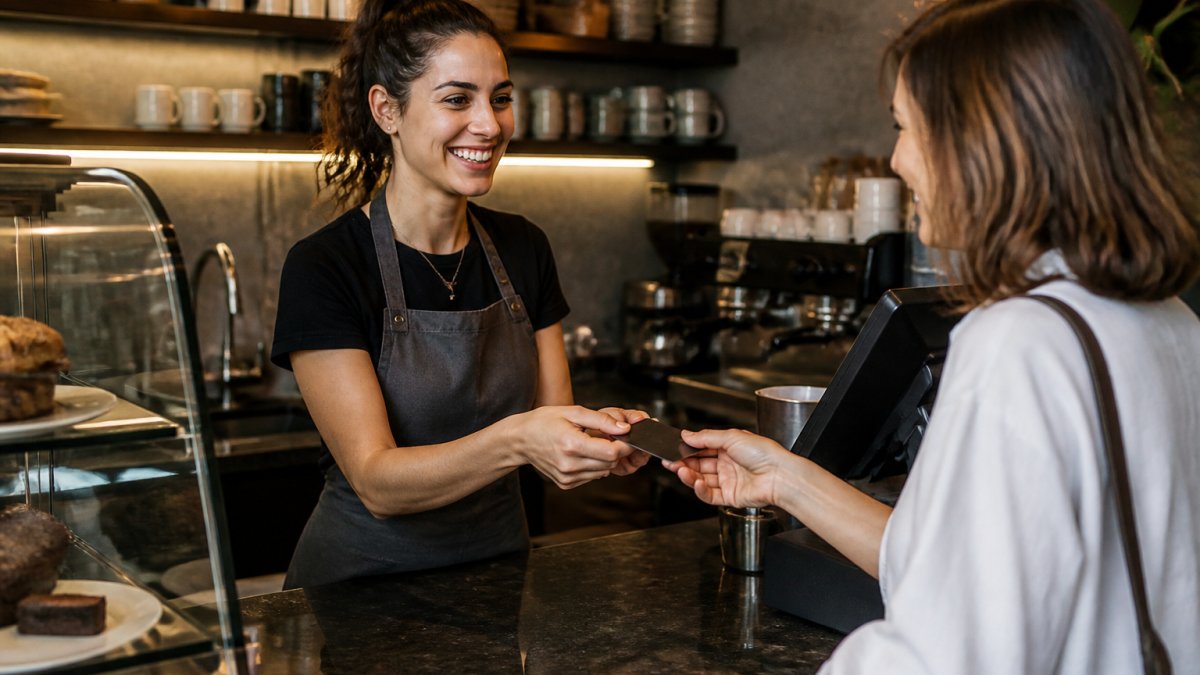
Your staff needs clear training on enrollment. They should mention the program to every customer and make signup feel effortless, not like a sales pitch.
Cafe Loyalty Program Examples and Real-World Structures
Real cafe loyalty programs show what works in practice.
Example 1: Points-based with tiered benefits
- Customers earn 1 point per dollar spent
- 25 points = free drink
- 50 points = free pastry
- After 100 lifetime points, customers unlock VIP status (double points on weekends)
This structure rewards both frequency and spending. VIP status creates an emotional connection.
Example 2: Visit-based rewards
- Every 5th visit earns a free item
- Every 10th visit earns a bonus reward (free drink + pastry)
- Encourages consistent return visits
This works well for cafes with strong daily traffic.
Example 3: Personalized offers based on purchase history
- Customer who always orders lattes gets a latte discount
- Customer who buys pastries gets a pastry offer
- Rewards match actual preferences
This approach uses transaction data to drive higher redemption rates.
A Restaurant Membership Program helps cafes build these structures without complex setup. You create your own offers and add them directly into your POS as coupon buttons for easy redemption.
Loyalty Program Integration Best Practices for Cafes
Staff Training and Workflow Testing
Your staff makes or breaks loyalty adoption. They're the frontline promoting enrollment and processing rewards.
Training should cover:
- How to explain the program in 10 seconds
- How to enroll customers at checkout
- How to process reward redemptions
- What to do when the system has issues
- How to answer common customer questions
Run test transactions before launch. Have staff practice enrollment, point earning, and redemption. Identify workflow problems while you're testing, not during your first busy morning.
Common workflow issues include:
- Customers not understanding how to use their rewards
- Staff forgetting to mention the program
- System delays during peak hours
- Confusion about which rewards are available
Test during your busiest time. If the system works smoothly when you're slammed, it will work fine during normal hours.
Data Privacy, Consent, and Payment Security
Customer loyalty data is sensitive. You're collecting purchase history, contact information, and potentially payment details.
Comply with privacy regulations:
- Obtain explicit consent before collecting customer data
- Clearly explain how you'll use their information
- Provide an easy way for customers to opt out
- Secure all customer data with encryption
- Never share customer data with third parties without permission
Payment security matters too. If your loyalty platform processes payments, ensure it meets Payment Card Industry (PCI) standards. Your POS should use secure, encrypted connections to your loyalty platform.
Be transparent about data use. If you plan to send marketing emails based on purchase history, tell customers upfront. If you're using their data to personalize offers, explain the benefit to them.
Measuring Program Success and Optimizing Results
Launch your program, then measure what actually works.
Track these metrics:
- Enrollment rate, What percentage of customers join? Target 30-50% within the first 90 days.
- Redemption rate, What percentage of earned rewards get redeemed? Higher is better (70%+ is strong).
- Repeat visit frequency, Do loyalty members visit more often than non-members? They should.
- Average transaction value, Do loyalty members spend more per visit? Track this closely.
- Customer retention, Are loyalty members sticking around longer? Compare retention rates between members and non-members.
After 60 days, review the data. Identify what's working and what isn't.
If enrollment is low, your checkout process needs work. Make signup faster or train staff to promote it more.
If redemption is low, your rewards might not appeal to customers. Adjust the structure or offer more attractive rewards.
If repeat visits aren't increasing, your program isn't creating enough incentive. Consider more generous rewards or personalized offers.
Optimization is ongoing. Small changes to your reward structure or enrollment process can significantly impact results.
Loyalty programs work best when they're simple to use and genuinely rewarding. The technical side matters, but the real success comes from understanding your customers and giving them reasons to return.
When integrating digital loyalty programs with cafe POS systems, start with clear goals. Do you want more repeat visits? Higher average transaction value? Better customer data? Your answer shapes every decision from reward structure to enrollment method.
A Restaurant Customer Loyalty Program helps independent cafes build loyalty without complexity. The platform connects to your existing POS, letting you create custom offers and track customer behavior. Your staff can add rewards directly into your register as coupon buttons. Get started and turn occasional customers into loyal regulars.
Frequently Asked Questions
How does a digital loyalty program connect to a cafe POS system?
A digital loyalty program integrates with your cafe POS through an API or direct connection that syncs customer transactions in real time. When a customer enrolls in your loyalty program and makes a purchase, the POS system records the transaction and automatically updates their points balance, purchase history, and reward eligibility. This connection eliminates manual entry and ensures accurate tracking of customer engagement and spending patterns across your cafe.
What are the best practices for cafe loyalty program integration?
Start by defining your reward structure and point system before integration. Test the workflow with staff and a small group of customers to catch issues early. Ensure your loyalty platform syncs transaction data securely with your POS. Train staff on enrollment procedures and redemption at checkout. Collect customer consent for data collection and marketing communications. Monitor key metrics like enrollment rate, redemption rate, and repeat visit frequency to measure program success and identify optimization opportunities.
Can customers earn and redeem rewards automatically at checkout?
Yes. When a POS-integrated loyalty program is set up correctly, customers earn points automatically each time they complete a transaction. Points are calculated instantly based on your cafe's rules (for example, 1 point per dollar spent). Customers can redeem accumulated points for rewards directly at checkout without additional steps. The POS system deducts the points and applies the discount or reward in real time, streamlining the customer experience.
What customer data does a POS-connected loyalty program collect?
A POS-connected loyalty program collects customer contact information (name, email, phone), purchase history (transaction dates, items purchased, amounts spent), visit frequency, and points balance. Some platforms also track customer preferences based on purchase patterns. This data helps cafes personalize promotions and engagement. Ensure your program complies with data privacy regulations by obtaining customer consent, providing clear privacy policies, and securing payment data according to industry standards.