 blog
blog
Thanx Alternative for Small Businesses: 2026 Guide
Table of Contents
- Why Small Businesses Look for a Thanx Alternative
- What Thanx Does Well and Where It Falls Short for Small Businesses
- Restaurant Loyalty Platforms for Small Businesses: A Comparison Table
- Small Business Customer Loyalty Programs: What to Look For
- Loyalty Programs for Independent Restaurants: Alternatives by Business Type
- Migration, Integrations, and Data Ownership When Switching Platforms
- Conclusion
- Frequently Asked Questions
Last Updated: October 9, 2026
Why Small Businesses Look for a Thanx Alternative
Search for a thanx alternative for small businesses and you will find plenty of enterprise-grade loyalty suites dressed up as starter tools. That mismatch is the whole story. Thanx built its reputation serving multi-location brands with dedicated marketing teams, and independent operators who signed up expecting a simple points program often found themselves managing a system designed for someone else's scale.
This guide from The Regulars Club breaks down where Thanx stops fitting a small restaurant, what to look for instead, and how to switch without losing the customer data you have already collected.
The core tension is simple: loyalty platforms price and package for the size of the business they want, not the size of the business you run. A single-location pizzeria and a 40-unit chain need different things from the same category of software.
What Thanx Does Well and Where It Falls Short for Small Businesses
Thanx handles loyalty mechanics competently for large operators. The problem is not quality; it is fit. Three friction points come up again and again when independent owners evaluate the platform.
Enterprise Pricing and Contracts
Pricing for platforms in this category is typically quoted, not published. That structure works for a chain that can amortize the cost across dozens of stores. A single independent restaurant cannot, and the return on a loyalty program depends heavily on how many repeat visits it actually generates.
Setup Complexity and POS Requirements
Thanx is built to connect deeply with point-of-sale systems, which is a strength at scale and a hurdle at one location. Integration projects take time, often require coordination with your POS provider, and can demand staff training before a single reward goes out the door.
For an owner who is also the closing manager, that setup burden is the real cost.
Restaurant Loyalty Platforms for Small Businesses: A Comparison Table
Most ranking pages for this query either list enterprise suites that a single-location operator cannot justify or recycle the same generic advice. This shortlist is built around one question: which platforms can an independent restaurant actually launch and maintain without a marketing team? The table below compares the alternatives small businesses most often weigh against Thanx, organized by how they fit an independent operation rather than by feature count.
| Platform | How It Works | Setup Effort | Cost Structure | Best For | Main Trade-off |
|---|---|---|---|---|---|
| The Regulars Club | Membership layer that sits on top of your existing POS; perks applied as coupon buttons | Low, no POS replacement | Membership-based | Independent restaurants wanting a fast launch and member discounts | |
| Square Loyalty | Native loyalty tied to Square POS; points or visit-based rewards | Low if you already run Square | Monthly per-location subscription plus per-transaction fees above a monthly threshold | Businesses already on Square | Locked to the Square ecosystem; limited if you use another POS |
| Toast Loyalty | Built into the Toast POS; points, rewards, and email campaigns | Medium, requires Toast POS | Bundled into Toast subscription tiers | Restaurants already on Toast | Only works if Toast is your POS |
| Loyalzoo | Standalone loyalty app that connects to many POS systems | Low to medium | Monthly subscription by location | Small businesses on mixed POS setups | Fewer deep reporting features |
| Punchh | Enterprise loyalty with AI-driven personalization | High, integration project | Quoted, scales with locations and volume | Multi-location chains | Cost and complexity for one site |
| Paper punch card | Physical card stamped per visit | None | Minimal | Testing whether loyalty works at all | No customer data captured |
Two patterns stand out. First, the platforms with the lowest setup effort are the ones that layer on top of the POS you already run rather than replacing it.
The right choice depends less on feature count and more on how much operational overhead it adds. For most independents, the winning move is a platform that makes the existing POS smarter, not one that requires ripping it out.
Small Business Customer Loyalty Programs: What to Look For
Small business customer loyalty programs succeed or fail on a handful of mechanics. Competitors tend to list features without explaining how they interact, so here is what actually matters when you evaluate a platform, and how each mechanic plays out in a single-location restaurant.

Loyalty Mechanics: Points, Visits, Tiers, and Referrals
- Points-based rewards award a set number of points per dollar spent. They work well when check averages vary widely, because the reward scales with spend. The downside is that points balances can feel abstract to guests who do not track them.
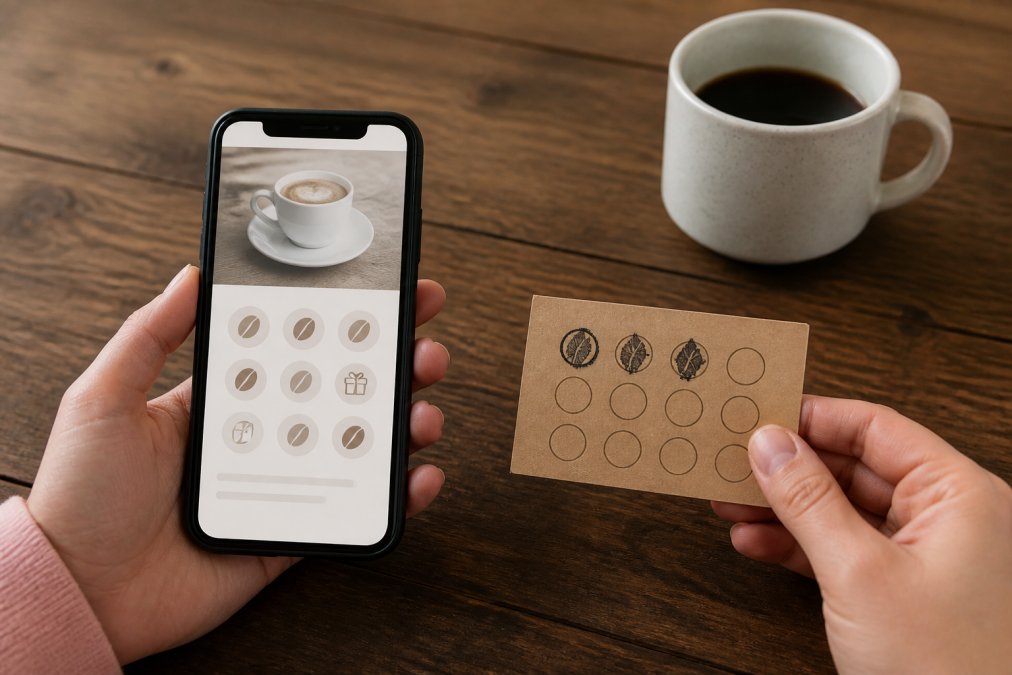
- Visit-based rewards award a stamp or credit per visit. They are the simplest to explain and the easiest to redeem, which makes them a strong fit for high-frequency, lower-ticket businesses like pizzerias and cafes.
- Tiered programs unlock better perks as members hit spending or visit thresholds. Tiers drive repeat behavior, but they add complexity and only pay off if you have enough regulars to populate the upper tiers.
- Referral rewards give an existing member a perk for bringing in a new customer. They are one of the cheapest acquisition channels a small business has, but they only work if the reward is easy to share and easy to redeem.
- Gift cards are often overlooked as a loyalty tool. They bring in revenue up front and introduce new customers who may become members.
Most independents get the best results by starting with one mechanic, usually visit-based or a standing member discount, and adding tiers or referrals only after the base program is running.
Redemption Rate and Repeat Visit Mechanics
A reward nobody claims is worse than no reward at all, because it signals the program is not worth engaging with. Look for mechanics that make redemption effortless at the moment of payment. At The Regulars Club, restaurants add member discounts directly into their POS as coupon buttons, so staff apply a perk the same way they apply any other discount. No separate app to open, no code to type in.
The deciding factor is friction at checkout. If redeeming a reward requires the guest to open an app, find a code, and hand a phone to a server who then has to look up how to apply it, redemption rates drop. Visit-based rewards, points-based rewards, and simple BOGO offers all work, but the one that gets redeemed is the one that takes the fewest steps.
Customer Data Collection and Segmentation
Your customer profiles and purchase history are the asset the program exists to build. A platform should capture who your members are, how often they visit, and what they order, and it should let you act on that data, for example, sending a targeted offer to members who have not visited in 30 days, or rewarding your top spenders with something they actually order.
Before you commit, confirm three things in writing: that you can export your customer list at any time, that you own the data rather than the vendor, and that the platform connects to the marketing tools you already use. Data you cannot export is data you do not control.
Total Cost of Ownership Beyond the Monthly Fee
The subscription is rarely the whole bill. Add integration fees, hardware, staff training time, and the cost of the promotions themselves.
Measurable Outcomes to Track
Once the program is live, judge it on repeat visits, redemption rate, and retention, not on signups alone. A common pattern is that a program looks successful because membership grows, while the metric that actually matters is whether members come back more often than non-members. Track repeat visit frequency, redemption rate, and the share of revenue from members, and compare them against your pre-program baseline. If those numbers are not moving after a few months, the mechanics, not the software, are usually the problem.
Loyalty Programs for Independent Restaurants: Alternatives by Business Type
Loyalty programs for independent restaurants should match the rhythm of the business. A pizzeria with a heavy takeout volume needs different mechanics than a full-service dining room where the check average is higher and the visit is longer.
Pizzerias and Quick-Service Spots
High-frequency, lower-ticket businesses win with visit-based rewards. Every fifth visit earns a free item, or a standing member discount applies to every order. The goal is frequency, so the reward should be easy to reach.
Bars, Cafes, and Full-Service Dining Rooms
Lower-frequency, higher-ticket venues do better with perks that feel like recognition: a member-only offer on a slower weeknight, a complimentary item with a meal, or a monthly reward for regulars. These businesses are building a relationship, not a punch card.
Both types share one requirement: the perk has to be redeemable by simply showing an active membership, without extra steps for the guest or the server.
Migration, Integrations, and Data Ownership When Switching Platforms
Switching platforms is less risky than most owners assume, provided you handle three things in order. First, export your customer list and confirm you own it, not the vendor. Second, check that the new platform works with your current POS rather than requiring a replacement. Third, run both programs in parallel for a short window so regulars are not left without a reward mid-transition.
Data ownership deserves a hard look. Your customer profiles and purchase history are the asset the program exists to build. Confirm in writing that you can export them at any time.
Conclusion
The hardest part of loyalty for an independent restaurant is not picking software. It is launching something simple enough that you will actually maintain it, and rewarding enough that customers come back for it. Most small operators do not need an enterprise loyalty suite; they need a membership layer that works with the POS already on the counter.
That is exactly what The Regulars Club is built for. Members get exclusive perks, discounts, free food offers, and monthly rewards simply by showing their active membership, and restaurants create their own offers and add them to their POS as coupon buttons. There is no POS replacement and no complicated integration project.
Get started with The Regulars Club and turn occasional customers into regulars.
Frequently Asked Questions
Who uses Thanx, and is it built for small businesses?
Thanx is typically used by mid-size and larger restaurant groups and retail chains that can handle a multi-month onboarding process and enterprise-level contracts. Small businesses with one or two locations often find the setup and cost structure a poor fit. If you run an independent restaurant, look for a platform that works with your existing POS and lets you launch offers quickly without a lengthy integration project.
What are the best Thanx alternatives for small businesses?
The best Thanx alternative for a small business depends on your setup. Membership-based platforms like The Regulars Club work well for restaurants that want to add perks without replacing their POS. Points-based tools suit cafes with high transaction volume. Visit-based punch cards fit bars and pizzerias. Compare each option on redemption rate, integration requirements, and total cost of ownership before deciding.
What should a small restaurant look for in a loyalty platform?
Prioritize four things: ease of use for staff during a rush, compatibility with your existing POS, transparent pricing with no surprise fees, and a redemption mechanic that actually drives repeat visits. Ask vendors how they measure retention rate and purchase frequency, and request a demo of the redemption flow. A platform that takes more than a few seconds to redeem at the counter will get skipped by staff.
Can small restaurants use a loyalty program without replacing their existing systems?
Yes. Several loyalty platforms are designed to layer on top of your current POS rather than replace it. The Regulars Club, for example, lets restaurants add member discounts as coupon buttons directly in their POS for easy redemption. This approach keeps your existing workflow intact and avoids the cost and downtime of a full system migration.