 ultimate-guide
Exclusive Membership Perks for Customer Loyalty
Table of Contents
- What Exclusive Membership Perks Actually Do for Customer Loyalty
- Examples of Successful Restaurant Membership Perks
- Why Exclusivity Matters in Building Brand Loyalty
- Best Practices for Restaurant Loyalty Engagement
- How to Choose a Membership Program That Delivers Real Value
- Frequently Asked Questions
Last Updated: September 18, 2026
What Exclusive Membership Perks Actually Do for Customer Loyalty
Exclusive membership perks transform casual diners into regulars. They create a sense of belonging and recognition that keeps customers coming back, not because they have to, but because they feel valued.
The most successful restaurant loyalty programs build community. When staff know a diner's name and usual order, that customer stops comparing prices and starts defending the restaurant to friends.
Exclusivity matters: when someone feels like an insider with benefits others lack, they develop stronger emotional ties to a brand. A member-only discount, early access to a new menu, or a birthday item acknowledges that they matter.
Loyal customers spend more, visit more frequently, bring friends, and resist switching when competitors arrive. Exclusive membership perks are foundational to sustainable growth.
Harvard Business Review's research on customer lifetime value shows that increasing customer retention by just 5% can boost profits by 25% to 95%. That's not a small margin. That's the difference between a restaurant that struggles and one that thrives.
Examples of Successful Restaurant Membership Perks
Restaurant membership programs succeed when they offer tangible, immediate value. Generic points that take months to redeem don't work. The most effective exclusive membership perks fall into distinct categories, each addressing a different customer motivation.
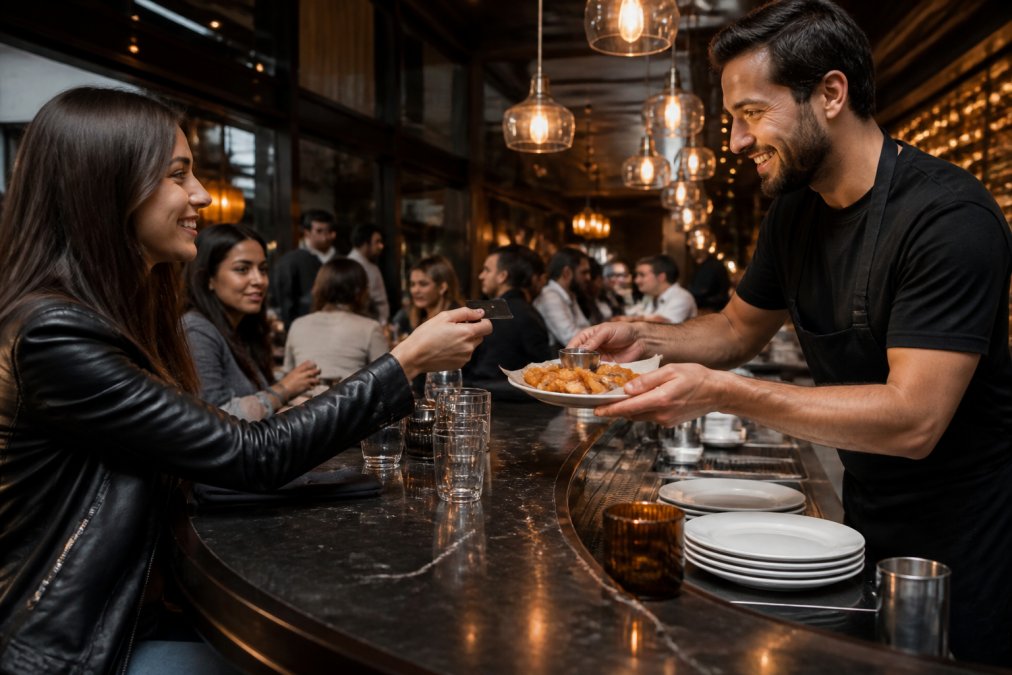
Member-Only Discounts and Special Pricing
Discounts work when they feel exclusive and substantial. A 10% discount on every purchase adds up for regular diners. The key is clear positioning: "$5 off your next visit" or "20% off appetizers on Tuesdays" drives redemption far higher than complicated tiered systems.
Some restaurants layer discounts by tier: basic members get 10% off, premium members get 15% plus birthday appetizers.
The perk fatigue trap: When everything is discounted, nothing feels exclusive. The most successful programs limit discounts to specific items, days, or tiers, preserving the perception that the benefit is genuinely special.
Free Items and BOGO Offers
Free items drive traffic and create memorable moments. A complimentary dessert on a member's birthday turns an ordinary visit into a celebration. Members remember the emotional moment of receiving a gift far more than they remember a percentage discount.
The best free-item perks are strategic: offer free items on slower nights or lower-margin dishes. A complimentary side or dessert feels generous while controlling margin impact.
Implementation consideration: Free items must be redeemable without friction. The best systems integrate the perk directly into the POS so staff are prompted to offer it automatically.
Early Access to New Menus and Seasonal Items
Early access to new menus or seasonal items makes members feel like insiders and drives extra visits. This perk costs nothing beyond communication effort yet members perceive it as highly valuable.
Points and Tiered Reward Systems
Points-based systems work when redemption is simple and achievable. Tiered structures create progression: silver members earn 1 point per dollar, gold members earn 1.5 points plus exclusive perks.
The trap is making points too hard to redeem. The redemption threshold needs to feel achievable within 2-3 months of regular visits, or customers lose motivation.
The complexity trade-off: Simpler, single-tier point systems with faster redemption often drive higher engagement than complex tiered systems.
Why Exclusivity Matters in Building Brand Loyalty
Exclusivity satisfies a fundamental human need to belong. Behavioral research shows people value things more highly when access is limited. A discount available only to members feels like a privilege.
Exclusivity changes how customers perceive the restaurant. A member sees a place that recognizes them and values their loyalty. A member visits, gets recognized by name, receives a special perk, and leaves feeling celebrated, far more likely to return and recommend.
McKinsey's research on customer advocacy demonstrates that customers who feel emotionally connected to a brand are significantly more likely to recommend it. Exclusive membership perks create that emotional connection by making customers feel like insiders.
Restaurants with strong membership programs see higher visit frequency, larger average checks, and lower churn rates. Members become the revenue foundation.
Best Practices for Restaurant Loyalty Engagement
Successful membership programs require ongoing attention. Communication, redemption ease, and personalization determine whether a program thrives.
Personalization and Customer Segmentation
Effective segmentation starts with data. Track what each member orders, when they visit, and how much they spend. Send lunch specials to midday visitors, wine pairings to wine drinkers, kids' discounts to families. Relevant offers drive redemption far higher than generic ones.
The technical requirement: Your membership platform must integrate directly with your POS system and capture transaction-level data. The Regulars Club provides a simple way to increase customer loyalty, repeat visits, and recurring revenue without replacing their existing POS system. Restaurants create their own offers and can add Regulars Club discounts directly into their POS as coupon buttons for easy redemption.
Omnichannel Integration and Easy Redemption
Redemption must be seamless. The best programs integrate across channels: a member receives an offer via email, opens it on their phone, and the discount automatically applies at payment. Effective programs meet customers where they are, email, SMS, app, or in-restaurant signage.
Implementation architecture: Your membership platform, POS system, and communication channels must integrate in real time. Offers must be immediately available in the POS, redemptions recorded to prevent double-redemption, and members should see their balance and history in the app.
Measuring Engagement and Program Health
Many restaurants launch loyalty programs but never measure whether they're working. Without measurement, you can't tell if perks drive retention or if members simply take discounts.
Key metrics to track include:
Redemption rate: If only 5% of offers are redeemed, your offers aren't resonating or redemption is too complicated.
Visit frequency: Compare average visit frequency in the first 90 days versus the second 90 days. If frequency isn't increasing, the program isn't working.
Average check size: Are members spending more per visit? Understanding this helps you adjust your perk mix.
Churn rate: What percentage of members become inactive? High churn signals perks aren't creating lasting connection or communication has dropped off.
Lifetime value: Compare total spending of members versus non-members. This is the ultimate measure of program success.
Successful restaurants review metrics monthly and adjust perks, communication frequency, and targeting based on data.
Avoiding the vanity metric trap: A program with 2,000 highly active members who visit monthly and spend 40% more is more successful than 10,000 inactive members. Focus on engagement and spending, not headcount.
How to Choose a Membership Program That Delivers Real Value
For restaurant owners evaluating membership platforms, consider: integration with existing POS, ease of offer creation, member experience simplicity, and transparent business model.
The Regulars Club connects diners with local restaurants through a straightforward membership model. Members receive exclusive membership perks by showing their active membership. For restaurant owners, the platform increases customer loyalty without replacing existing POS systems, with discounts added directly as coupon buttons.
A strong membership program should feel like a natural extension of your restaurant, make life easier for staff, and deliver genuine value members notice and appreciate.
Building customer loyalty through exclusive membership perks isn't complicated in theory, but execution matters enormously. The restaurants that succeed are those that recognize their regular customers, make redemption effortless, and deliver perks that feel genuinely valuable. If you're looking for a platform that makes this process straightforward while integrating seamlessly with your existing operations, The Regulars Club's restaurant membership program simplifies the setup and helps you turn casual diners into loyal regulars. The right program becomes the foundation of sustainable customer retention and recurring revenue growth.
Frequently Asked Questions
What defines an exclusive membership perk in a loyalty program?
An exclusive membership perk is a benefit available only to members that non-members cannot access. This includes member-only discounts, free items, early access to new menu items, priority service, or points-based rewards. These perks create tangible value that justifies membership and encourages repeat visits. The best exclusive membership perks are specific enough to feel valuable but easy enough to redeem without friction.
How do exclusive perks influence long-term customer loyalty?
Exclusive membership perks create psychological commitment and increase customer lifetime value by making members feel recognized and valued. When customers receive special treatment unavailable to others, they're more likely to return and spend more. Studies show that members who regularly redeem perks visit 2-3 times more frequently than non-members. The consistency of meaningful perks reinforces the decision to remain a member and recommend the restaurant to others.
What types of rewards do customers value most in loyalty programs?
Diners prioritize rewards they can use immediately or frequently: discounts on favorite items, free appetizers or drinks, and points toward free meals. Early access to new menu items and limited-edition offerings appeal to food enthusiasts. VIP perks like priority seating or exclusive events attract customers seeking personalized recognition. Tiered systems that unlock better rewards as spending increases motivate higher purchase frequency and stronger engagement.
How can restaurants use exclusive perks to increase repeat visits?
Restaurants should design perks that align with customer dining habits and preferences. Personalized offers based on past orders drive higher redemption rates. Rotating seasonal perks keep the program fresh and give members reasons to return monthly. Tiered structures that reward consistent patrons with increasingly valuable benefits create an incentive to visit more frequently. Easy redemption through existing POS systems removes barriers and increases actual perk usage, which directly correlates with repeat visits.