 ultimate-guide
The Restaurant Owner's Guide to Improving Customer Lifetime Value
Last Updated: October 30, 2026
Quick Summary
Customer lifetime value is the total profit a restaurant can expect from a single guest across every visit, minus the cost of acquiring and serving them. Calculate it by multiplying average order value, visits per year, guest lifespan and contribution margin, then use that figure to guide retention spending.
- Roughly 7% of a restaurant's guests can account for up to half of its total orders.
- A guest visiting 14 times a year for three years generates $296 in profit at a $32 average order value.
- Build five-field guest profiles covering last visit date, 90-day visits, average transaction value, daypart and menu preferences.
- Reward frequency rather than spend, since a free appetizer on the fifth visit costs less than a blanket discount.
- Measure loyalty programs by redemption rate, visit frequency lift and incremental profit per member, not sign-ups.
Table of Contents
- What Customer Lifetime Value Means for a Restaurant
- How to Calculate Restaurant Customer Lifetime Value
- Why Lifetime Value Drives Restaurant Profitability
- Building Restaurant Customer Profiles That Guide Retention
- Restaurant Customer Retention Strategies That Raise Visit Frequency
- Restaurant Loyalty Program Benefits and How to Measure Them
- Start Turning Occasional Diners into Regulars
- Frequently Asked Questions
What Customer Lifetime Value Means for a Restaurant
Customer lifetime value is the total profit a restaurant can expect from a single guest across every visit they make, minus the cost of acquiring and serving them.
Here's the number that should reframe how you think about your guest list: according to the Toast and Resy Regulars Report, cited in a 2026 analysis of restaurant customer lifetime value, roughly 7% of a restaurant's guests can account for up to half of its total orders.
Below, we'll show you how to calculate restaurant customer lifetime value with a worked example, then walk through the retention, loyalty, and personalization tactics that raise it.
How to Calculate Restaurant Customer Lifetime Value
A common restaurant CLV formula multiplies average order value, visits per year, average guest lifespan in years, and profit margin. That final multiplier is the one most guides skip, and skipping it is how operators end up overpaying to acquire guests who never turn a profit.
Define the Inputs Before You Multiply
Four inputs drive the number, and each has a restaurant-specific trap:
- Average order value (AOV): Use fully loaded tickets (food, beverage, tax-excluded, tip-excluded) over a defined window, 90 days is a common choice, not a single month that a holiday or promotion distorts.
- Visit frequency: Count distinct visits per guest per year, not line items. A guest who orders twice in one sitting is one visit.
- Guest lifespan: Use observed tenure from your own data where possible. If you have less than 12 months of history, use a conservative assumption (two to three years for full-service, shorter for quick-service) and label it as an assumption.
A Worked Example Using Average Order Value and Visit Frequency
Take a neighborhood pizzeria with a $32 average order value and a 22% contribution margin. A guest who visits 14 times a year for three years generates $1,344 in revenue and $296 in profit.
Now run the same math on a fast-casual concept: $14 AOV, 30% contribution margin, 30 visits a year, two-year lifespan. Revenue is $840; profit is $252.
That gap is the entire argument for retention spending. For a deeper walkthrough of the math applied to subscription and membership models, see our guide on how to Calculate Customer Lifetime Value for Restaurant Subscriptions.
Profit-Adjusted Lifetime Value and Acquisition Economics
Profit-adjusted CLV changes your acquisition math. If a first-time guest is worth $422 in lifetime profit, a $15 discount to bring them back a second time is cheap. If that guest is worth $60, the same offer is a loss.
The acquisition side is where most operators leave money on the table. Compare contribution-margin CLV to customer acquisition cost (CAC), total spend on the channel divided by new guests acquired, and to payback period, the number of visits (or months) it takes for a new guest's cumulative contribution margin to cover CAC.
Measure by Cohort, Not by Average
A single blended CLV hides the guests who actually drive profit.
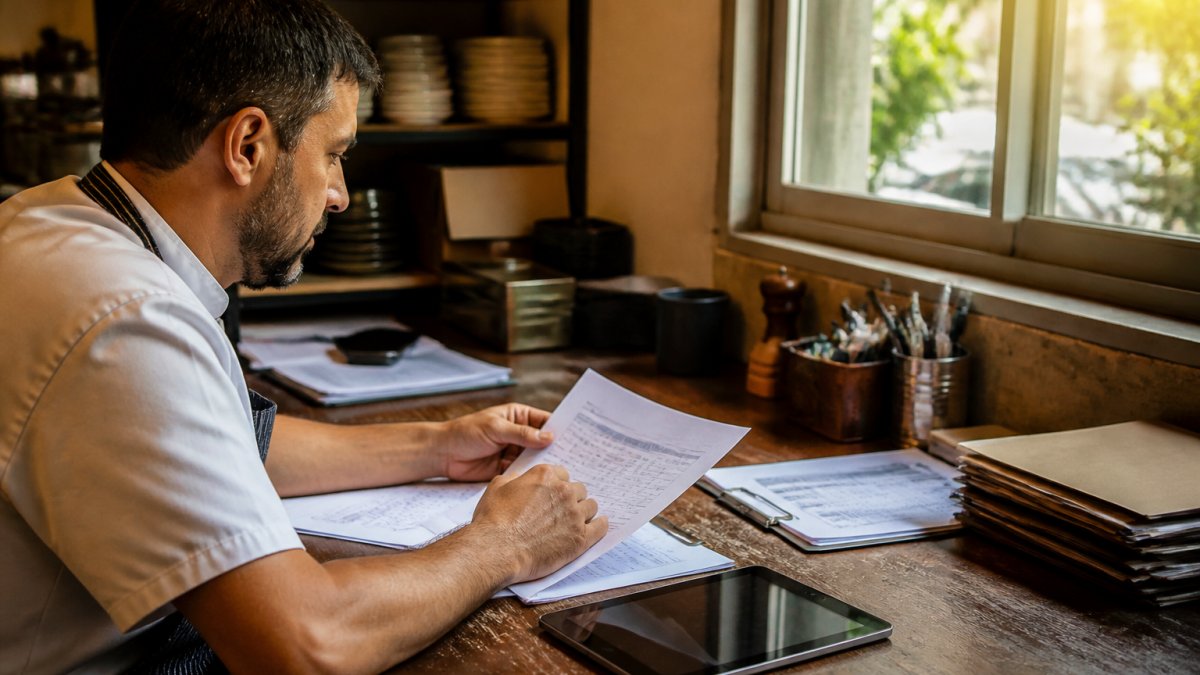
The worked examples in the article show how average order value, visit frequency, lifespan and margin combine into very different profit totals.
| Scenario | Inputs | Revenue | Profit |
|---|---|---|---|
| Neighborhood pizzeria, occasional guest | $32 AOV, 22% margin, 14 visits a year, three years | $1,344 | $296 |
| Neighborhood pizzeria, monthly guest | $32 AOV, 22% margin, monthly visits, five years | $1,920 | $422 |
| Fast-casual concept | $14 AOV, 30% margin, 30 visits a year, two-year lifespan | $840 | $252 |
Why Lifetime Value Drives Restaurant Profitability
Lifetime value drives profitability because repeat guests cost almost nothing to re-acquire and spend more per visit than first-timers. Diners increasingly weigh value and experience alongside price, which means the relationship, not only the discount, helps keep them coming back.
There's a second effect that rarely makes it into the spreadsheet: capacity use. A Tuesday table filled by a known regular is worth more than the same table filled by a first-timer acquired through a discount, because the regular orders dessert, brings friends, and doesn't need a coupon to walk in the door.
Building Restaurant Customer Profiles That Guide Retention
Restaurant customer profiles are structured records of each guest's recency, visit frequency, average spend, and preferences, used to decide who gets which offer. The three levers that matter most are recency, visit frequency, and spend, and you should build profiles from all guest data, not just loyalty program members.
A practical profile captures five fields: last visit date, visits in the past 90 days, average transaction value, preferred daypart, and one or two menu preferences. That's enough to sort your list into four groups:
- Regulars: visit weekly or more, high spend. Protect them with recognition, not discounts.
- Promising: visit monthly, rising spend. Nudge toward the next frequency tier.
- At-risk: no visit in 60 to 90 days. Win back with a specific, time-limited offer.
Turn the Buckets into Behavioral Segments
The four groups above are a starting point, not a strategy. The gap most guides miss is the step between labeling a guest and choosing the intervention. A workable pattern is to score every guest on recency (days since last visit), frequency (visits in the trailing 90 days), and monetary value (average ticket), then set thresholds from your own distribution rather than industry averages. A guest in the top quartile on all three is a high-value regular; a guest in the bottom quartile on recency but top on monetary value is a lapsed high-value guest who deserves a personal outreach, not a mass coupon.
Segment-specific interventions that avoid the generic-discount trap:
- High-value regulars: recognition and access, a preferred table time, a first look at a new menu item, a note from the manager. Discounting this group trains them to wait for offers.
- Promising guests: a frequency nudge with a defined window (for example, a return incentive valid for 21 days) that rewards the next visit rather than the next dollar.
- At-risk guests: a specific, time-limited win-back tied to something they ordered before, not a blanket percentage off.
Research published through Stockton University's customer lifetime value study describes using CLV analysis to predict which customers are likely to lapse, which is the whole point of building profiles: catching the at-risk guest before they're gone.
Keep the Data Clean and Consented
Profiles are only as good as the data behind them. Deduplicate guest records across POS, online ordering, and loyalty so one guest isn't counted as three, and capture consent at the point of collection, guests should know what they're opting into and be able to opt out. Store only the fields you actually use, restrict access to staff who need it, and review the list quarterly so stale records don't drive bad offers.
Restaurant Customer Retention Strategies That Raise Visit Frequency
The most effective restaurant customer retention strategies raise visit frequency by giving guests a concrete reason to return within a defined window, not by discounting everything on the menu.
Here are the strategies that consistently move the needle:
- Set a return window. A "come back within 21 days" offer outperforms an open-ended one because it creates a deadline.
- Reward frequency, not just spend. A free appetizer on the fifth visit costs less than a blanket 15% discount and builds the habit faster.
- Recognize regulars by name. Recognition is free and it's the single most cited reason diners return to independent restaurants.
- Fix the second visit. The drop-off between visit one and visit two is the steepest in the guest lifecycle.
- Measure visit frequency by cohort. Compare this month's new guests to last month's at the 60-day mark.
For a fuller set of tactics, our article on Restaurant Customer Retention: 7 Strategies That Work goes deeper.
Turning First-Time Guests into Returning Guests
Turning first-time guests into returning guests comes down to the 30 days after their first visit. Capture contact information at the table, send one specific thank-you within 48 hours, and follow with a single reason to return inside three weeks. Our playbook on How to Turn First-Time Diners Into Regulars covers the full sequence.
Personalization, Communication, and Guest Feedback
Personalization works when it's specific. A message that references a guest's last order and offers something adjacent to it will outperform a generic blast every time.
Guest feedback closes the loop. Ask a single question after each visit, act on the answers, and tell guests when you've changed something because of them. For a deeper look at building personalized outreach from guest data, see our 2026 guide to using guest data for personalized dining.
Restaurant Loyalty Program Benefits and How to Measure Them
The main restaurant loyalty program benefits are higher visit frequency, larger average transaction value, and a lower cost per returning guest.
Measure three things: redemption rate, visit frequency lift among members versus non-members, and incremental profit per member. If members visit more often than non-members, the program is working. If they visit at the same rate, the program is not changing behavior.
A membership model can be simpler to run than a points program because there's no balance to track. If you want to see how a Restaurant Membership Program or a Restaurant Customer Loyalty Program fits alongside your existing POS, that's the model to look at.
Start Turning Occasional Diners into Regulars
The gap between a restaurant that grows and one that plateaus usually isn't the food. It's whether the operator knows who their best guests are and has a system to bring them back.
Start with the calculation above, build profiles from the data you already have, and put a retention mechanism in place that rewards frequency rather than discounting everything. Our guide on increasing customer lifetime value through memberships shows how the model lifts CLV specifically.
Frequently Asked Questions
What is customer lifetime value for a restaurant?
Customer lifetime value is the total profit a guest is expected to generate over their entire relationship with your restaurant. It combines average order value, visit frequency, and how long they keep coming back. A guest who spends $30 per visit twice a month for three years is worth far more than a one-time diner. Tracking customer lifetime value helps you decide how much to invest in retention, loyalty rewards, and guest experience rather than chasing new customers alone.
How do restaurants calculate customer lifetime value?
Start with three numbers: average order value, average visits per year, and average years a guest stays active. Multiply them for gross lifetime value, then subtract food, labor, and marketing costs to get profit-adjusted CLV. For example, $28 average order value times 20 visits times 3 years equals $1,680 in revenue. Run the calculation by segment, such as weekday lunch regulars versus weekend families, because averages hide the guests who matter most.
How can restaurants increase customer lifetime value?
Focus on visit frequency, average spend, and retention length. Practical moves include capturing guest data at the table, sending targeted offers to guests who have not visited recently, training staff to suggest premium menu items and combo deals, and running a loyalty program with clear rewards. Each lever compounds: a small lift in repeat visits and average transaction value raises customer lifetime value more than a single discount campaign ever will.
What role do loyalty programs play in restaurant customer lifetime value?
Loyalty programs give guests a reason to choose you over the restaurant next door and give you a way to identify regulars by name and behavior. Restaurant loyalty program benefits include higher visit frequency, larger average spend, and better guest data for personalization. The key is keeping redemption simple at the POS and making rewards feel exclusive, so members see real value and keep coming back.
Which restaurant metrics help track customer lifetime value?
Watch recency, visit frequency, average spend, and retention rate by cohort. Recency flags guests who are drifting away before they are lost. Visit frequency and average transaction value show whether retention efforts change behavior. Retention rate by signup month tells you if newer guest cohorts stay longer than older ones. Review these monthly alongside loyalty program redemption data so you can adjust offers and staffing before revenue slips.
If your regulars are carrying half your orders and you have no way to identify them, that's the gap worth closing this quarter. The Regulars Club gives independent restaurants a membership program with member-only perks, monthly rewards, and POS-integrated coupon redemption, so you can turn occasional diners into loyal regulars without adding operational overhead. Get started with The Regulars Club and build a guest list that keeps your tables full.