 how-to
How Do You Build a Restaurant Community Through Social Media in 2026?
Last Updated: October 25, 2026
Quick Summary
You build a restaurant community by treating social media as a relationship rather than a billboard: pick one platform your regulars use, reply to comments and DMs within a day, and invite engaged followers to events. Then move those online relationships into offline visits and loyalty.
- 99% of full-service restaurants keep at least one active social media profile, but only 69% maintain a working website.
- 65% of consumers follow food and lifestyle topics on social media, the largest community studied.
- Run a daily loop: listen 10 minutes, reply 15 minutes, invite 5 minutes, follow up 5 minutes.
- Track repeat contributors, response time, sentiment, tagged photos, social referrals and event turnout weekly.
- Twenty regulars beat two thousand passive followers, so reward the locals who already show up.
Table of Contents
- Why Restaurant Community Building Beats Posting and Praying
- Step 1: Set Goals and Pick the Platforms Your Regulars Actually Use
- Step 2: Build a Restaurant Social Media Calendar You Can Keep Up With
- Step 3: Fill the Calendar With Restaurant Social Media Post Ideas That Start Conversations
- Step 4: Turn Guests Into Restaurant User-Generated Content
- Step 5: Grow Restaurant Social Media Engagement With Real Replies and Moderation
- Step 6: Measure Community Health Beyond Reach and Likes
- Step 7: Move Online Relationships Into Offline Visits and Loyalty
- Frequently Asked Questions
Why Restaurant Community Building Beats Posting and Praying
Restaurant community building is the work of turning followers into familiar faces: people who know your staff, show up for your events, and bring friends.
The numbers explain the gap. According to Restaurant Velocity's 2026 restaurant social media statistics, 99% of full-service restaurants keep at least one active social media profile, but only 69% maintain a working website.
At The Regulars Club, we work with independent restaurants every day, and the pattern is consistent: the operators who win treat social media as a relationship, not a billboard.
What the Data Says About Restaurants and Social Media
Demand is already there. Deloitte Digital's restaurant social media research found that 65% of consumers follow food and lifestyle topics on social media, the largest community among those studied.
Small operators have noticed. A Walden University case study by researcher T. Bennett examined how small restaurant businesses use social media, chosen because so little information existed on the subject at the time.
Here is the part most guides skip: a profile is not a community. Community is what happens in the comments, the DMs, and the group chat where someone asks, "Who's in for Friday?"
Step 1: Set Goals and Pick the Platforms Your Regulars Actually Use
Start with one goal and one platform. A restaurant that tries to be everywhere ends up nowhere, with half-finished profiles and a content calendar nobody keeps.
Pick based on where your guests already spend time:
- Instagram: plated food, staff stories, and daily specials
- TikTok: short-form video of prep, pours, and personality
- Facebook: events, neighborhood groups, and older regulars
Set a goal you can measure in people, not likes. "Twenty comments from locals this week" beats "grow followers." Write it down, and check it every Friday.
Step 2: Build a Restaurant Social Media Calendar You Can Keep Up With
A restaurant social media calendar is a simple weekly plan that says what gets posted, on which day, and by whom. The keyword is "keep up with." A calendar you abandon in three weeks is worse than no calendar.
Build it around what already happens in your kitchen:
| Day | Post Type | Who Owns It |
|---|---|---|
| Monday | Behind-the-scenes prep video | Kitchen lead |
| Wednesday | Staff spotlight or chef Q&A | Owner |
| Friday | Weekend special and event post | Manager |
| Sunday | Guest photo repost | Anyone on shift |
Batch the work. Shoot four short videos on one slow afternoon, then schedule them. Consistent posting gets far easier when the content already exists.
Step 3: Fill the Calendar With Restaurant Social Media Post Ideas That Start Conversations
Restaurant social media post ideas should do one job: give people something to reply to. A pretty plate photo gets scrolled past. A question gets answered.
Try these formats:
- This-or-that polls on the menu
- "Name the dish we should bring back"
- Staff picks with a story behind them
Short-form video drives audience growth, and authenticity matters more than polish. For a deeper bank of formats and creator partnerships, see our guide to influencer marketing for local restaurants.
Step 4: Turn Guests Into Restaurant User-Generated Content
Restaurant user-generated content is any photo, video, or review a guest creates about your restaurant. It is the most trusted content you will ever publish, because it comes from a real diner, not your marketing team.
Make it easy to say yes:
- Ask happy tables for a photo before they leave
- Print a small card with your handle on the receipt
- Repost every guest photo, with credit
Reviews are part of the same system. Our method for encouraging repeat guests to leave reviews turns happy regulars into steady, honest feedback.
Step 5: Grow Restaurant Social Media Engagement With Real Replies and Moderation
Restaurant social media engagement grows fastest when replies come from a person, not a template. But engagement is not a vibe, it is a workflow.
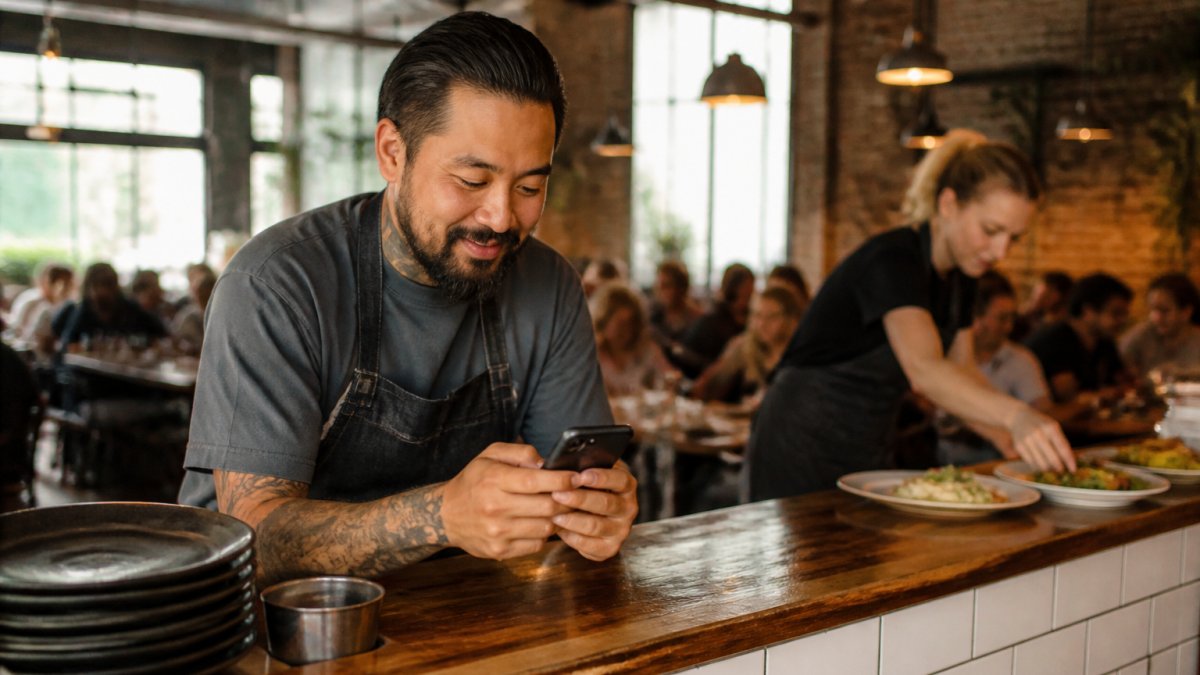
The daily community loop
- Listen (10 minutes, morning). Scan comments, DMs, tags, and mentions of your handle. Note recurring questions (hours, parking, dietary options) and recurring names.
- Reply (15 minutes, midday). Answer every comment and DM within a day. Use names. Ask a follow-up question so the exchange continues rather than dead-ends.
- Invite (5 minutes). Turn a good exchange into a next step: "Bring a friend Thursday and ask for me." Invitations convert lurkers into participants.
- Follow up (5 minutes, end of day). Thank people who posted photos, answer anything you missed, and log repeat contributors so you recognize them next time.
Assign one staff member as the inbox owner and a backup for days off. A shared login with no owner is how messages sit unanswered for a week.
Moderation that keeps the room welcoming
Moderation is not censorship, it is hosting. Treat your comment section like your dining room: you would not let a guest shout at another table.
- Answer complaints publicly once, then move to DM. A short, specific public reply ("That wait was too long, we're fixing Friday staffing") shows other guests you listen. The detailed resolution belongs in private.
- Hide spam and hate speech; never argue in the thread. Most platforms let you hide a comment so the author still sees it but no one else does, this de-escalates without a public fight.
- Separate criticism from harassment. A bad review is feedback; a personal attack on staff is a boundary. Respond to the first, remove and report the second.
Make every post accessible
Inclusion is part of community, and most restaurants skip it:
- Add captions to every short-form video, many guests watch with sound off.
- Write alt text on food and staff photos so screen-reader users can follow along.
- Use readable graphics: high contrast, large type, no text buried in busy images.
- Translate key posts (hours, events, allergen notes) when a meaningful share of your neighborhood speaks another language.
For a full system that keeps feedback from overwhelming your team, read managing restaurant member feedback and engagement.
Step 6: Measure Community Health Beyond Reach and Likes
Reach and likes tell you a post was seen. They do not tell you a community is forming. Community health is about whether the same people keep showing up, whether guests talk to each other, and whether conversations turn into visits. Track those signals on a simple weekly scorecard, a spreadsheet is enough, and review it every Friday alongside your posting calendar.
The community health scorecard
| Signal | What to track | Why it matters |
|---|---|---|
| Response time | Median hours to reply to comments and DMs | Slow replies kill momentum; a day is the ceiling |
| Repeat contributors | Count of people who commented or tagged you 2+ times this month | The clearest sign of a forming community |
| Customer-to-customer interaction | Replies where one guest answers another | Shows the room is talking without you |
| Sentiment | Rough share of positive vs. negative comments | Catches reputation drift early |
| Guest photos tagged | UGC volume month over month | Trust signal and free content |
| Social referrals | New guests who mention a post, story, or group at the door | Connects online effort to real visits |
| Event turnout from social | Attendees who heard about it on social | Tests whether your invite actually works |
How to collect the numbers without a big tool
- Response time: check your platform inbox timestamps once a day; note the gap between message and reply.
- Repeat contributors: keep a running list of names who comment or tag you. After a month, count who appears twice or more.
- Customer-to-customer interaction: scroll your comments weekly and tally threads where guests reply to each other.
- Sentiment: read the last 50 comments and mark each positive, neutral, or negative. A rough ratio is enough.
Turn the scorecard into action
Numbers only matter if they change what you do next week:
- If repeat contributors are flat, invite your most active commenters by name to a tasting or a members' night.
- If response time slips past a day, add a backup inbox owner or set a midday reply block.
- If sentiment trends negative, read the last month of comments for a pattern before you post again.
- If social referrals are low, add a clear "mention this post" line to event announcements.
Tie these back to dollars. Our guide to measuring restaurant marketing ROI shows how to connect social effort to actual revenue.
Step 7: Move Online Relationships Into Offline Visits and Loyalty
The final step is the one most restaurants skip: turning a follower into a face at the bar. A comment thread is not a customer. A regular is.
Do this with small, repeatable moves:
- Invite commenters to a members-only tasting
- Post event recaps that show familiar faces
- Reward the people who keep showing up
This is where The Regulars Club fits naturally. A Restaurant Membership Program gives your most engaged followers a reason to come back, and a Restaurant Customer Loyalty Program turns those repeat visits into steady, recurring revenue for restaurants. Our guide on increasing repeat restaurant customers covers the full playbook.
Watch out: the common mistake is chasing follower growth while ignoring the same twenty locals who already love you. Twenty regulars beat two thousand passive followers.
Frequently Asked Questions
What should a restaurant post on social media to build a community?
Post things that invite a reply, not just a look. Behind-the-scenes prep shots, staff introductions, chef Q&A clips, and photos of regulars' favorite dishes all give people something to react to. Deloitte Digital found that 65% of consumers follow food and lifestyle topics on social media, so food visuals are your entry point. Pair them with questions, polls, and local shoutouts to nearby farms or breweries. The goal is conversation, not a broadcast feed.
How often should a restaurant post on social media?
Consistency matters more than volume. A realistic restaurant social media calendar with three to five posts a week, plus daily replies to comments and messages, beats a burst of ten posts followed by two quiet weeks. Build the calendar around what you can sustain during your busiest service days. Short-form video and photo posts can carry most of the schedule, with stories or live sessions filling gaps. Track response time as closely as posting frequency.
How can a restaurant measure social media community growth?
Look past reach and impressions. Track saves, shares, comment threads with more than one reply, direct message volume, response time, and how many people show up at events you promoted online. A simple monthly check of repeat commenters and tagged photos tells you whether the same people keep coming back. Tie those numbers to visits and loyalty signups so you can see whether online relationships turn into tables.
How can restaurants encourage customers to share their experiences online?
Make sharing easy and worth their while. Put a small card on the table with your handle, ask staff to mention it at checkout, and repost guest photos with credit. Run a monthly photo contest around a signature dish or a seasonal special, and feature the best entries on your profile. When guests see their own post on your page, they bring friends into the conversation. User-generated content also gives you a steady supply of authentic visuals.
Building a real restaurant community takes consistency, not budget. Most independent operators do not have hours to spare on social media, and that is the challenge worth solving first. The Regulars Club helps restaurants turn occasional guests into loyal regulars with membership-based perks, monthly rewards, and offers redeemed through the POS you already use. Get started with The Regulars Club and give your best customers a reason to come back this week.