 how-to
Personalized Dining for Members: A Step-by-Step Guide
Last Updated: October 29, 2026
Quick Summary
Creating personalized dining experiences for members means using guest data to shape menus, service, offers, and atmosphere around what each member already loves. Build a simple profile with visit history, top orders, dietary restrictions, and one personal note, then act on it visibly at the table.
- Members expect three things from a personalized experience: recognition, relevance, and ease.
- Keep profiles to four fields: contact method, visit history, top orders, and one personal note.
- Match each offer to a member signal, such as a free appetizer for a lapsed member.
- Every offer should be redeemable in under ten seconds or it dies at the table.
- Run a monthly accuracy check, since a stale allergy note does more damage than no personalization.
Table of Contents
- Why Personalized Dining Turns Members Into Regulars
- Step 1: Build Restaurant Customer Profiles That Actually Get Used
- Step 2: Collect Guest Preferences Without Making It Awkward
- Step 3: Turn Profiles Into Personalized Restaurant Offers
- Step 4: Personalize the Service, Not Just the Menu
- Personalized Dining Experience Examples You Can Copy
- Restaurant Customer Experience Best Practices for Member Programs
- Start With Your Member List, Not Your Menu
- Frequently Asked Questions
Why Personalized Dining Turns Members Into Regulars
Creating personalized dining experiences for members is the practice of using guest data to shape menus, service, offers, and atmosphere around what each member already loves. It turns a one-time visit into a habit.
The stakes are simple. A member who feels recognized comes back. A member who feels like a stranger stops showing up.
What Members Actually Expect From a Personalized Experience
Members expect three things: recognition, relevance, and ease. They want to be known when they walk in. They want offers that match how they actually eat. And they want the whole thing to take zero effort.
Miss any one of these and the program feels like a coupon club. Nail all three and it feels like a relationship.
Step 1: Build Restaurant Customer Profiles That Actually Get Used
Restaurant customer profiles are the foundation of every personalized dining experience. For practical steps on building the underlying restaurant customer database that profiles depend on, start there.
Most restaurants collect too much and use too little. A profile that sits in a spreadsheet nobody opens is worse than no profile at all.
Keep it to four fields to start:
- Name and contact method the member actually checks
- Visit history with dates and day of week
- Top orders and any dietary restrictions
What to Collect and What to Leave Alone
Collect what changes a decision: allergies, favorite table, usual drink, birthday month. Leave alone anything that feels like surveillance.
Skip home addresses, income guesses, and anything a guest did not volunteer. Member trust is the asset. Guard it.
Step 2: Collect Guest Preferences Without Making It Awkward
Preference collection works best when it rides along with something the guest already wants. A server asking "Any allergies I should flag for the kitchen?" feels like care.
Try these low-friction methods:
- Train servers to log one preference per table in the POS
- Add a two-question prompt to your digital ordering flow
- Ask members to confirm allergies at check-in, every time
Watch out: collecting preferences and never acting on them is worse than not collecting at all. If a member says they hate cilantro and it shows up on the plate, you have broken trust.
Step 3: Turn Profiles Into Personalized Restaurant Offers
Personalized restaurant offers convert because they arrive at the right moment. If you want more creative ways to reward loyal restaurant guests, there are plenty of concrete ideas to borrow.
Match the offer to the signal:
- Lapsed member (no visit in 60 days): a free appetizer to bring them back
- Frequent brunch guest: a weekend-only upgrade
- Big-group booker: a shareable plate for the table
Set one rule: every offer must be redeemable in under ten seconds. If the server has to hunt for it, it dies at the table.
Match each offer to the signal the member has already given you.
| Member signal | Offer |
|---|---|
| Lapsed member, no visit in 60 days | Free appetizer to bring them back |
| Frequent brunch guest | Weekend-only upgrade |
| Big-group booker | Shareable plate for the table |
| New member | Welcome perk on visit two, not visit one |
Step 4: Personalize the Service, Not Just the Menu
Menu customization gets the attention, but service is where members feel the difference. A server who says "Your usual table is open" beats a discount every time.
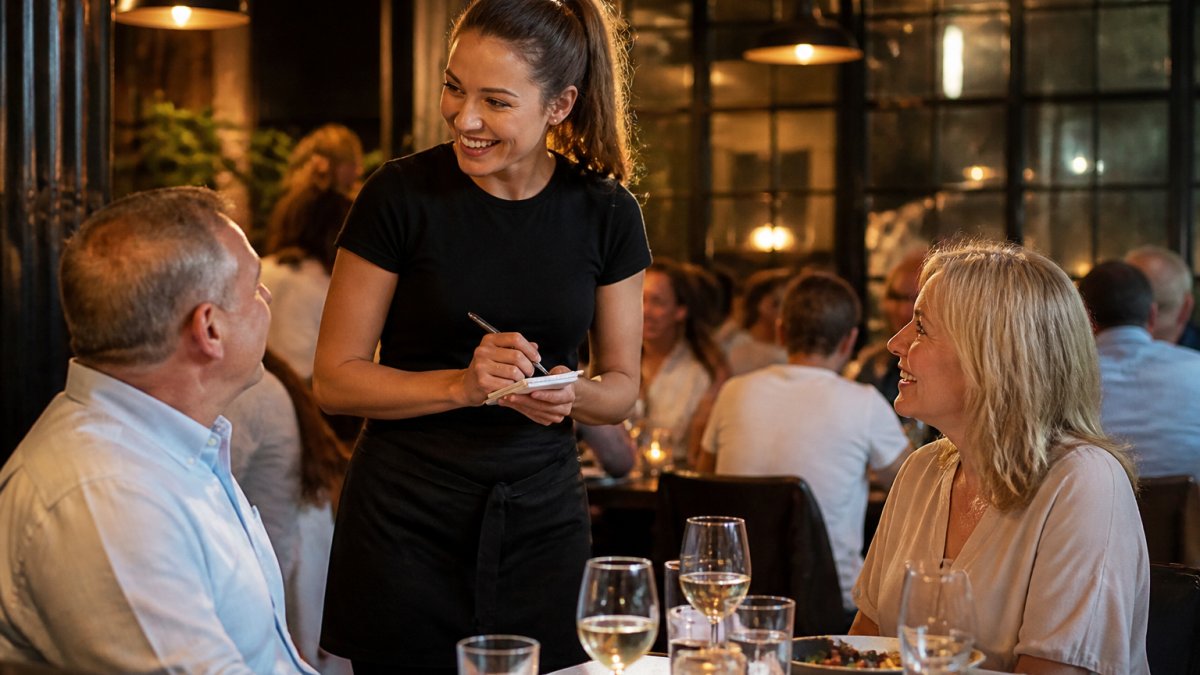
Build recognition into the shift:
- Print a short member brief for the pre-shift huddle
- Flag birthdays and milestones on the floor sheet
- Let servers note one detail to use next visit
Staff engagement is the whole game here. For guidance on restaurant staff training tips for better service, review the fundamentals before your next shift huddle.
Personalized Dining Experience Examples You Can Copy
Generic personalization examples are everywhere. The examples below show how to personalize for members specifically, using visit history and stated preferences without making the experience feel transactional.
1. The usual, remembered, with a tier twist
A café logs each member's usual order and greets them with it. For higher-tier members, the server offers a small unlisted upgrade (a different milk, a side) once per month. Mechanism: a "usual order" field in the POS plus a tier flag. Measure: repeat visit rate among members who received the greeting versus those who did not.
2. The allergy-safe welcome
A member's allergy note prints automatically on the kitchen ticket and appears in the server's table view. The server confirms it at greeting, every visit. Mechanism: allergy flag on the member profile, mapped to the ticket printer. Measure: allergy-related remakes and complaints per 100 covers, should trend toward zero.
3. The milestone table
A birthday month triggers a free dessert, applied at the POS with one button. Keep it small and specific; a free dessert reads as care, a deep discount reads as a coupon. Mechanism: birthday month field plus a POS coupon button. Measure: redemption rate and average spend on the visit.
4. The quiet regular
A member who always orders the same dish gets first word on the seasonal swap, a short text or a server mention before the menu changes. Mechanism: top-order field plus a seasonal change list. Measure: trial rate of the new dish among flagged members.
5. The tier-appropriate perk
Recognition works best when the benefit fits the member's relationship with the restaurant. Mechanism: tier field plus a perk calendar. Measure: tier upgrade rate and retention by tier.
6. The lapsed-member nudge
A member with no visit in 60 days gets a small, specific offer tied to what they used to order, not a generic discount. Mechanism: last-visit date plus top-order field, filtered weekly. Measure: reactivation rate within 30 days of the nudge.
None of these require new technology. They require a habit of writing things down, reading them before service, and checking whether the member came back.
Restaurant Customer Experience Best Practices for Member Programs
Most personalization advice stops at "collect data and use it." That is not enough for a member program, where the relationship is ongoing and the trust cost of a mistake is higher. Treat the following as non-negotiable operating rules, each with a concrete mechanism behind it.
Ask before you store, and make opting out easy
Tell members in plain language what you collect, why, and how long you keep it. Under the FTC Act, deceptive or unfair data practices can trigger enforcement even without a specific privacy statute, so keep your stated practices accurate (the FTC). See the FTC guidance on protecting personal information for the baseline.
Practice data minimization
Collect only fields that change a service decision. A workable starter set: name, preferred contact method, allergy and dietary flags, top two or three orders, usual visit window, and one free-text note. Skip home address, income proxies, employer, and anything a member did not volunteer. Every field you keep is a field you must secure, train staff on, and eventually delete, so the cheapest privacy program is a short field list.
Put access controls around member data
A profile nobody can see at the table is dead weight, but a profile everyone can export is a liability. A common pattern for independents:
- POS or CRM login per staff member, no shared manager password.
- Role-based views, servers see name, allergies, and usual order; only managers see contact details and full history.
- No exports to personal devices, if a staff member needs a list, print a shift brief and collect it at close.
Never sell or share member data
One leak or one sold list ends the program and invites regulatory attention. If you use a third-party loyalty or texting platform, confirm in writing that they do not resell member data and that you can export and delete it on request. Keep a one-page data map: what you collect, where it lives, who can see it, and how it is deleted.
Measure what matters
Define a small scorecard and review it monthly. Useful measures for a member program:
- Repeat visit rate, share of members with two or more visits in the last 90 days.
- Member retention, share still active after 6 and 12 months.
- Offer redemption rate, redemptions divided by offers sent, by offer type.
Interpret trends, not single months. A redemption spike after a big send is less meaningful than a steady rise in repeat visits among members who received a relevant offer.
Review and prune monthly
Cut any field, offer, or message that is not moving a number. A field that no one acts on is pure risk; an offer that never redeems is noise in the member's inbox. Pruning is a feature of a healthy program, not an admission of failure.
The National Restaurant Association's industry research is a solid benchmark source for tracking guest trends year over year.
Start With Your Member List, Not Your Menu
Most restaurants build personalization backwards. They redesign the menu first and hope members notice. The better path is to start with the list you already have and ask what each member would want next.
That is the whole idea behind The Regulars Club: members show their active membership and get perks at local spots, while restaurants add member discounts as simple POS coupon buttons. If you want to learn more about a Restaurant Membership Program, you can explore it there.
Here is your first-week plan:
- Add allergy and preference fields to your POS
- Brief staff on one recognition habit
- Launch one small offer for lapsed members
Frequently Asked Questions
What information should a restaurant use to personalize member experiences?
Start with what members freely share and what your POS already records: visit frequency, favorite dishes, spend level, dietary restrictions, allergy information, and table preferences. Add feedback from brief post-meal surveys and notes staff pick up during service. Keep the profile to a handful of fields people will actually update. A short, accurate profile beats a sprawling database nobody maintains, and it keeps your team focused on details that change the guest experience.
How can personalized restaurant offers avoid overwhelming members?
Limit offers to one or two active promotions per member at a time, and tie each to something in their profile, like a dish they order often or a day they usually visit. Space them out so a member is not hit with a new message every week. Track offer redemption rates and average spend, then drop anything that gets ignored twice. A small number of relevant offers outperforms a constant stream of generic discounts.
How should restaurants measure the success of personalized dining efforts?
Track repeat visits, member retention, offer redemption, average spend, and guest satisfaction scores before and after you introduce personalization. Compare members who receive tailored touches against a similar group who do not. Watch for staff workload too: if personalization slows service, the guest experience suffers. Review the numbers monthly and keep the tactics that move repeat visits and spend, dropping the ones that only add busywork.
How does a membership program make personalization easier for independent restaurants?
A membership program gives you a defined group of guests who have already opted in, so you know who to personalize for and how to reach them. The Regulars Club connects local restaurants with members through member-only perks, free food offers, BOGO deals, and monthly rewards, and restaurants can add those discounts directly into their existing POS as coupon buttons. That gives your team a simple way to recognize members and deliver tailored offers without changing systems.
Personalization does not require a big budget or a data team. It requires a list, a habit, and the discipline to use both. The Regulars Club gives independent restaurants a simple membership layer with member-only perks, monthly rewards, and POS-friendly redemption, so you can turn occasional guests into regulars without replacing the system you already run. Get started with The Regulars Club and give your best members a reason to come back this week.