 how-to
How to Increase Repeat Restaurant Customers
Table of Contents
- Why Repeat Restaurant Customers Are Worth More Than New Ones
- Restaurant Loyalty Program Ideas That Actually Drive Return Visits
- How to Track Repeat Customers Without Complicated Software
- Restaurant Email Marketing Templates and SMS Campaigns That Bring Guests Back
- Personalized Customer Service: The Habit That Keeps Repeat Restaurant Customers Coming Back
- Handling Negative Feedback to Win Back Guests
- Collecting Customer Contact Data and Maintaining Consistency
- Frequently Asked Questions
Last Updated: September 1, 2026
Why Repeat Restaurant Customers Are Worth More Than New Ones
Figuring out how to increase repeat restaurant customers is one of the highest-return investments an independent restaurant owner can make. At The Regulars Club, we work with restaurants every day that are spending heavily to attract new diners while their existing guests quietly drift away. That's the wrong order of priorities.
Repeat restaurant customers spend more per visit, tip better, and refer friends without being asked. They already trust your food and your staff. Acquiring a new customer requires marketing spend, promotional offers, and a first impression that lands perfectly. Retaining an existing one requires a warm greeting and a reason to come back.
The math is straightforward: a customer who visits once a month for a year generates twelve times the revenue of a one-time visitor. Scale that across a few hundred regulars and you have a business that runs on loyalty rather than luck.
The Real Cost of Chasing New Diners
Most restaurants focus their marketing budgets on acquisition: social ads, delivery platform promotions, influencer posts. These channels can work, but they attract price-sensitive, low-loyalty diners who are just as likely to try the next new place next week.
According to Harvard Business Review research on customer retention, increasing customer retention rates by just five percent can increase profits significantly, depending on the industry. For restaurants operating on thin margins, the difference between a guest who returns twice a year and one who returns twice a month is the difference between scraping by and building something durable.
The real cost of chasing new diners is not just the ad spend. It's the opportunity cost of ignoring the people already walking through your door.
Restaurant Loyalty Program Ideas That Actually Drive Return Visits
A loyalty program is not a discount machine. Done right, it's a reason for guests to choose you over the place down the street, even when both options are equally convenient.
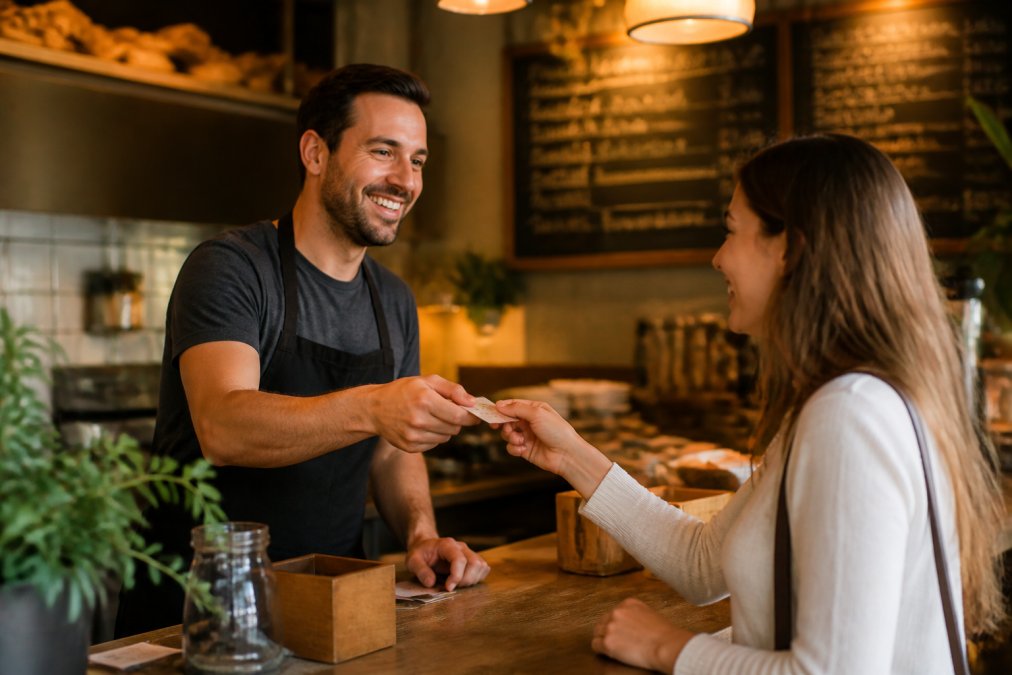
The most effective restaurant loyalty program ideas share one trait: they reward behavior that's already happening rather than trying to manufacture artificial visits. If your regulars come in on Thursdays, reward Thursday visits. If your best customers always order a specific dish, give them a free one on their fifth order.
Points-Based vs. Membership-Based Programs
Points-based programs reward guests for each dollar spent, accumulating toward a free item or discount. They work well for high-frequency, lower-spend visits like cafes and fast-casual spots. The risk is that guests collect points slowly, lose interest, and forget the program exists.
Membership-based programs charge a flat fee for ongoing access to exclusive perks, discounts, and offers. They create a different psychological relationship: the guest has already invested, so they're motivated to visit more often to get their money's worth. This is the model VIP Dining Memberships are built on, connecting diners to local restaurants through member-only benefits like free food offers, BOGO deals, and monthly rewards that don't require replacing your existing POS setup.
| Program Type | Best For | Guest Psychology | Complexity |
|---|---|---|---|
| Points-based | High-frequency, low spend | Accumulation mindset | Moderate |
| Punch card | Cafes, fast-casual | Simple, tactile | Low |
| Membership-based | Full-service, neighborhood spots | Sunk-cost loyalty | Low-moderate |
| Tiered rewards | High-volume restaurants | Status motivation | High |
Birthday and Anniversary Rewards
Birthday and anniversary promotions are among the highest-converting offers in restaurant marketing. A guest who receives a genuine birthday reward feels recognized as an individual, not just a transaction. The offer itself matters less than the timing and the personal touch.
Collect birth months during sign-up (not full dates, which some guests find intrusive) and send a reward that arrives three to five days before the month begins. This gives them time to plan a visit rather than scrambling on the day itself.
How to Track Repeat Customers Without Complicated Software
Tracking repeat restaurant customers does not require enterprise software or a dedicated IT budget. Many independent restaurants already have the tools they need.
The core requirement is simple: a way to identify returning guests and record what they order, how often they visit, and what keeps them coming back. Everything else is built on top of that foundation.
Using Your POS System as a Customer Database
Your point-of-sale system is likely already capturing more data than you're using. Most modern POS platforms allow you to attach a customer profile to a transaction, log visit frequency, and track average spend. This is your customer database, and it costs nothing extra to use.
A common mistake is treating the POS purely as a payment tool. Instead, train your staff to ask for a name or phone number at checkout, especially for regulars. Over time, this builds a customer database that supports segmentation, targeted marketing automation, and loyalty tracking.
According to the National Restaurant Association's technology guidance for operators, operators who capture customer contact data at the point of sale are significantly better positioned to run effective re-engagement campaigns than those relying on third-party platforms alone.
Restaurant Email Marketing Templates and SMS Campaigns That Bring Guests Back
Email and SMS are the two channels that give you direct access to your guests without paying a platform for every impression. Building that list is one of the most valuable things an independent restaurant can do.
Here's a practical email marketing template structure that works for most restaurants:
Subject line: "We saved your usual table, [First Name]"
Hi [First Name],
It's been a while since we've seen you, and we wanted to reach out. As one of our regulars, you've got [offer: free appetizer / 20% off your next visit / BOGO entrée] waiting for you this week.
Just mention this email when you arrive. No app, no code, no hassle.
We'd love to see you again soon.
[Restaurant Name]
Keep SMS campaigns shorter and more direct. A message like "Hi [Name], your [Restaurant Name] reward is ready: free dessert this weekend. Just show this text." converts well because it respects the guest's time and delivers value immediately.
Winning Back Lapsed Visitors
Lapsed visitors are guests who haven't returned in 60 to 90 days. They're not lost. They're just not thinking about you.
A win-back campaign targeting this segment typically outperforms acquisition campaigns because the guest already has a positive reference point. They know your food. They just need a reason to return.
The most effective win-back sequence looks like this:
- Day 60: Send a "We miss you" email with a low-friction offer (free item, not a discount percentage)
- Day 75: Follow up with an SMS if no visit has occurred
- Day 90: Final outreach with your strongest offer, framed as exclusive
Segment your lapsed visitors by their original visit frequency. A guest who came in weekly needs a different message than one who visited twice. Customer segmentation at this level is what separates data-driven marketing from generic blasts.
Personalized Customer Service: The Habit That Keeps Repeat Restaurant Customers Coming Back
Personalized customer service is the single most underrated retention tool in the restaurant industry. Technology can support it, but the habit starts with your staff.
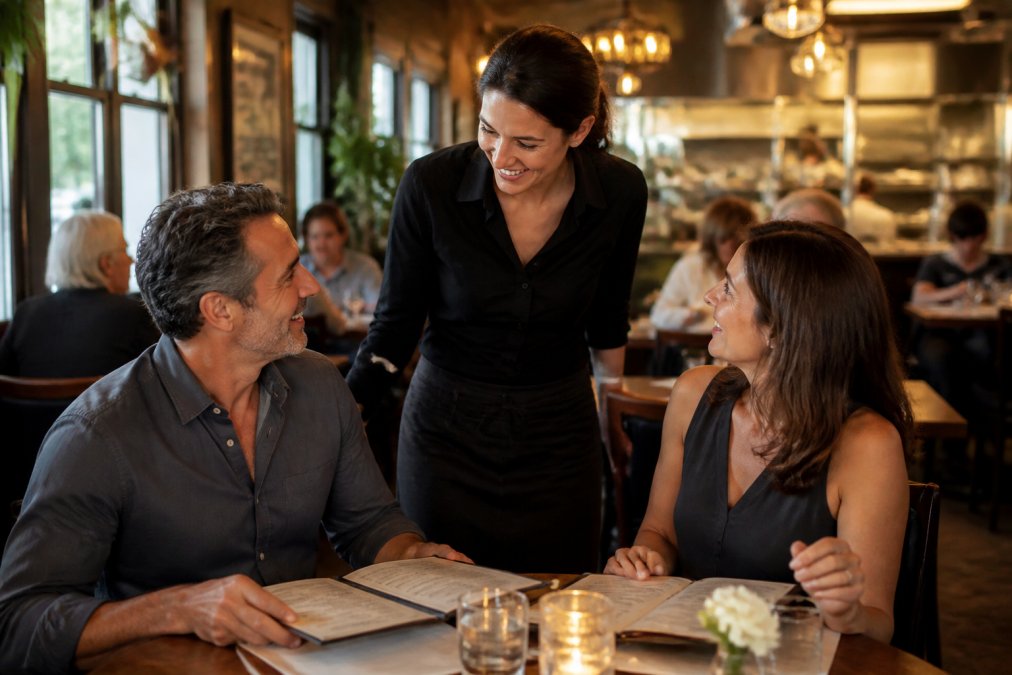
Repeat restaurant customers remember the moment a server recalled their usual order or asked about their anniversary trip. These micro-moments cost nothing and create the kind of brand advocacy that no ad budget can replicate. A guest who feels genuinely recognized tells friends. That's your most efficient marketing channel.
Staff Training for Guest Recognition
Most restaurants train staff on food safety, POS operation, and service steps. Very few train staff on guest recognition as a deliberate skill.
A practical framework for staff training on retention:
- Pre-shift briefings: Review which regulars have reservations or are likely to visit based on their typical patterns
- Recognition cues: Train staff to note and remember at least one personal detail per regular (preferred table, usual drink, dietary restrictions)
- Handoff protocols: When a regular's usual server is off, brief the covering staff member before the guest arrives
- Post-visit notes: Encourage staff to add brief notes to customer profiles in the POS after notable interactions
The restaurant with the best food doesn't always win. The restaurant where the staff knows your name almost always does.
Handling Negative Feedback to Win Back Guests
Negative feedback is a retention opportunity that most restaurants treat as a threat. This is where most guides get it wrong.
A guest who complains and receives a genuine, fast response is statistically more loyal than one who had a perfect experience. The complaint creates a moment of human connection. The recovery creates a story the guest tells others.
According to the Small Business Administration's guidance on customer relationship management, businesses that respond to negative feedback promptly and personally retain a significantly higher percentage of affected customers than those who don't respond at all.
The right response framework:
- Acknowledge within 24 hours on any public platform (Google, Yelp)
- Move the conversation offline with a direct contact method
- Offer a specific remedy, not a vague apology ("We'd like to invite you back for a complimentary dinner" beats "We're sorry you felt that way")
- Follow up after the recovery visit to close the loop
The worst thing you can do is respond defensively or not at all. A non-response tells the guest and everyone reading that you don't care about the customer experience.
Collecting Customer Contact Data and Maintaining Consistency
The entire retention strategy described in this guide depends on one thing: having a way to reach your guests after they leave. Without contact data, you're relying on them to remember you on their own.
Collecting customer contact data works best when the ask is framed as a benefit, not a form. "Join our regulars list for monthly rewards" converts better than "Sign up for our newsletter."
Practical collection points:
- At checkout: A tablet prompt or staff ask for name and phone/email
- Online ordering: Capture data at the order confirmation stage
- Reservation systems: Most table management platforms capture contact info by default
- WiFi login: Offer guest WiFi in exchange for an email address
- Loyalty program enrollment: This is the most motivated collection point because the guest is already opting in for a reason
Maintaining food and service consistency is equally critical. A guest who had a great experience on their first visit and a mediocre one on their second will not return for a third. Consistency is the foundation that makes every other retention strategy work. A loyalty program can't save a restaurant with inconsistent execution.
For restaurants looking for a structured approach to all of this, Restaurant Customer Loyalty Program solutions can handle the offer creation, member communication, and POS integration without requiring you to rebuild your operations from scratch. Restaurants create their own offers and can add discounts directly into their POS as coupon buttons, making redemption frictionless for both staff and guests.
The goal is not to run more promotions. The goal is to give your best customers a reason to keep choosing you.
Frequently Asked Questions
Why is customer retention more cost-effective than customer acquisition for restaurants?
Acquiring a new customer typically costs several times more than keeping an existing one. Repeat restaurant customers spend more per visit over time, refer friends, and require less marketing spend to bring back. A guest who visits twice a month generates far more annual revenue than an occasional first-timer. Focusing on retention through loyalty programs, personalized service, and consistent food quality builds customer lifetime value without the high cost of constant new-customer advertising.
What is the most effective way to track repeat customers in a small restaurant?
The simplest starting point is your point-of-sale system. Many POS platforms let you attach a phone number or email to each transaction, building a customer database automatically. From there, you can identify visit frequency, average spend, and lapsed guests. If your POS lacks this feature, a basic loyalty app or membership program can collect the same data at checkout. Consistent data collection at every visit is what makes customer segmentation and targeted marketing possible.
How do I encourage repeat customers without offering constant discounts?
Discounts are one tool, but recognition often matters more than price cuts. Greeting regulars by name, remembering their usual order, and offering small surprise gestures, a complimentary appetizer on a birthday, early access to a new menu item, build emotional loyalty. A structured membership program that delivers exclusive perks rather than blanket discounts also protects your margins while rewarding your best guests. Consistent food quality and reliable service are the foundation that makes every other retention tactic work.
What is the 30/30/30 rule for restaurants?
The 30/30/30 rule is a customer retention framework suggesting that 30% of your marketing budget should target new customers, 30% should focus on bringing lapsed guests back, and 30% should reward and retain your existing regulars. The remaining 10% covers general brand awareness. For most independent restaurants, the middle and last categories are underfunded compared to new-customer acquisition, even though repeat guests and reactivated lapsed visitors typically deliver a higher return on every marketing dollar spent.
Building a base of repeat restaurant customers is not a marketing project. It's an operational commitment: to consistency, to recognition, to following up when things go wrong, and to giving guests a reason to feel like they belong. The Regulars Club was built specifically to help independent restaurants make that commitment without adding complexity to their day-to-day operations. Get started with The Regulars Club and turn your occasional visitors into the regulars your restaurant depends on.
This article was written using GrandRanker