 listicle
5 Best Restaurant Marketing Strategies for 2026
Table of Contents
- How We Selected These Restaurant Marketing Strategies
- Restaurant Digital Marketing Trends 2026: What's Actually Changing
- Strategy 1: Local SEO and Hyper-Local Targeting
- Restaurant Loyalty Program Best Practices That Drive Repeat Visits
- Restaurant Email Marketing Templates and Automation
- Strategy 4: Social Media, Influencer Collaboration, and User-Generated Content
- How to Increase Restaurant Customer Retention with Guest Data and CRM
- Which Restaurant Marketing Strategy Should You Prioritize?
Last Updated: August 30, 2026
Most independent restaurant owners know they need to market their business, but executing a strategy that actually drives repeat visits is where most fall short. The restaurant marketing landscape has shifted significantly heading into 2026, with AI-powered search, first-party data compliance, and community-driven loyalty programs reshaping what moves the needle. The five strategies below reflect what's working right now.
Quick Picks:
- Best for retention: Loyalty and membership programs, the highest ROI strategy for independent restaurants
- Best for discovery: Local SEO and hyper-local targeting, the foundation everything else builds on
- Best for lifetime value: Guest data and CRM integration, turns one-time visitors into regulars
- Best for awareness: Social media and influencer collaboration, especially micro-influencers
- Best for engagement: Email automation, underused by independents, consistently high-converting
How We Selected These Restaurant Marketing Strategies
These five strategies were chosen based on a single filter: do they directly improve guest retention, repeat visits, or customer lifetime value for independent restaurants? Selection criteria included implementation accessibility for single-location operators, measurable impact on dining room growth, compatibility with existing POS systems, and relevance to the 2026 digital environment.
Paid social advertising and third-party delivery platforms are intentionally excluded. Both generate short-term volume, but neither builds the guest relationship that drives customer lifetime value.
Restaurant Digital Marketing Trends 2026: What's Actually Changing
The biggest shift heading into 2026 is how diners discover and choose restaurants.
AI Search Optimization and the Shift Away from Traditional SEO
AI search optimization structures your restaurant's digital content so AI-powered search engines surface your business in response to conversational queries. Diners increasingly ask "where's a good neighborhood Italian spot open late on Tuesdays" rather than typing keyword strings into a search bar.
Your Google Business Profile, menu descriptions, and website copy need to answer specific questions. Structured data markup, consistent NAP (name, address, phone) information across directories, and FAQ-style content all improve visibility in AI-generated search results. According to Google's Search Central documentation on structured data, restaurants implementing menu and local business schema see meaningfully higher click-through rates.
First-Party Data Privacy Compliance
First-party data is guest information you collect directly: email addresses, visit frequency, order history, and birthday detail. Owning this data is now a competitive advantage, but collecting and using it requires compliance under frameworks like the California Consumer Privacy Act guidelines.
Use clear opt-in at point of collection, maintain a simple privacy policy on your website, and give guests an easy way to opt out.
Strategy 1: Local SEO and Hyper-Local Targeting
Local SEO captures high-intent diners already looking for somewhere to eat in your area. Done well, it's the most cost-effective discovery channel available.
Optimizing Your Google Business Profile for 2026
Your Google Business Profile is your single most important digital asset for local search. For 2026, the highest-impact updates are:
- Post weekly updates on events, seasonal menu items, and limited-time offers
- Add menu items with descriptions, indexed and surfaced in AI search results
- Respond to every review within 48 hours, both positive and negative
- Upload fresh photos monthly, interior, food, and team photos
- Use the Q&A section proactively, seeding it with questions your guests actually ask
Hyper-local targeting extends beyond Google through Nextdoor, neighborhood Facebook groups, and local event sponsorships.
Online Reputation Management and Social Proof
Online reputation management is monitoring, responding to, and influencing how your restaurant appears across review platforms. Social proof, positive reviews, ratings, and guest-generated content, directly influences conversion from search to reservation.
Build a system that generates steady fresh reviews. A post-visit text or email asking for feedback, sent within an hour of departure, dramatically increases review volume.
Restaurant Loyalty Program Best Practices That Drive Repeat Visits
A well-designed loyalty program is the most direct lever for improving customer lifetime value. The goal is to change guest behavior, specifically increasing visit frequency and average spend among your most valuable customers.
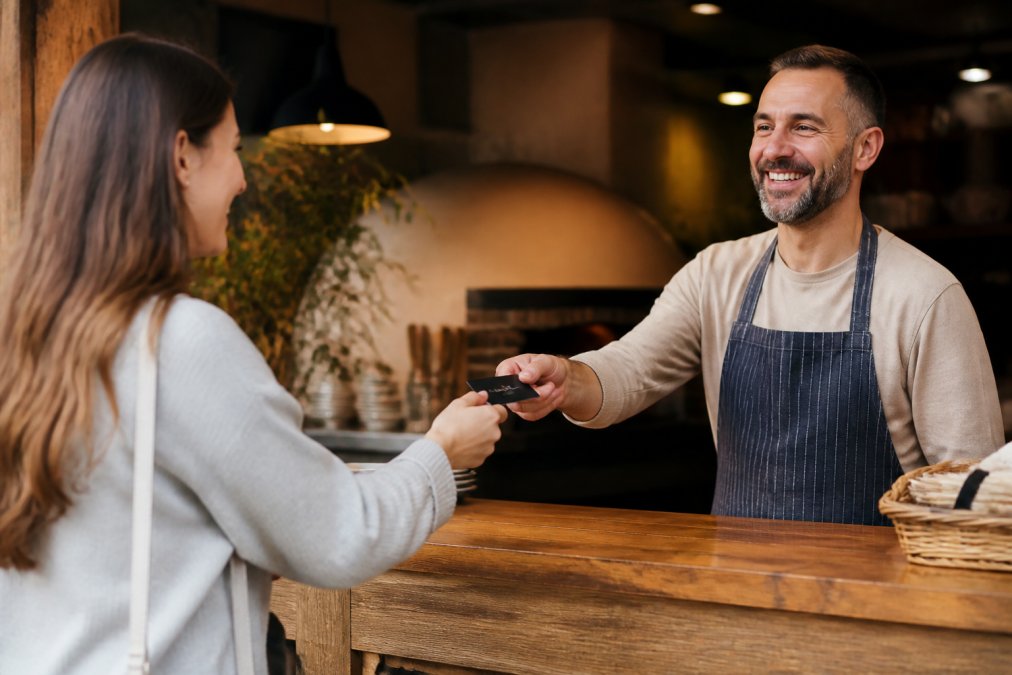
The Regulars Club takes a membership-based approach. Members receive exclusive perks, BOGO deals, and monthly rewards simply by showing active membership, with no complex point calculations or app required. A Restaurant Membership Program built this way creates recurring revenue while simplifying operations for your team.
Membership Models vs. Points-Based Programs
The core tension in loyalty program design comes down to simplicity versus personalization. Points-based programs offer granular data on guest behavior but introduce friction at redemption. Membership models trade some data granularity for higher perceived value and lower operational complexity.
| Program Type | Best For | Guest Friction | Operational Complexity | Perceived Value |
|---|---|---|---|---|
| Points-based | High-frequency diners | Medium | High | Low-Medium |
| Membership/flat-rate | Casual to regular diners | Low | Low | High |
| Tiered hybrid | Multi-location groups | High | Very High | Medium |
| Stamp card | Cafes, quick-service | Very Low | Very Low | Low |
For most independent restaurants, a membership model delivers better guest experience and simpler staff training. The Regulars Club lets restaurants create their own offers and add discounts directly as coupon buttons in their existing POS.
Post-Purchase Experience Optimization
Post-purchase experience optimization is what happens after the check is paid. Most restaurants treat the guest relationship as ending at the door. The ones building genuine loyalty treat it as beginning there.
Post-visit touchpoints include a thank-you message within an hour, a follow-up at the 30-day mark if the guest hasn't returned, birthday or anniversary messages tied to reservation data, and exclusive offers for members who haven't visited in 60+ days.
Restaurant Email Marketing Templates and Automation
Email remains one of the highest-converting channels in restaurant marketing and one of the most underused by independent operators.
Automated Email Campaigns That Convert
Automated email campaigns are pre-built sequences triggered by guest behavior or time intervals. For restaurants, the highest-performing automations are:
Welcome sequence (sent immediately after opt-in):
Subject: You're in, here's what's waiting for you
Hi [First Name],
Thanks for joining [Restaurant Name]. As a subscriber, you'll be the first to know about new menu items, special events, and exclusive offers we don't post publicly.
Your first offer: [specific offer, e.g., complimentary dessert on your next visit, valid 30 days].
We look forward to seeing you soon.
[Restaurant Name]
Re-engagement (sent 45 days after last visit):
Subject: We haven't seen you in a while, here's something to change that
Hi [First Name],
It's been a while since your last visit. Here's an exclusive offer just for you: [specific offer, valid 14 days].
[Reservation link or address]
Birthday offer (sent 7 days before birthday if data available):
Subject: Your birthday treat from [Restaurant Name]
Hi [First Name],
Your birthday is coming up, and we want to celebrate with you. Come in this month and enjoy [specific offer, e.g., a complimentary appetizer or dessert].
[Reservation link]
According to Mailchimp's email marketing benchmarks for restaurants, restaurant emails consistently outperform industry averages when they include a specific, time-limited offer rather than generic newsletter content.
Strategy 4: Social Media, Influencer Collaboration, and User-Generated Content
Social media's role in restaurant marketing has matured. Organic reach has declined, but the channel remains critical for brand positioning, social proof, and community engagement when you shift focus from broadcasting to conversation.
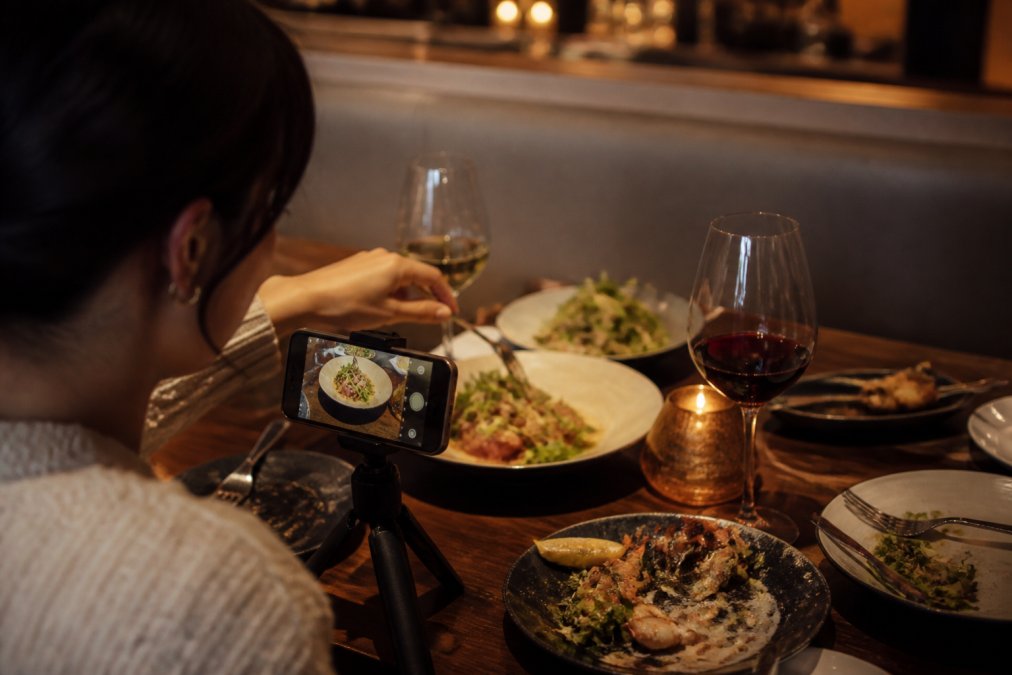
User-generated content is the most cost-effective form of social proof available. A guest photo tagged at your restaurant carries more credibility than any ad you could run. Create conditions that make guests want to share: a visually distinctive dish, a notable interior detail, or a moment worth capturing.
Micro-Influencer ROI Metrics Worth Tracking
Micro-influencer ROI metrics determine whether an influencer partnership generates real business value. A local food blogger with 4,000 highly engaged followers in your neighborhood will drive more covers than a lifestyle influencer with 80,000 followers spread across the country.
Metrics that matter:
- Reservation or walk-in lift in the 72 hours following a post
- Redemption rate on any exclusive offer code tied to the partnership
- Profile visit increase on your own social accounts post-collaboration
- Story view-to-swipe-up rate if using Instagram Stories with a reservation link
Track these by comparing the 72-hour window before and after each influencer post. After three to four partnerships, you'll have enough data to identify which creators actually drive visits.
Sustainability and Ethical Marketing as a Brand Differentiator
Sustainability and ethical sourcing have moved from niche differentiators to mainstream guest expectations. Many independent operators source locally, minimize waste, or support community initiatives without communicating that to guests. Sharing these practices through social media, menu descriptions, and email creates genuine brand differentiation. According to the National Restaurant Association's sustainability research, a growing segment of diners actively factors a restaurant's environmental practices into their dining decisions.
Pick one or two genuine practices and build consistent content around them. Authenticity matters; guests identify performative sustainability marketing quickly.
How to Increase Restaurant Customer Retention with Guest Data and CRM
Customer retention is where restaurant marketing ROI compounds. Acquiring a new guest costs significantly more than retaining an existing one, and repeat visitors typically spend more per visit and refer others at higher rates. The infrastructure for retention is guest data: who visited, when, what they ordered, and what would bring them back.
Building a Customer Feedback Loop
A customer feedback loop is a systematic process for collecting guest input, acting on it, and communicating those changes back to guests. The simplest implementation:
- Send a one-question survey within 24 hours of a reservation (SMS or email)
- Route negative responses directly to the owner or manager
- Log recurring themes monthly, not individual complaints
- When you make a change based on feedback, say so in your next email or social post
This builds trust, reduces public negative reviews, and generates data-driven insights that inform menu engineering and service decisions.
For independent operators, the priority is owning the data, email addresses, visit frequency, and basic preferences, rather than relying on third-party platforms that retain customer data for themselves.
Which Restaurant Marketing Strategy Should You Prioritize?
If you have no loyalty infrastructure, start there. A membership program directly addresses the revenue leak of occasional customers who never become regulars.
If you have loyalty in place but poor discovery, local SEO and Google Business Profile optimization should be next.
If retention and discovery are both working, email automation and CRM integration compound your results.
| Strategy | Priority For | Time to Results | Complexity |
|---|---|---|---|
| Local SEO and hyper-local targeting | All restaurants | 4-8 weeks | Low-Medium |
| Loyalty and membership programs | Restaurants with repeat customer base | 2-4 weeks | Low |
| Email automation | Restaurants with existing contact list | 1-2 weeks setup | Medium |
| Social media and influencer | New restaurants building awareness | 4-12 weeks | Medium |
| Guest data and CRM | Established restaurants scaling retention | 8-16 weeks | High |
The biggest mistake most independent restaurants make is trying to run all five simultaneously with limited resources. Pick one, build it properly, and layer the next strategy on top once the first is generating consistent results.
For restaurants starting with loyalty, The Regulars Club offers a Restaurant Membership Program specifically designed for independent operators, no POS replacement required, and a built-in network of diners actively looking for participating restaurants. Visit theregularclubmembers.com/register to see how it fits your operation.
As noted in Harvard Business Review's research on customer retention economics, the economics of retention consistently favor investment in existing customer relationships over new customer acquisition.
Choosing where to invest your marketing time is one of the most consequential decisions an independent restaurant owner makes. The five strategies covered here, local SEO, loyalty programs, email automation, social media and influencer collaboration, and guest data integration, each address a different stage of the guest relationship. The Regulars Club focuses specifically on the loyalty and retention layer, giving independent restaurants a membership program that increases repeat visits and recurring revenue without overhauling existing systems. Get started with The Regulars Club and turn your occasional visitors into the regulars your restaurant depends on.
Frequently Asked Questions
Q: What are the key restaurant marketing trends for 2026?
A: The biggest shifts in 2026 center on AI-driven search optimization, first-party data collection, and mobile-first marketing. Restaurants that own their guest data through direct loyalty programs and email lists are outperforming those relying solely on third-party delivery platforms. Hyper-local targeting, user-generated content, and membership-based loyalty models are also generating stronger repeat visit rates than broad promotional discounts. Omnichannel marketing, connecting in-person, email, and social touchpoints, is now a baseline expectation rather than a differentiator.
Q: How can restaurants improve customer retention in 2026?
A: The most reliable path to higher customer retention is building a structured loyalty program that rewards repeat visits with tangible perks, not just points that expire. Pairing that with automated email campaigns triggered by guest behavior (lapsed visits, birthdays, milestones) keeps your restaurant top of mind without manual effort. Collecting first-party data through your own channels rather than third-party apps gives you direct access to your guests and reduces your customer acquisition cost over time. Platforms like The Regulars Club are built specifically to help independent restaurants achieve this.
Q: What role does loyalty software play in modern restaurant marketing?
A: Loyalty software does more than track points, it captures guest data, automates re-engagement campaigns, and gives restaurants data-driven insights into customer lifetime value and visit frequency. The best programs integrate with existing POS systems so redemption is frictionless for both staff and guests. For independent restaurants, a membership-based loyalty platform like The Regulars Club creates recurring revenue while turning occasional visitors into regulars. The key metric to watch is repeat visit rate: even a modest improvement compounds significantly over a full year of operations.
Q: Are traditional restaurant marketing methods still effective in 2026?
A: Some traditional tactics still work, but their ROI has dropped as digital touchpoints dominate the guest decision journey. Print flyers and local event sponsorships can build community engagement, but they lack the measurability that digital channels provide. Email marketing, local SEO, and loyalty programs consistently outperform traditional methods on cost per acquisition. The restaurants seeing the strongest results in 2026 blend community-focused brand positioning with data-driven digital execution rather than relying on either approach alone.
Q: How do I create a restaurant marketing plan for 2026?
A: Start by auditing your current digital footprint: Google Business Profile, review scores, email list size, and social media engagement. Then identify your highest-value guest segment using whatever data you have and build a loyalty or membership program around retaining them. Layer in automated email campaigns for re-engagement, a local SEO strategy for discovery, and a social media plan that encourages user-generated content. Set clear conversion rate and repeat visit benchmarks before you launch so you can measure what's actually working within the first 90 days.
This article was written using GrandRanker