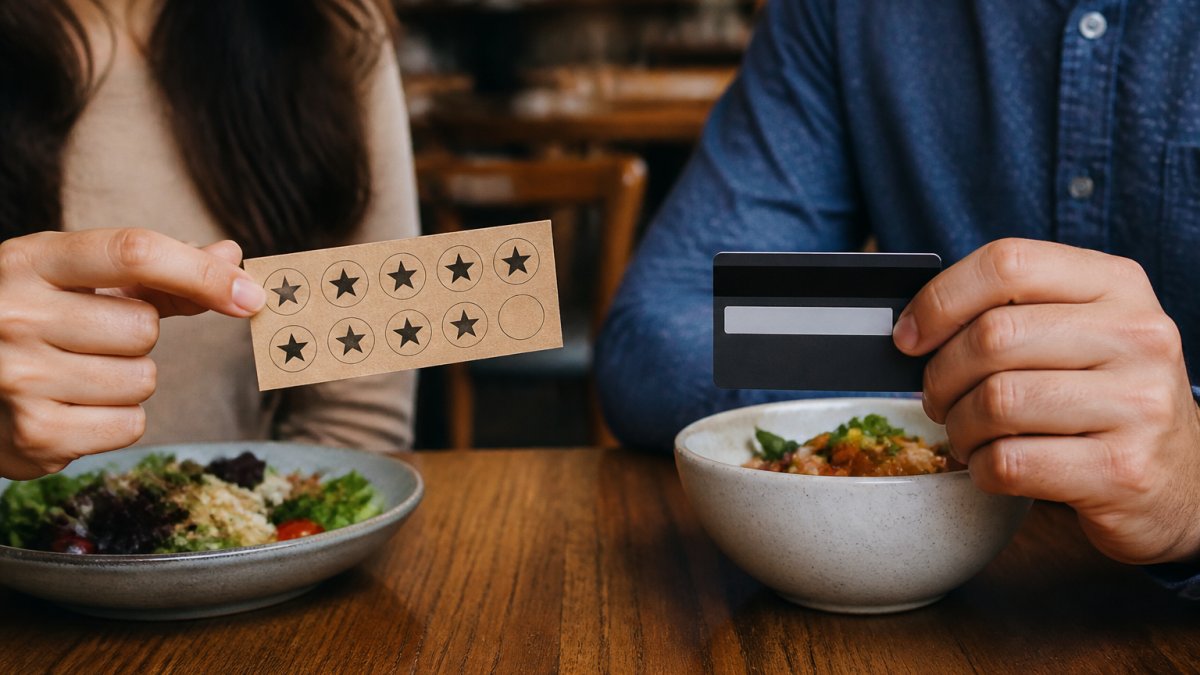
 comparison
Balancing Loyalty Programs and Subscription Models
Table of Contents
- Why Loyalty Programs and Subscription Models Need Each Other
- Loyalty Program vs Subscription Model: Key Differences That Decide Your Strategy
- How Free Rewards and Paid Memberships Work Together
- Paid Loyalty Program Examples That Show What Works
- The Unit Economics: When Paid Memberships Pay Off
- Loyalty Program Best Practices for Restaurants
- Customer Loyalty Program Metrics That Prove It's Working
- Frequently Asked Questions
Last Updated: October 15, 2026
Why Loyalty Programs and Subscription Models Need Each Other
Balancing loyalty programs and subscription models works best when you treat them as two halves of one system, not competing ideas.
At The Regulars Club, we watch independent restaurants try both approaches.
Below, we'll show you exactly how to decide which model fits, when to add a paid tier, and how to measure whether it's working.
Most guides skip the hard part.
Loyalty Program vs Subscription Model: Key Differences That Decide Your Strategy
A loyalty program is a rewards system that gives customers points, discounts, or perks in exchange for repeat purchases. A subscription model charges a recurring fee for ongoing access to benefits (the FTC). The first earns loyalty through behavior.
The differences that matter for your strategy:
- Revenue timing: Loyalty programs pay out after a purchase. Subscriptions collect upfront, every month.
- Customer mindset: Free rewards feel like a bonus. A paid membership feels like a decision.
- Risk profile: Free programs are low-risk, low-commitment. Paid tiers carry churn risk if value isn't obvious.
The conventional wisdom says pick one. We disagree. The strongest restaurant programs run both, with clear separation between what each tier offers.
How Free Rewards and Paid Memberships Work Together
Free rewards and paid memberships work together when the free tier builds the habit and the paid tier rewards the habit. The free program gets people in the door. The paid tier gives your best customers a reason to stay.
That division matters because it prevents the trap most operators fall into: making the free program so generous that nobody upgrades.
The Hybrid Loyalty Program Model
A hybrid loyalty program combines a free rewards layer with a paid membership tier. The free layer captures casual diners. The paid layer serves regulars who want more.
A workable structure looks like this:
| Layer | Who It Serves | What It Offers | Revenue Type |
|---|---|---|---|
| Free rewards | New and occasional diners | Points, birthday perks, basic discounts | None upfront |
| Paid membership | Repeat visitors | Exclusive discounts, free items, member-only offers | Recurring fee |
| VIP tier | Top spenders | Priority perks, personalized rewards | Recurring fee |
The key is that the paid tier must offer something the free tier cannot. If a free member can get the same discount, nobody pays.
A Decision Framework: Free, Paid, or Both
Most guides tell you to "build loyalty" and stop there. The harder question is which model to run for which customer.
1. Purchase frequency. How often does the average customer return in a 90-day window?
- Low frequency (one to two visits): a free points program is usually enough. A paid tier rarely earns back its fee in perceived value when visits are this sparse.
- Medium frequency (three to six visits): test a paid tier with a narrow benefit tied to the behavior you want, such as a discount on a specific day or a free item after a set number of visits.
- High frequency (seven or more visits): a paid tier is most likely to work, because the member can plausibly use the benefit often enough to feel it pays for itself.
2. Willingness to pay. Ask existing regulars directly whether they would pay a recurring fee for a defined benefit, and at what level.
3. Margin per visit. If your margin per visit is thin, a blanket discount in a paid tier can erase the fee revenue.
Benefit Boundaries: Keeping the Two Tiers From Colliding
The most common failure in a hybrid program is overlap. If a free member can get the same discount as a paid member, the paid tier has no reason to exist.
Draw the boundary on three axes:
- Access: paid members get benefits free members cannot buy, such as a member-only item or an early look at a seasonal offer.
- Frequency: paid members earn rewards faster, such as double points or a shorter redemption threshold.
- Exclusivity: paid members get something scarce, such as a limited-run item or a perk tied to a specific day.
Write the boundary down before you launch. If you cannot state in one sentence what a paid member gets that a free member does not, the tiers will blur within a month.
Migration Path: Moving From Free to Paid Without Losing Members
Moving from free to paid without losing members requires that you never take something away. Add the paid tier on top. Keep the free program intact.
A practical migration path:
- Run the free program until you have a clear base of repeat buyers.
- Identify your most frequent customers using purchase data.
- Build a paid tier that adds benefits those customers already want.
- Offer an introductory period so members can test the value.
- Track upgrade rates and churn separately from free-program activity.
What most guides miss is that the migration is a research project, not a marketing push. Talk to your regulars before you build the tier. The customers who upgrade are the ones who already told you what they wanted.
Paid Loyalty Program Examples That Show What Works
Paid loyalty programs work when the member value is obvious from day one.
What makes them work isn't the fee. It's that a member can explain the value in one sentence. Free shipping. A discount that pays for itself.
For independent restaurants, the lesson is direct: if a diner can't explain your membership benefit in one sentence, they won't renew.
The Unit Economics: When Paid Memberships Pay Off
Paid memberships pay off when the recurring revenue from members exceeds the cost of the benefits they redeem, plus the revenue you lose to discounts they would have paid full price for anyway. That second part is where most operators get the math wrong.
Break-Even Analysis for Subscription Loyalty
Break-even analysis for subscription loyalty asks one question: how many visits does a member need to make before their redemptions cost you more than their fee brings in?
Run the calculation in three steps:
- Estimate the average cost of benefits a member redeems per month.
- Compare that to the recurring fee you collect.
- Factor in the extra visits the membership drives.
If members visit more often because of the membership, the incremental revenue often covers the benefit cost. If they don't visit more, you're simply discounting your best customers.
Cannibalization and Unintended Customer Behavior
Cannibalization happens when a paid tier gives benefits to customers who would have paid full price anyway. You gain a fee but lose margin on sales that were never at risk.
Watch for these signals:
- Members redeem heavily but visit no more often than before.
- Average order value drops after enrollment.
- Free-program members stop engaging because the paid tier looks like the only real option.
The fix is to tie paid benefits to behavior you want, like frequency or off-peak visits, rather than blanket discounts.
Loyalty Program Best Practices for Restaurants
The best restaurant loyalty programs keep enrollment simple, make redemption effortless, and tie rewards to the visits you actually want. Complexity kills participation faster than a weak reward.

Best practices that hold up in practice:
- Let members redeem by showing their membership, no app fumbling required.
- Add loyalty discounts directly into your POS as coupon buttons so staff redeem in one tap.
- Keep your offer list current so members always know what's live.
For restaurant owners, a Restaurant Membership Program fits here because it works with your existing POS system.
Customer Loyalty Program Metrics That Prove It's Working
Customer loyalty program metrics prove a program is working when they show more repeat visits from the same customers over time, not just more signups. Enrollment is a vanity number. Retention is the real one.
Track these metrics:
- Repeat purchase rate: share of customers who return within a set window.
- Redemption rate: how many members actually use their benefits.
- Retention rate and churn rate: for paid tiers, how many members stay.
Measure free-program performance and paid-tier performance separately. Blending them hides cannibalization.
Separating Incremental Impact From Correlation
The metrics above tell you what happened. They do not tell you whether the program caused it. A member who visits often may have visited often anyway.
Use a holdout group to isolate the effect:
- Split your audience. Randomly assign a portion of eligible customers to a holdout group that does not receive the program or the paid-tier offer.
- Run the test for a fixed window. Ninety days is a common starting point for restaurant visit cycles.
- Compare the two groups on the same metrics. Repeat purchase rate, average order value, and visit frequency.
- Calculate the lift. The difference between the enrolled group and the holdout group is the incremental effect, not the raw change in the enrolled group alone.
A common pattern is that the enrolled group looks better than the holdout group on repeat visits, but the gap is smaller than the raw numbers suggest. That gap is the real value of the program.
Cohort Analysis for Paid Tiers
For a paid tier, track members by the month they joined. Compare each cohort on:
- Upgrade rate: what share of eligible free members convert.
- Churn rate: what share cancel within 30, 60, and 90 days.
- Redemption cost: what the benefits cost you per member per month.
If a cohort churns fast but redeems heavily, the benefit is being used without building a habit. If a cohort stays but redeems little, the fee is carrying the program and the benefit may not be doing the work.
A Simple KPI Framework
Group your metrics into three layers so you can see where a program is failing:
- Acquisition: enrollment rate, upgrade rate.
- Engagement: redemption rate, visit frequency, average order value.
- Economics: retention rate, churn rate, redemption cost per member, customer lifetime value.
A program that grows enrollment but not repeat visits isn't a loyalty program. It's a discount with extra steps.
Run a holdout group before you scale a paid tier. The raw numbers will always look good. The holdout group tells you whether the program caused the change or just captured customers who were already coming back.
Frequently Asked Questions
What is the difference between a loyalty program and a subscription model?
A loyalty program rewards customers for purchases they already make, often with points or discounts, and is free to join. A subscription model charges a recurring fee for ongoing benefits, like free delivery or member-only pricing. The key difference is that loyalty programs drive repeat purchases through earned rewards, while subscriptions generate predictable recurring revenue and deeper commitment. Many businesses now combine both to capture different customer segments.
Can a business offer both a loyalty program and a subscription?
Yes, and many do. A hybrid loyalty program lets free members earn points while paid subscribers get extra perks like free items or faster rewards. This approach works well because it gives price-sensitive customers a free entry point and gives frequent buyers a reason to pay for more value. The challenge is making sure the paid tier feels clearly better without making free members feel penalized.
How do you balance free loyalty rewards with paid membership benefits?
Start by mapping what each group values. Free members should get meaningful but limited rewards, such as points on every purchase. Paid members should receive benefits that free members cannot easily replicate, like monthly credits or exclusive access. Test different combinations with small groups before rolling out broadly. The goal is to make the paid tier attractive without making the free tier feel worthless.
How can restaurants measure whether a loyalty program is working?
Track customer loyalty program metrics like repeat purchase rate, average order value, redemption rate, and churn rate. Compare these numbers between members and non-members. A healthy program shows members visiting more often and spending more over time. Also watch reward liability to ensure you are not giving away more than the program brings in. Review these metrics monthly to catch problems early.
What are the risks of combining loyalty points and recurring membership fees?
The main risks are cannibalization and reward liability. If paid members get too many free items, they may stop paying for those items entirely, reducing short-term profits. If free members earn points too quickly, redemption costs can outweigh the revenue they generate. To manage this, set clear caps on rewards, review redemption data regularly, and adjust the program as you learn what works.
Restaurant owners face a real challenge: casual diners are easy to attract and hard to keep. The fix is a program that rewards both the first visit and the hundredth. The Regulars Club gives you membership-based access to local diners, exclusive member perks, and a setup that works with your existing POS system, so you can turn occasional customers into loyal regulars. Get started with The Regulars Club and build recurring revenue from the customers you already have.