 how-to
How to Get Repeat Restaurant Customers: 7 Proven Strategies
Table of Contents
- Why Repeat Customers Matter More Than New Ones
- Build a Points-Based Loyalty Program That Drives Repeat Orders
- Key elements of an effective points program:
- Create Restaurant Bounce-Back Campaigns to Win Back Lapsed Diners
- Bounce-back campaign structure:
- Use Restaurant Email Marketing Templates for Consistent Engagement
- Personalize the Guest Experience to Build Habit and Frequency
- Implement Restaurant Loyalty Program Ideas That Don't Require New Technology
- Train Your Staff to Recognize and Reward Your Best Customers
- Frequently Asked Questions
Last Updated: September 29, 2026
Why Repeat Customers Matter More Than New Ones
Acquiring a new customer costs five times more than keeping an existing one (The Value of Keeping the Right Customers). A regular who visits twice a month spends more annually than someone who comes once and disappears. Building a base of repeat restaurant customers transforms your business from feast-or-famine to predictable, growing income.
When a diner feels recognized and valued, they become an advocate who brings friends.
This guide walks you through seven proven strategies to turn occasional visitors into regulars. Each one is actionable today, no massive tech overhaul required.
Build a Points-Based Loyalty Program That Drives Repeat Orders
The Regulars Club provides a simple way to increase customer loyalty, repeat visits, and recurring revenue without replacing their existing POS system. Restaurants create their own offers and can add Regulars Club discounts directly into their POS as coupon buttons for easy redemption.
Key elements of an effective points program:
- Visible reward threshold (customers know exactly what they're working toward)
The psychology is powerful. A customer with 75 points will come back to hit 100. That's a guaranteed return visit. They're not deciding whether to eat at your place, they're deciding when.
If you're looking to formalize this approach, a Restaurant Customer Loyalty Program can streamline enrollment and tracking across your entire customer base.
Create Restaurant Bounce-Back Campaigns to Win Back Lapsed Diners
Restaurants create their own offers and can add Regulars Club discounts directly into their POS as coupon buttons for easy redemption.
Bounce-back campaign structure:
- Message: Personal (use their name if you have it), warm, focused on the offer
- Redemption: One-click or one-code simplicity
- Follow-up: One additional offer at day 90 if they don't respond
The goal isn't to win back every lapsed customer. It's to re-engage the ones most likely to return. A customer who visited monthly for six months is more recoverable than someone who came once two years ago.
Use Restaurant Email Marketing Templates for Consistent Engagement
Email is the most direct channel to repeat restaurant customers. Segment your list and use behavioral triggers, generic emails get ignored, but targeted messages drive action.
Segment your email list into these tiers:
- High-frequency regulars (visit 2+ times per month): Send exclusive previews of new menu items, VIP event invitations, and early access to limited-time offers. These customers have proven loyalty; reward it with insider treatment.
- Occasional visitors (visit 4-6 times per year): Send bounce-back offers when 60+ days pass without a visit, seasonal promotions, and menu highlights tied to occasions (weekend brunch, date night specials).
- One-time or lapsed customers (1-2 visits ever, or 6+ months inactive): Send win-back campaigns with stronger incentives (free appetizer, not a percentage discount) and less frequent contact to avoid list fatigue.
Behavioral triggers that drive repeat visits:
- Post-visit email (24 hours after transaction): "Thanks for visiting. We loved serving you. Here's 10% off your next visit." This capitalizes on positive sentiment while the experience is fresh.
- Birthday or anniversary email: Send a free appetizer or dessert offer on or near their birthday. Segment this to high-value customers only if budget is tight.
- Seasonal menu launch: Alert customers who ordered similar items in the past season. "You loved our summer salads. Fall harvest dishes are here."
- Lapsed-customer trigger (60 days no visit): Send a re-engagement offer with urgency. "We miss you. Free appetizer this week only."
- Milestone email (5th visit, 10th visit): Recognize loyalty. "You've visited us 10 times! You're officially a regular. Here's a free entree."
Email template structure:
Subject line: Specific and benefit-driven. Personalization boosts opens: "Sarah, your favorite is back" beats generic subject lines.
Header: Your restaurant name, logo, and a single hero image (new dish, seasonal visual, or event photo).
Body: One main offer or announcement, 50-75 words max. Use short sentences. Mobile users skim. "We brought back the blackened salmon you loved last year" is stronger than "We're excited to announce our new seasonal menu featuring a variety of fresh ingredients sourced locally."
CTA button: Single, clear action. "Claim Your Free Appetizer" or "See This Week's Specials." Avoid multiple links; they dilute clicks.
Footer: Hours, phone, address, social links, unsubscribe option (required by law under CAN-SPAM).
Optimal send times: Tuesday-Thursday 11 AM (lunch planning), Wednesday-Thursday 5-6 PM (dinner planning), Friday 10 AM (weekend plans). Avoid Sunday and Monday.
If your POS supports dynamic content, show customers menu items they've ordered before. If not, segment manually into 3-4 groups and send tailored messages.
Frequency and list health:
Send one email every two weeks. Monitor unsubscribe rates and A/B test subject lines. For restaurants serious about Restaurant Marketing & Customer Retention, email automation paired with a structured loyalty framework ensures consistent engagement without manual effort.
Personalize the Guest Experience to Build Habit and Frequency
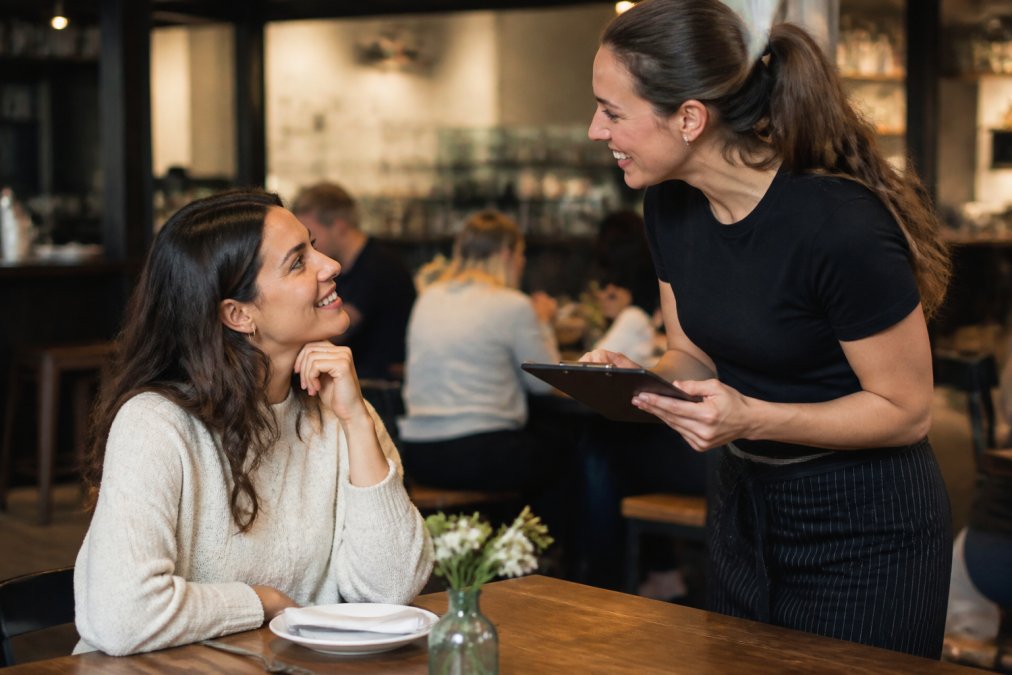
Train your staff to remember names and usual orders. "Hi Sarah, the usual?" takes 10 seconds and creates lasting loyalty. Track preferences and anticipate them without being asked.
Personalization tactics that work:
- Greet regulars by name when they enter
- Remember their favorite table or seat
- Know their drink order without asking
- Suggest menu items based on past orders
- Acknowledge special occasions (birthdays, anniversaries)
- Remember dietary preferences or restrictions
- Offer a new item you think they'll love
The psychology is clear: people return to places where they feel known. A chain restaurant can't offer this. An independent restaurant can, and should.
This isn't about surveillance.
Implement Restaurant Loyalty Program Ideas That Don't Require New Technology
Punch cards (ten visits, one free item), VIP notebooks, monthly regular specials, and birthday clubs all build loyalty without new technology. These work immediately with no software integration.
No-tech loyalty ideas:
- Punch cards (buy 10, get one free)
- VIP guest list (special treatment for best customers)
- Monthly regular specials (discount on specific days)
- Birthday club (free item on their birthday)
- Referral bonuses (bring a friend, both get a discount)
- Seasonal loyalty offers (different rewards each quarter)
Train Your Staff to Recognize and Reward Your Best Customers
Your staff is the engine of repeat business. Most training focuses on order-taking and food safety, not relationships. Staff-driven recognition is the single most powerful retention lever.
Building a staff-driven recognition system
- Tier 1 (VIP): 2+ visits per month or $500+ annual spend. Treatment: Greeted by name at the door, offered preferred seating, checked on more frequently, offered complimentary items (appetizer, dessert, wine pairing), personal thank-you from manager or owner.
- Tier 2 (Regular): 6-12 visits per year or $200-500 annual spend. Treatment: Greeted by name, remembered drink order, suggested new items based on history, thanked for loyalty.
- Tier 3 (Occasional): 2-5 visits per year. Treatment: Friendly service, noted for future visits, invited to special events via email.
Step 3: Incentivize staff to build relationships.
Step 4: Create accountability through daily huddles.
Before each shift, spend 5 minutes reviewing:
- Which VIPs are expected today?
- Which Tier 2 customers visited recently and might return?
- Which lapsed customers should we try to re-engage if they walk in?
- What new items should we suggest to which regulars?
Step 5: Track and measure staff performance on retention.
At the end of each month, review:
- Which servers brought in the most repeat customers?
- Which servers have the highest customer satisfaction scores from regulars?
- Which servers grew their regular base the most?
Common mistakes to avoid:
- Fake personalization: Don't force staff to use customer names if it feels unnatural. Authenticity matters more than a script. "Welcome back, we're glad to see you" is better than a forced "Hi Sarah" if the server doesn't genuinely remember her.
- Overburdening staff: Don't expect servers to remember 100 customers. Start with your top 20-30 regulars. Build from there.
- Treating it as optional: Make relationship-building part of your job description and training. New servers learn it on day one. It's not a nice-to-have; it's how your restaurant operates.
- Ignoring feedback: Ask your staff what makes it hard to remember customers. Maybe your POS doesn't display notes easily. Maybe you're understaffed and servers are too rushed. Fix the system, not the person.
The compounding effect:
Frequently Asked Questions
What's the fastest way to turn casual diners into repeat restaurant customers?
Recognition and incentives work fastest. Greet regulars by name, remember their usual order, and reward repeat visits immediately. A simple points-based loyalty program or bounce-back offer after their first visit can increase return rates significantly. The key is making customers feel valued within their first three visits, this builds the habit that turns them into regulars.
How should I structure a restaurant loyalty program to maximize repeat orders?
Tie rewards directly to visit frequency, not just spending. Offer a free item after 5-10 visits or provide a percentage discount on every purchase. Integrate the program into your POS system so redemption is seamless. Email reminders about progress toward rewards boost engagement. The most effective programs balance immediate small rewards with larger incentives that take 6-8 weeks to earn, this maintains consistent dining frequency.
What makes restaurant bounce-back campaigns actually work?
Timing and specificity matter. Send a bounce-back offer referencing something they ordered or enjoyed. An offer for a free appetizer on their next visit is more effective than generic discounts. Personalized email or SMS works better than mass promotions. Track which offers drive the highest return rates and adjust accordingly to improve customer lifetime value.
How often should I contact repeat customers without annoying them?
Once weekly is the safe maximum for email; twice weekly for SMS if the messages provide real value. Use segmentation so frequent diners get different messaging than occasional customers. Promote special events, new menu items, or exclusive member perks rather than constant discounts. Monitor unsubscribe rates and adjust frequency if they spike. Quality messaging about things customers actually care about beats high volume.