 How-to
5 Ways Loyalty Data Automates Restaurant Marketing
Last Updated: November 14, 2026
Quick Summary
Automating restaurant marketing with loyalty data means using what guests already do at the register to decide who gets which message, and when. Loyalty data is the record of who eats with you, how often, what they order, and what they ignore, and it feeds triggers that fire automatically.
- According to the 2026 Restaurant Industry Trends Report, 59% of operators call repeat guests their most profitable segment.
- Compare automation platforms on POS integration, loyalty triggers, segmentation depth, and reporting before you buy.
- Build four segments first: weekly regulars, monthly occasional guests, lapsed guests past 60 days, and one-time visitors.
- Integration runs in six steps, starting with auditing data sources and picking a master record.
- Small operators should start with one POS connection and two triggers.
Table of Contents
- Why Loyalty Data Beats Guesswork in Restaurant Marketing
- Restaurant Marketing Automation Tools: What to Compare Before You Buy
- Restaurant Customer Segmentation That Actually Drives Repeat Visits
- Restaurant Loyalty Campaign Examples You Can Copy
- A Step-by-Step Roadmap to Integrate Loyalty Data
- Privacy and Data Compliance for Restaurant Loyalty Data
- Restaurant Loyalty Program Best Practices and Feedback Loops
- Turning Automated Loyalty Data Into Regulars at Your Restaurant
- Frequently Asked Questions
Why Loyalty Data Beats Guesswork in Restaurant Marketing
Automating restaurant marketing with loyalty data means using what guests already do at the register to decide who gets which message, and when. According to the 2026 Restaurant Industry Trends Report, 59% of operators call repeat guests their most profitable segment, yet most still blast the same email to everyone on the list.
That gap is the whole opportunity. Loyalty data is the record of who eats with you, how often, what they order, and what they ignore. At The Regulars Club, we built our membership platform around a simple belief: the independent operators who win are the ones who treat that record as a marketing asset instead of a report they glance at once a quarter.
Below, we break down how the data flows from your point of sale into campaigns that actually fill tables, plus the tools, steps, and privacy rules that keep it running.
The Five Benefits of Marketing Automation
Automation pays off in five measurable ways: it protects repeat visits, raises average check through targeted offers, recovers lapsed guests before they disappear, cuts manual campaign work, and produces clean data for the next decision. The first four show up in the dining room. The fifth compounds.
A common mistake is chasing all five at once. Start with repeat visits, because that is where loyalty data gives you the clearest signal: dining frequency, last visit date, and average spend per head.
Restaurant Marketing Automation Tools: What to Compare Before You Buy
Compare automation platforms on four things: how they connect to your POS, whether loyalty status can trigger a message, how segments are built, and what reporting you get. To justify the spend, see how to calculate restaurant loyalty software ROI. Everything else is decoration.
Paytronix describes platform-level automation as connecting emails to POS transaction data, loyalty-program status, and online ordering. That connection is the line between a real automation tool and a glorified newsletter sender.
| What to compare | Why it matters | What to ask a vendor |
|---|---|---|
| POS integration | Transaction data feeds every trigger | Is the connection native or a paid add-on? |
| Loyalty triggers | Status changes should fire messages | Can a tier upgrade start a campaign? |
| Segmentation depth | Dining frequency and spend must be filterable | How many filters can stack in one segment? |
| Reporting | You need to see revenue per campaign | Does it show return per send? |
POS, CRM, and Loyalty: Connecting the Data
Three systems hold the pieces: the POS records transactions, the CRM stores guest profiles and contact details, and the loyalty layer tracks status and rewards. Automation only works when all three agree on who a guest is.
Klaviyo's restaurant marketing guidance describes sending email and SMS automatically when diners take a certain action or meet a loyalty condition. That is the output. The input is a clean, unified guest profile.
Watch out: the most common failure is duplicate profiles, where the same guest exists twice under different emails. Every trigger then fires twice, and your unsubscribe rate climbs.
Restaurant Customer Segmentation That Actually Drives Repeat Visits
Restaurant customer segmentation is the practice of grouping guests by behavior, not demographics, so each group receives an offer that fits how they actually dine. The segment that moves revenue fastest is dining frequency.
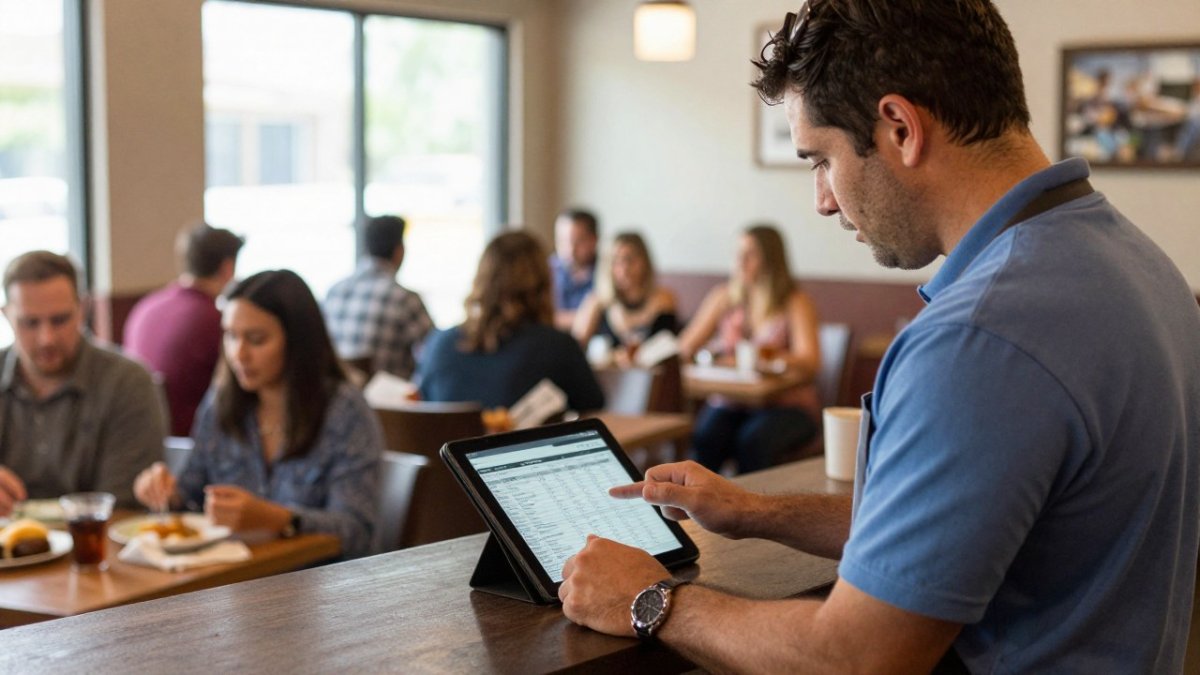
Build four segments first: regulars who visit weekly, occasional guests who come monthly, lapsed guests past 60 days, and one-time visitors. Then layer spend and favorite menu items on top.
Trigger-Based Campaigns Built on Dining Frequency
Frequency triggers beat calendar campaigns because they respond to behavior in real time. A guest who hits their fourth visit this month is a different prospect than one who has not been in since spring.
Set triggers for: a first visit, a third visit within 30 days, a lapse past 60 days, a tier upgrade, and a birthday month. Each one fires a message written for that moment. For a practical walkthrough of building these sequences, see how to automate restaurant email campaigns that fill tables.
Restaurant Loyalty Campaign Examples You Can Copy
These restaurant loyalty campaign examples work because each one ties a message to a specific behavior. Copy the structure, then write your own offer.
- The fourth-visit nudge: after three visits in 30 days, send a free appetizer on the next one.
- The 60-day win-back: lapsed guests get a two-week offer with a clear end date.
- The tier upgrade: a status change triggers a congratulations message with a member-only perk.
- The birthday month: one reminder at the start of the month, one mid-month.
- The slow-night fill: Tuesday regulars get a Tuesday-only offer.
You will find seven more copyable formats in our guide to restaurant SMS marketing campaigns.
A Step-by-Step Roadmap to Integrate Loyalty Data
Integration runs in six steps, and the order matters more than the speed.
- Audit your data sources. List every place guest data lives: POS, online ordering, loyalty app, email list.
- Pick a master record. Choose one system as the source of truth for guest identity.
- Clean and dedupe. Merge duplicate profiles before connecting anything.
- Map fields. Decide which POS fields feed which CRM fields.
- Connect and test. Run a small test segment through one trigger before going live.
- Document and hand off. Write down who owns each connection so it does not rot.
Our step-by-step loyalty data migration guide walks through each stage in detail.
Small vs. Enterprise Scaling
Small operators should start with one POS connection and two triggers. Multi-location groups need location-level segmentation and role-based access before they scale, or head office will overwrite local guest history.
Privacy and Data Compliance for Restaurant Loyalty Data
Compliance is a data design decision, not a legal afterthought. Collect only what you will use, tell guests plainly why you are collecting it, and honor opt-outs across every channel at once.
Start with the laws that actually reach a restaurant's loyalty list. Several United States states have enacted comprehensive privacy statutes that give residents rights to know, delete, and correct personal information, and to opt out of certain data sales. Check the requirements for each state where your guests live. A documented process also helps keep automated responses accountable without losing the human judgment that makes sensitive guest interactions feel respectful, a balance RoboQuill explores.
Build that process around four steps. First, designate one person who owns privacy requests and a single inbox where they land. Second, know every system that holds guest data, POS, CRM, loyalty app, email platform, SMS platform, because a deletion request has to reach all of them. Third, set a response window you can actually meet; Set a response window you can actually meet, and log each request so you can show when it was resolved. Fourth, log every request and its resolution.
Consent is the second pillar, and it is where restaurants get into trouble fastest. Text message marketing generally requires documented consent from each guest. Importing a phone list from a third party without that consent is a fast route to legal risk. Keep consent records: what the guest agreed to, when, and through which channel.
Data minimization is the third pillar. Every field you collect is a field you have to protect, disclose, and delete on request. Birthdate is useful for a birthday reward; a full date of birth is not. Home address is useful for a delivery radius; it is not needed for an email campaign. Collect the minimum that makes the automation work.
Finally, check the Federal Trade Commission's data privacy guidance for how enforcement works in practice. The FTC has pursued businesses that mishandled consumer data or misrepresented how it would be used, and its guidance is the clearest public statement of what regulators expect from a small operator.
Watch out: opt-outs must propagate across every channel at once. A guest who unsubscribes from email but keeps receiving texts has not opted out in any meaningful sense, and that gap is exactly what regulators look for.
Restaurant Loyalty Program Best Practices and Feedback Loops
The best restaurant loyalty program best practices share one trait: they close the loop. A guest who redeems an offer, leaves feedback, or goes quiet is telling you something. Automation should listen and adjust.
- Ask for feedback after redemption, not after every visit.
- Route negative responses to a human, never to another automated send.
- Suppress promotional messages for guests who just complained.
- Review trigger performance monthly and retire the ones nobody opens.
That last point matters most. A negative feedback loop, where a bad experience triggers more marketing, is worse than no automation at all.
Turning Automated Loyalty Data Into Regulars at Your Restaurant
The operators who turn data into regulars share a habit: they start small and let the results argue for the next step. One POS connection, two triggers, four segments. That is enough to see whether automation earns its place.
The Regulars Club gives independent restaurants a simpler path. Members show their active membership at participating restaurants, and owners add member discounts straight into their existing POS as coupon buttons, no system replacement required. Restaurants set their own offers, and the platform handles member discovery, monthly rewards, and the recurring revenue that comes from guests who keep coming back.
Get started with The Regulars Club and turn your occasional diners into regulars.
If your guest list is growing but your repeat visits are flat, the missing piece is usually the connection between what the POS knows and what your marketing sends. The Regulars Club helps independent restaurants close that gap with a membership program that works alongside the POS you already run, member-only offers you control, and monthly rewards that give guests a reason to return. Explore our restaurant membership program and see how loyalty data becomes repeat revenue.
Frequently Asked Questions
How can restaurants use loyalty data to automate marketing?
Loyalty data automates marketing by triggering messages from real guest actions. When a diner hits a visit threshold or a loyalty tier, the system sends a personalized offer without staff involvement. Many operators consider repeat guests their most profitable segment. Connect your POS to your loyalty platform so each transaction updates the guest profile and fires the right campaign.
What customer data should a restaurant loyalty program collect?
Collect contact details, transaction history, visit frequency, average spend, favorite menu items, and loyalty tier status. Paytronix notes that automation platforms connect emails to POS transaction data, loyalty status, and online ordering, which is what makes personalization possible. Keep collection limited to what you will actually use in campaigns. Tell guests what you collect and why, and honor opt-outs for email and SMS.
How do restaurants segment loyalty members for marketing campaigns?
Segment by dining frequency, spend level, recency of last visit, and menu preferences. A practical structure uses four groups: regulars who visit weekly, occasional guests who come monthly, lapsed guests who have not visited in 60 to 90 days, and new sign-ups. Each group gets a different offer and message cadence. Restaurant customer segmentation works best when segments update automatically from POS data rather than manual lists.
Which tools help automate restaurant loyalty marketing?
Look for platforms that connect to your existing POS, support email and SMS triggers, and report on repeat visit rates. Compare tools on data integration depth, segmentation flexibility, and whether they replace your POS or work alongside it. The Regulars Club takes the second path: restaurants add member discounts as coupon buttons in their current POS, so loyalty data flows without a system swap. Ask each vendor how campaign results are measured before you commit.